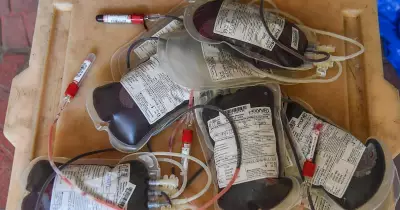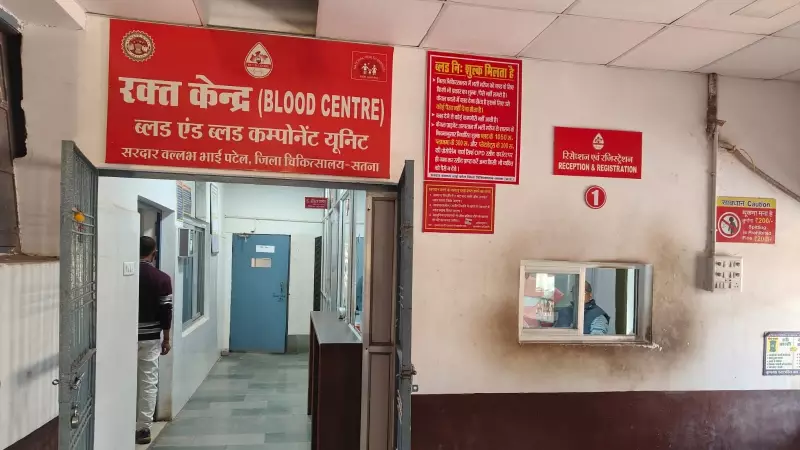
In a shocking public health failure, five children battling thalassemia in Madhya Pradesh's Satna district have now been diagnosed with HIV, contracted through contaminated blood transfusions received at government and private hospitals between March and early April this year. A state-level inquiry has uncovered severe systemic lapses, leading to the suspension of three health officials. For the affected families, this represents a devastating double burden of life-threatening diseases.
Dreams Shattered by Systemic Failure
Among the victims is a spirited nine-year-old boy who aspires to join the CID. A cricket enthusiast who loves batting and finds joy in mathematics, he quietly bears a heavy cross. "I go to school. Many people don't know what I am going through," he told investigators. His father recounted that the boy was diagnosed with thalassemia at just two years old. For years, regular blood transfusions allowed him a semblance of normal life, until March 2024, when tests confirmed he was HIV positive. "He has struggled so much at such a young age; now he has an additional burden. All I can do is smile at my son when he dreams of becoming a CID officer and give him hope," the heartbroken father said.
The tragedy extends to other young lives. A three-year-old girl tested positive, with her family learning of the infection only five months ago, after over two years of transfusions. While authorities count her among the five cases, her parents are also HIV positive. The diagnosis has forced the family into isolation, fearing stigma. "We cannot tell our relatives about this disease. We don't know how to explain it. Even the hospital told us to remain quiet," her father claimed, expressing utter helplessness.

Another victim, a 15-year-old girl, had to drop out of school two years ago as her health deteriorated, shattering her father's dream of seeing her become a "big officer one day." The families squarely blame the district hospital's negligence. "They have done this to my family. Everything changed because of them," accused the first father.
Administrative Chaos and a Botched Response
As grief turned to anger, the health administration scrambled to manage the fallout. On Friday, the state government suspended the in-charge of the Satna district hospital blood bank, Dr. Devendra Patel, along with laboratory technicians Ram Bhai Tripathi and Nandlal Pandey. A show-cause notice was also issued to the former civil surgeon of the hospital, Manoj Shukla, for alleged administrative failures.
The response on the ground has been marred by chaos and fear. Counsellors at the HIV centre faced the harrowing task of informing families and then tracing over 198 donors. "First, we had to break the news to the five families... We also had to question parents about their sexual history. These are very hard conversations when they don't see a bright future for their child anymore," an exhausted counsellor revealed.
Donor tracing proved exceptionally difficult. Of about 125 people contacted, only two to four agreed to come forward. Others denied donating blood or refused testing. The situation turned threatening, with counsellers reporting donors saying, 'If you call again, we will shoot you. Do not come to our homes.' A senior official admitted the first tracing exercise was halted in April due to safety concerns and a lack of manpower, only to be restarted later.
Suspended official Dr. Devendra Singh defended the blood bank's procedures, claiming all units underwent multiple screenings and tested negative. However, he highlighted a core problem: "Nearly 50 per cent of donor data is either incorrect or outdated. Many addresses are outside Madhya Pradesh or are wrong."
How the Alarm Was Raised and What Lies Ahead
The crisis came to light thanks to the vigilance of Dr. Sadhna, head of the Integrated Hemoglobinopathy and Haemophilia Centre. She noticed severe symptoms in an eight-year-old thalassemia patient, who was then referred to Rewa Medical College and tested HIV positive. This triggered a broader screening, which identified the five infected children.

However, the full scale of the risk remains unknown. Dr. Sadhna stated that ten other thalassemia patients from Satna and neighbouring districts like Panna have not been traceable for testing, leaving a shadow of uncertainty over whether more children are affected.
The incident exposes a catastrophic breakdown in one of the most fundamental protocols of healthcare—safe blood transfusion. It underscores the dire consequences of poor donor record-keeping, inadequate testing, and failed oversight, leaving five young lives and their families to fight a battle they never should have faced.