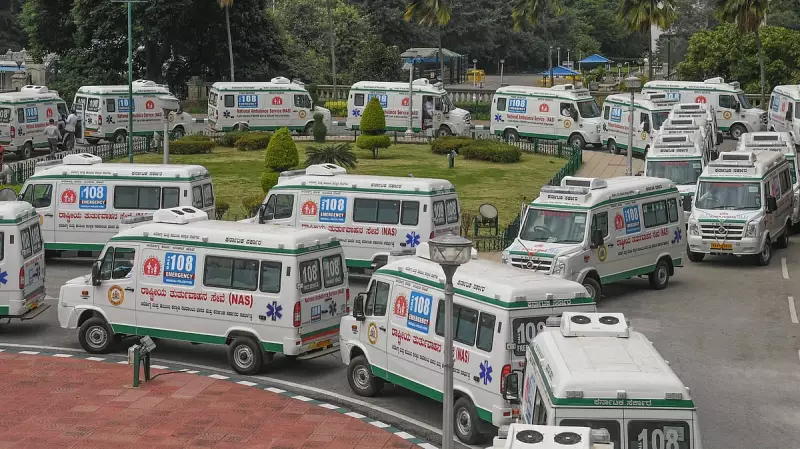
A significant portion of Karnataka's vital emergency medical response system is currently non-operational, raising serious concerns about the state's ability to handle medical crises. Twenty-five percent of the ambulances under the flagship 108 service are reportedly under maintenance, according to recent reports. This development has sparked fears among citizens and healthcare professionals about potentially life-threatening delays in emergency care.
State of the Fleet and Strategic Concerns
The 108 ambulance service is a critical lifeline across Karnataka, designed to provide rapid medical assistance. The standard operating protocol aims for a response time of approximately 20 minutes from the moment a call is received. However, with a quarter of the fleet unavailable, this benchmark is under severe strain. Officials indicate that if these vehicles are not positioned at their designated strategic locations due to maintenance, the actual time it takes for help to arrive could increase substantially. This gap could be the difference between life and death in cardiac, accident, or other medical emergencies.
Impact on Public Health and Emergency Protocols
The immediate consequence of this shortfall is a direct impact on public health safety. With fewer ambulances on the road, the existing vehicles have to cover larger areas, leading to longer travel times. This situation is particularly alarming for remote and rural areas where healthcare infrastructure is already sparse. The report, highlighted by Sneha Ramesh and published on 28 December 2025, underscores a systemic vulnerability. It calls into question the maintenance schedules, spare parts management, and contingency planning of the service provider and the state health department.

Looking Ahead: Accountability and Solutions
This incident has prompted calls for greater transparency and urgent remedial action. Key questions being asked include the expected timeline for returning the ambulances to service and the interim measures being put in place to mitigate risks. Stakeholders are urging the authorities to:
- Publicly disclose a clear plan to restore the full fleet.
- Implement a robust preventive maintenance schedule to avoid such large-scale downtime in the future.
- Explore temporary solutions, such as mobilizing ambulances from other services or districts, to cover the deficit.
The effectiveness of the 108 service is a key indicator of the state's emergency preparedness. Ensuring its operational readiness is not just an administrative duty but a fundamental commitment to saving lives.