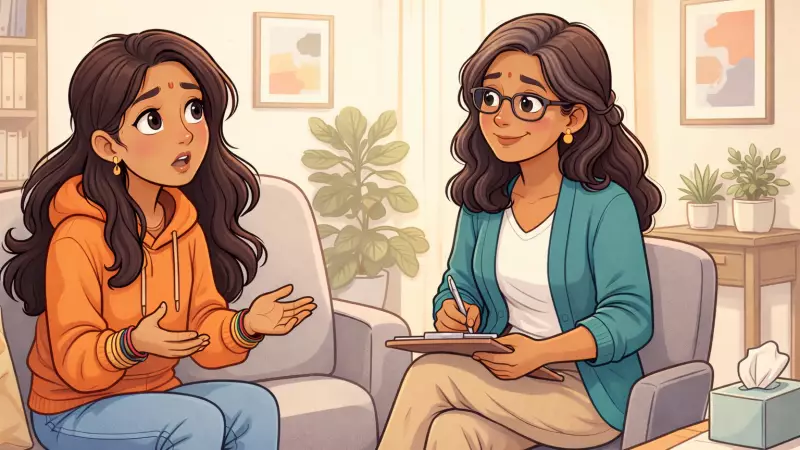
When 19-year-old Aanya from Delhi entered her first therapy session last month, she greeted her therapist with a phrase that stopped the professional in her tracks. "I am looking for someone to lore drop on," the teenager stated, before casually mentioning she had an "avoidant attachment style." This opening, far removed from traditional expressions of distress, highlights a significant shift occurring in counseling rooms across the country.
The New Vocabulary of Mental Wellness
The conventional therapy starter kit of "I'm feeling stressed" or "I can't concentrate" is being rapidly retired. In its place, a new lexicon, borrowed directly from the depths of social media and pop psychology forums, is taking root. India's youngest patients are self-diagnosing and articulating their struggles with terms gleaned from TikTok, Instagram, and Reddit. For therapists, this presents a dual challenge: they must now decode this modern slang while accurately assessing the underlying mental health condition.
In Aanya's case, when asked to elaborate on her statement, she explained, "I keep shutting down when I try to connect with someone emotionally." This translation from internet jargon to emotional experience is becoming a common first step in sessions. The phenomenon underscores how deeply online discourse on mental health has permeated the consciousness of Generation Z.

Bridging the Communication Gap
This linguistic evolution is not merely a curiosity; it represents a fundamental change in the therapist-client dynamic. On one hand, this shared vocabulary can serve as a powerful bridge. When a young person says they need to "lore drop"—a term meaning to extensively share backstory or personal history—it instantly communicates a deep need to be heard and understood in context. It can fast-track the initial stages of building rapport and trust.
However, the trend also carries risks. The ease of access to psychological terminology online can lead to misinterpretation and self-misdiagnosis. A teenager might confidently label themselves with a complex attachment style or disorder without fully grasping its clinical meaning, potentially leading to confirmation bias or unnecessary anxiety. Therapists now have the added task of gently unpacking and contextualizing these self-applied labels to ensure accurate understanding and treatment.
The Future of Therapeutic Dialogue
The entry of Gen Z slang into therapy rooms, as seen with Aanya in December 2025, signals a larger cultural movement. Mental health discourse is becoming democratized and destigmatized, driven by open conversations online. For mental health professionals in India, adapting to this change is no longer optional. It requires active listening, continuous learning about digital culture, and the flexibility to meet young clients where they are—linguistically and emotionally.
This shift ultimately reflects a generation that is more aware and vocal about its psychological well-being than any before it. While the language may be new, the core human needs—for connection, understanding, and healing—remain timeless. The task for therapists is to harness this new vocabulary to foster more effective and relatable healing journeys.