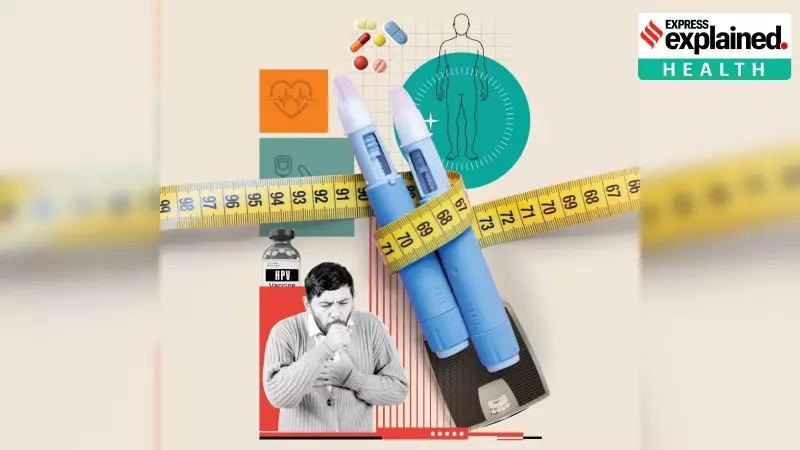
The landscape of healthcare in India is undergoing a significant transformation, driven by new medical technologies and ambitious public health initiatives. Two major trends are set to define 2026: the anticipated mass adoption of a new class of weight-loss medications and a substantial expansion of accessible cancer care across the country.
The Meteoric Rise and Future of GLP-1 Drugs
The year 2025 witnessed a dramatic entry of GLP-1 receptor agonist drugs into the Indian market. Eli Lilly launched Mounjaro (tirzepatide) in March, followed by Novo Nordisk's Wegovy (semaglutide) in June. Despite their high cost and limited patient uptake initially, these drugs achieved a remarkable feat by climbing to the top tiers of India's pharmaceutical market in terms of value, trailing only behind the established antibiotic Augmentin from GSK.
This commercial success, largely funded out-of-pocket by patients, signals a profound shift in consumer behaviour. Indians, traditionally conservative in managing chronic conditions like obesity and diabetes, are now demonstrating a willingness to invest in long-term, albeit expensive, metabolic treatments. This shift has rapidly converted a niche patient group into a substantial market.

Unanswered Questions and Cardiovascular Benefits
Clinically, several critical questions remain. Experts like Dr. Nikhil Tandon, head of endocrinology at AIIMS, New Delhi, caution that it is too early for firm conclusions on long-term outcomes, particularly regarding weight regain after stopping the medication. Practical concerns about maintenance therapy, dose reduction, and treatment breaks are yet to be fully addressed.
However, the cardiovascular benefits of these drugs are becoming clearer. Dr. Ambuj Roy, professor of cardiology at AIIMS, highlights strong data supporting their use in patients with coronary artery disease and a specific type of heart failure. A landmark 2025 study in The Lancet showed that semaglutide reduced major cardiovascular events in people with obesity and heart disease, independent of diabetes status. This benefit was only partially linked to weight loss, suggesting a direct protective effect on the heart.
The Generic Wave and Regulatory Evolution
The most consequential change in 2026 may occur in manufacturing and courts. With the primary patent on semaglutide expired, Indian pharmaceutical giants are preparing for a domestic market shift. Companies like Dr. Reddy’s, Sun Pharma, Cipla, Lupin, Biocon, Zydus Lifesciences, and Aurobindo are all developing generic versions or expanding capacity.
A secondary patent on formulation and injection devices expires in March 2026, which will be the real inflection point for affordable access. Once Indian generics hit the market, prices are expected to plummet, dramatically expanding patient access. Concurrently, regulatory approvals are expected to broaden beyond just diabetes and obesity to include indications like cardiovascular risk reduction, mirroring trends in the United States.
India's Public Health Agenda: Cancer, TB, and HPV
Parallel to the drug revolution, the government is pushing major public health projects. A key announcement in the 2025-26 Union Budget is the plan to establish at least 200 Day Care Cancer Centres in district hospitals in the current financial year, with a full rollout over three years. These centres will provide chemotherapy, essential drugs, and minor procedures, decentralising cancer care and reducing the burden of travel for rural populations.
On other fronts, India continues its fight against tuberculosis. While the ambitious 2025 elimination target was not met, progress is notable. The Global TB Report 2025 estimates India had 2.71 million cases and 300,000 deaths in 2024. Treatment coverage improved to roughly 92% in 2024 from 85% the previous year.
Furthermore, a national HPV vaccination campaign to prevent cervical cancer is in the planning stages. With training for implementers underway, a final decision on the vaccine type and rollout is expected in the first half of 2026. This is crucial for a country where cervical cancer claims about 75,000 lives annually.

In summary, 2026 in Indian healthcare will be a year of expanded access—both through cutting-edge, increasingly affordable pharmaceuticals and through a strengthened public health infrastructure aimed at bringing critical care closer to home.