UK Surgeon Achieves Milestone with Remote Robotic Surgery on Gibraltar Patient
In a groundbreaking medical feat, Professor Prokar Dasgupta, a renowned urological surgeon based in London, has performed a landmark remote robotic surgery on a patient located more than 1,500 miles away in Gibraltar. This historic procedure marks the first time a doctor in the United Kingdom has carried out a robotic operation at such a significant distance, showcasing the potential of advanced technology in transforming healthcare delivery.
Details of the Pioneering Surgical Procedure
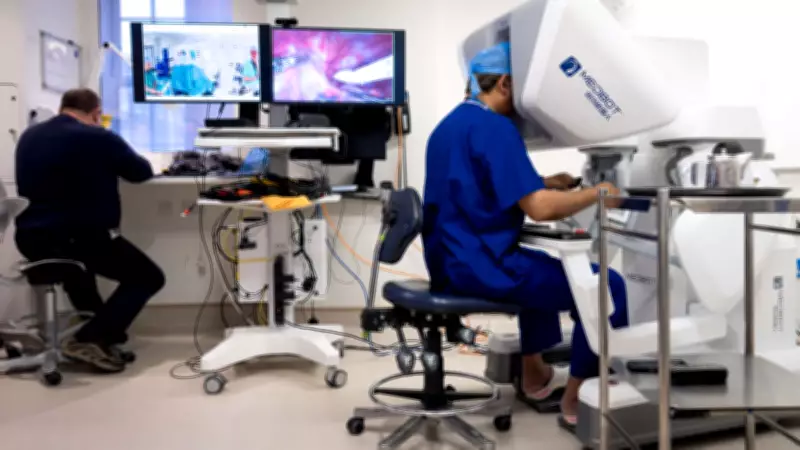
The surgery involved removing the prostate of a 62-year-old cancer patient, Paul Buxton, who was situated at St Bernard’s Hospital in Gibraltar. Professor Dasgupta controlled the robotic system from a surgical console at The London Clinic in the UK, while Buxton lay in an operating theatre overseas. The robotic system utilized four mechanical arms and a 3D high-definition camera, allowing Dasgupta to view the surgery on a screen and execute precise movements.
Remarkably, the delay between the surgeon’s hand movements and the robot’s response was only about 60 milliseconds, thanks to high-speed communication lines. This minimal latency enabled the operation to be conducted with exceptional accuracy, comparable to in-person surgeries. The system was supported by fibre-optic connections and a backup 5G network to ensure stability throughout the procedure, with local surgeons in Gibraltar on standby to intervene if necessary.

Implications for Remote Healthcare and Patient Benefits
Medical experts have hailed this procedure as a significant milestone for remote healthcare. Professor Dasgupta emphasized that this technology makes it possible to treat patients who live far from specialist medical centres, potentially benefiting those in smaller communities, remote regions, or areas with limited access to experienced surgeons. "Remote robotic surgery could help patients who might otherwise have to travel long distances for complex procedures," he noted, highlighting its role in improving healthcare equity.
For patient Paul Buxton, the remote surgery offered a convenient alternative to traveling to the UK and enduring weeks of waiting for treatment. He reported feeling "fantastic" just four days after the operation, underscoring the reduced recovery time often associated with robotic procedures. Robotic surgery, increasingly used in the UK for treatments like prostate cancer, allows for smaller incisions and greater precision, which can minimize complications and accelerate healing.
Background on Professor Prokar Dasgupta and Future Prospects
Professor Prokar Dasgupta is a leading figure in robotic urological surgery, heading the Robotic Centre of Excellence at The London Clinic and specializing in prostate and urinary tract procedures. Born in Rourkela, Odisha, India, and partly raised in Lucknow, he earned his medical degree from Medical College, Calcutta in 1989 before moving to the UK for specialist training. His contributions to medicine have been recognized with India’s prestigious Padma Shri award.
The successful Gibraltar procedure is seen as a crucial step in expanding telesurgery, where surgeons operate from distant locations using robotic systems. Doctors suggest that this technology could eventually be deployed in conflict zones, underserved areas, or places lacking specialist care, revolutionizing how medical services are delivered globally. As remote healthcare continues to evolve, such innovations promise to bridge gaps in access and enhance patient outcomes worldwide.