

Andhra Medical College Conducts In-Depth Study on Homicide Cases in Visakhapatnam
A team of doctors from Andhra Medical College has undertaken a comprehensive retrospective study focusing on homicide cases that underwent autopsies between January 2023 and December 2024. This research provides critical insights into the nature and circumstances surrounding violent deaths in the region.
Key Findings from the Autopsy Analysis
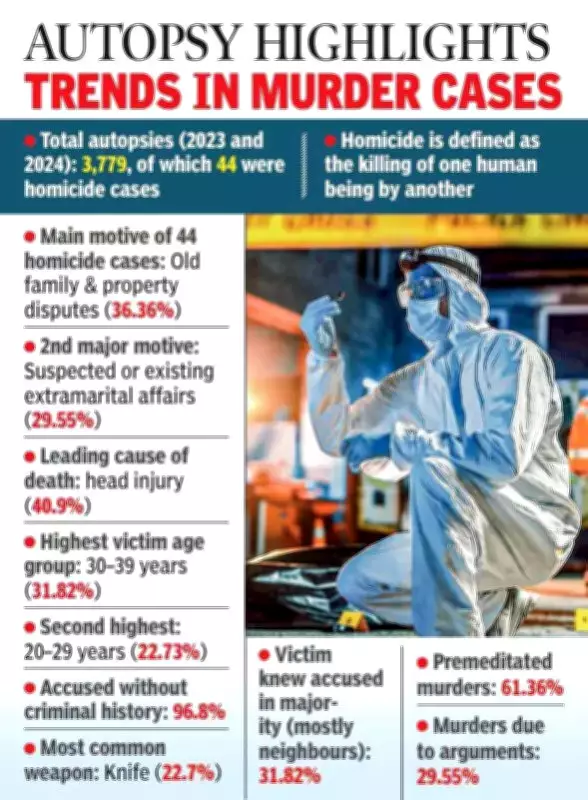
Out of a total of 3,779 autopsies performed during the two-year period, 44 cases were conclusively identified as homicides. The study revealed that the majority of these incidents, accounting for 61.36%, were allegedly premeditated, indicating a significant level of planning and intent. In contrast, 29.55% of the homicides occurred during heated arguments, suggesting impulsive acts of violence, while the motives remained unknown in 9.09% of cases.
Common triggers were identified in 40 of the 44 homicide cases. The leading causes included revenge linked to family and property disputes, which constituted 36.36% of the cases. Suspected or existing extra-marital affairs were a factor in 29.55% of the incidents, followed by land disputes at 9.09%, and robbery at 4.55%. Other isolated triggers involved dowry-related issues, ragging, road rage, threats, and mental illness, highlighting the diverse and complex nature of these crimes.

Demographic and Injury Patterns Among Victims
The study found that most victims were young, employed or self-employed males from urban backgrounds. Men accounted for 70.45% of the victims, with the highest proportion falling within the 30–39 age group at 31.8%, followed by those aged 20–29. This demographic trend underscores the vulnerability of this segment of the population to violent crimes.
In terms of injuries, blunt force trauma was more common than sharp force injuries. Head injury emerged as the predominant cause of death, responsible for 40.9% of the fatalities. Other causes included burns, stab wounds, strangulation, and asphyxial deaths, which contributed smaller proportions. Notably, nearly half of the victims, 47.7%, were found dead at the scene, indicating the severity and immediacy of the assaults.
Relationships and Background of Accused Individuals
In most cases, the accused was known to the victim, often being neighbours, friends, or family members. This finding suggests that interpersonal conflicts and close relationships play a significant role in homicide incidents. Interestingly, the majority of accused individuals, 96.8%, had no prior criminal history, pointing to the spontaneous or situational nature of many of these crimes.
Data on substance use were available for a subset of cases, revealing that the majority of both victims and accused were not under the influence of drugs or alcohol at the time of the incident. This challenges common assumptions about substance abuse as a primary driver of violent behavior in these contexts.
Research Methodology and Recommendations
The study was conducted by a team of researchers including Dr Manchala Jeevan Anudeep Babu, Dr Srinivasa Reddy Nandiki, Dr Sravani Yandava, Dr S.M. Krishna Sagar, and Dr Annie P from Andhra Medical College, along with Dr Kattamreddy Ananth Rupesh from Government Medical College, Ongole. They analyzed various variables such as age, sex, marital status, occupation, criminal history, victim–accused relationship, substance influence, weapon type, and nature of assault to build a detailed profile of homicide cases.
Based on their findings, the researchers emphasized the urgent need for improving social conditions, expanding employment opportunities, and strengthening the judicial system to address the root causes of violence. They also called for ongoing research into factors such as weapon types, victim–offender characteristics, and mental health to develop more effective prevention and intervention strategies.

Publication and Broader Implications
The study, titled "Patterns and Trends of Homicide Cases Autopsied at a Tertiary Care Hospital in Visakhapatnam: A Retrospective Study", was published in the National Board of Examinations – Journal of Medical Sciences. This research contributes valuable data to the fields of forensic medicine and criminology, offering insights that can inform public policy and community safety initiatives in Visakhapatnam and beyond.





