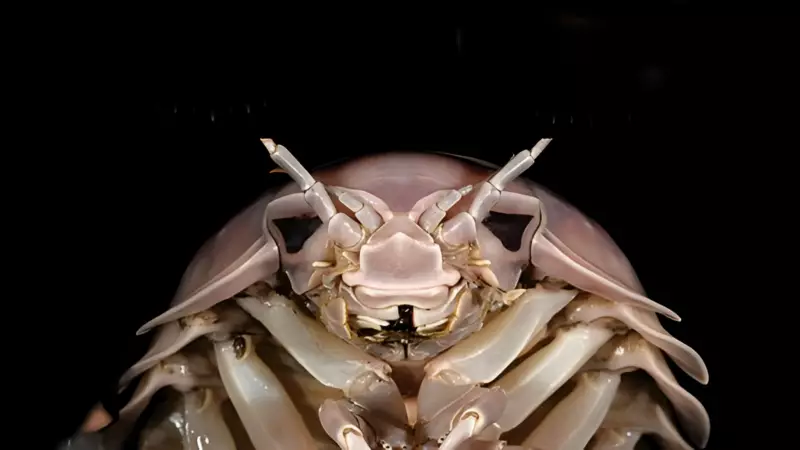
In a discovery that seems straight out of a science fiction saga, marine biologists have identified a new, colossal species of deep-sea isopod with an appearance eerily reminiscent of one of cinema's most iconic villains. The creature has been formally named Bathynomus vaderi, earning the popular nickname 'Darth Vader superbug' for its striking similarity to the helmet of the Star Wars antagonist.
A Face Only a Sith Lord Could Love
The newly identified species was found in the cold, deep waters near the Spratly Islands in the South China Sea. Its most distinguishing feature is its head and shell structure, which closely mimics the angular, intimidating design of Darth Vader's helmet. The resemblance is heightened by its large, widely spaced, and triangular compound eyes, along with other distinct facial features.
Beyond its pop-culture appeal, Bathynomus vaderi is a formidable specimen of the giant isopod genus Bathynomus. It measures an impressive 12.8 inches (32.5 centimetres) in length and can weigh over 2.2 pounds (1 kilogram). This deep-sea dweller plays a crucial ecological role as a scavenger, feeding on dead marine animals that fall to the seafloor, thereby recycling essential nutrients in an otherwise nutrient-poor environment.
Identification and Unique Characteristics
The species was first identified in 2022 when researchers examined samples collected by local fishers from the depths of the South China Sea off the coast of Vietnam. These 'bottom feeders' were hauled up from the pitch-black depths, presenting scientists with a unique opportunity.
Upon close examination, several key differences set it apart from other known giant isopods. Researchers noted a unique narrowing and a slight backward curve at the last segment of its back legs. Additionally, specific anatomical features, including a distinct hip bone depression and a specialised bony ridge on its coracoid, confirmed it was a completely new species to science.
Threats from the Surface World
While the discovery excites biologists and Star Wars fans alike, it brings to light a growing conservation concern. In Vietnam, giant isopods from the Bathynomus genus have recently gained popularity as a seafood delicacy, often seen as an alternative to expensive lobster. This rising demand is turning these deep-sea creatures into a valuable commodity, but it also increases fishing pressure on their populations.
Studying these supergiant isopods is inherently difficult due to their extreme deep-sea habitats. Most specimens are found either as bycatch from fishing operations or during costly and rare deep-sea expeditions. Each new discovery is therefore precious, helping scientists piece together the puzzle of deep-sea biodiversity and adaptation.
The case of Bathynomus vaderi underscores the need for conscious efforts to understand and protect these remarkable, otherworldly creatures before human activities threaten their existence in the abyss.