

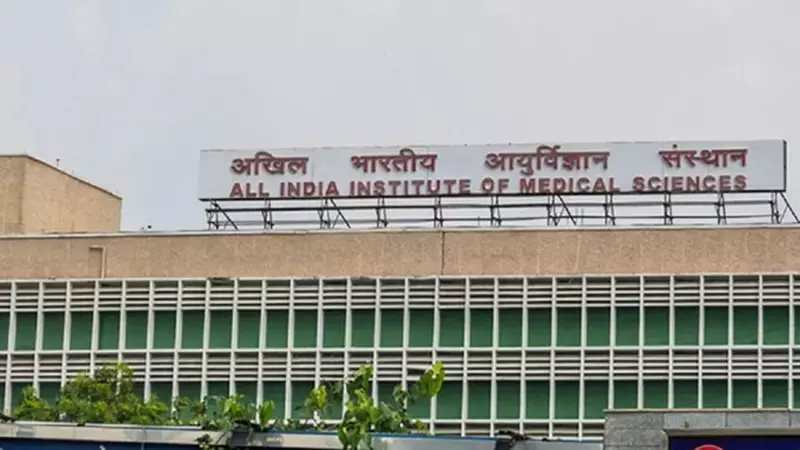
India's premier network of public hospitals, the All India Institutes of Medical Sciences (AIIMS), is grappling with a severe shortage of teaching doctors, a situation that threatens to undermine patient care and medical training. Recent data obtained through Right to Information (RTI) requests has laid bare the scale of the problem, showing that a staggering 39% of approved faculty positions across 11 AIIMS remain unfilled.
A Nationwide Shortage Across Old and New Institutes
The compiled RTI responses indicate a widespread staffing crunch that affects both the older, established institutes and the newer ones. Out of a total sanctioned strength of 4,099 faculty posts across these eleven institutions, a whopping 1,600 positions are currently vacant. This significant gap exists even as patient inflows at these national referral centers continue to rise year after year.
The crisis is starkly visible at the flagship AIIMS Delhi. The country's oldest and largest institute, which handles the most complex cases, has 524 vacant posts out of its sanctioned strength of 1,306. This shortage spans critical departments including Medicine, Surgery, Anaesthesia, Paediatrics, Neurology, Oncology, and Emergency Care.

Newer AIIMS Bear the Brunt of the Crisis
While AIIMS Delhi faces a massive 40% vacancy rate, several of the newer institutes are in an even more precarious position. AIIMS Jodhpur is the worst affected, operating with 46.7% of its faculty posts (189 out of 405) lying vacant. It is closely followed by AIIMS Gorakhpur (45.5% vacancies) and AIIMS Jammu (44.3% shortfall).
The data shows that more than 40% of posts are also unfilled at AIIMS Kalyani and AIIMS Bilaspur. AIIMS Nagpur reports 137 vacancies out of 373 sanctioned positions, amounting to a 36.7% gap. Other institutes, though showing relatively lower figures, still face significant shortages: AIIMS Bathinda (37.4%), AIIMS Raipur (34.8%), AIIMS Bhubaneswar (26%), and AIIMS Bhopal (25.6%).
Impact on Healthcare and the Recruitment Challenge
Health experts have consistently warned that such prolonged faculty shortages at major teaching hospitals have a cascading effect. The strain impacts outpatient services, delays elective surgery schedules, compromises ICU supervision, and hampers the quality of training for undergraduate and postgraduate medical students. Senior doctors are forced to juggle excessive clinical, academic, and administrative duties.
In response to the concerns, Prof. Rima Dada, media cell in-charge at AIIMS Delhi, stated that recruitment is an ongoing process. "Interviews are underway, and the process of filling vacant posts is being carried out regularly," she said. However, the RTI data underscores a worrying disconnect between the rapid expansion of healthcare infrastructure and the much slower pace of recruiting qualified faculty.
The AIIMS network serves hundreds of thousands of patients annually, many referred from smaller hospitals for advanced treatment. The growing vacancies raise serious questions about whether India's flagship medical institutions are being adequately staffed to meet the nation's escalating healthcare demands and to maintain their world-class standards of medical education.






