

Regenerative Orthopedics: A Paradigm Shift in Musculoskeletal Care
Regenerative Orthopedics represents a transformative approach in medical science, offering biologic and image-guided alternatives that focus on repairing and regenerating damaged tissues rather than resorting to removal and replacement procedures. This innovative field is gaining significant momentum across India, thanks to pioneering physicians who are bringing advanced non-surgical treatments to patients seeking alternatives to traditional orthopedic surgery.
The Visionary Behind India's Regenerative Movement
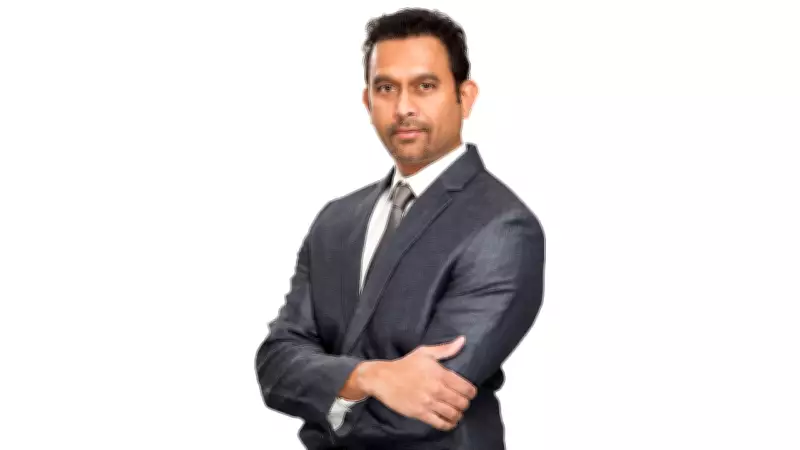
At the forefront of this medical revolution stands Dr. Venkatesh (Ven) Movva, the visionary founder of RegenOrthoSport. With fellowship training in Sports Medicine, board certification, and an impressive three decades of clinical experience spanning prestigious medical centers in Dallas, Mumbai, Bengaluru, and Hyderabad, Dr. Movva has established himself as a leading authority in precision-based, non-surgical orthopedic treatments.
Dr. Movva's approach centers on utilizing the body's own healing mechanisms, employing autologous bone marrow stem cells, high-concentration platelets, and growth factors to stimulate targeted tissue repair. His pioneering work introduced this paradigm shift to India nearly a decade ago, bringing a philosophy that has already become mainstream in global medical communities and is now experiencing rapid growth throughout the Indian healthcare landscape.

Redefining Orthopedic Philosophy
"Orthopedics has traditionally focused on cutting, replacing, or permanently altering anatomical structures," explains Dr. Movva. "Regenerative Orthopedics challenges this conventional approach by asking whether we can activate the body's inherent repair pathways before making irreversible surgical decisions."
This revolutionary perspective now addresses numerous conditions that were once considered exclusively surgical cases, including:
- ACL repair support for selected ligament injuries
- Labral regeneration strategies for shoulder and hip pathology
- Meniscal regeneration approaches
- Disc regeneration therapies in early degeneration stages
- Early-to-mid-stage avascular necrosis (AVN)
- Intraosseous biologic therapy for bone marrow lesions
"In appropriately selected patients, we are not merely managing pain symptoms," Dr. Movva emphasizes. "We are actively supporting tissue repair processes and helping patients return to their normal activities more quickly and with greater confidence."
The Journey to Regenerative Medicine
Dr. Movva's path into regenerative orthopedics began with a fundamental question: Can we help the body heal itself before resorting to surgery? After years of treating athletes and active individuals with joint and spine injuries, he recognized a growing patient demand for solutions that preserved natural anatomy whenever possible.
This insight led to a focused exploration of biologic therapies designed to support the body's own repair systems. "The human body already contains powerful healing elements - platelets, bone marrow stem cells, and growth factors," Dr. Movva notes. "When carefully concentrated and precisely delivered to injury sites, these biological components can stimulate repair in ways that work harmoniously with the body rather than replacing its structures."
Core Principles of Regenerative Orthopedics
At RegenOrthoSport, the clinical philosophy centers on three fundamental principles: Repair. Regenerate. Preserve. For patients, this translates into exploring thoughtful, stage-based treatment options aimed at reducing pain, restoring function, and potentially delaying or avoiding surgical interventions while facilitating a confident return to cherished activities.
Regenerative Orthopedics utilizes a patient's own biological materials - including bone marrow stem cells, platelets, growth factors, and cytokines - to repair damaged joints, tendons, ligaments, and spinal discs without surgical intervention. These cells undergo careful harvesting and concentration before being precisely injected into injured areas using live ultrasound and fluoroscopic X-ray guidance technologies.

The primary objective remains tissue regeneration while preserving natural anatomical structures instead of cutting or replacing them. RegenOrthoSport exclusively employs autologous (self-derived) cells in strict accordance with ICMR guidelines, eliminating donor tissue, implants, and hospital admissions. Patients typically return home the same day, followed by structured rehabilitation programs.
Treatment Modalities and Clinical Decision-Making
High-Concentration Platelet therapy involves deriving platelets from a patient's own blood and concentrating them 16–18 times to release growth factors that accelerate tissue repair. This approach proves particularly effective for early inflammation, tendonitis, and mild soft-tissue injuries.
Bone Marrow Stem Cell therapy utilizes concentrated stem cells harvested from the iliac crest to support repair in cases of structural damage - including cartilage degeneration, meniscus tears, disc pathology, or early arthritis - where platelet therapy alone may prove insufficient.
"Treatment selection depends on comprehensive clinical evaluation, biomechanical assessment, and detailed MRI analysis," Dr. Movva explains. "Therapeutic approaches must be tailored to individual patients, not merely based on imaging findings."
Addressing Diverse Musculoskeletal Conditions
The knee remains the most commonly treated joint, with regenerative approaches addressing cartilage injuries, meniscus tears, ACL injuries, and early-to-moderate osteoarthritis. Spinal conditions - including disc bulges, herniations, degeneration, and sciatica - are increasingly managed in younger adult populations. Shoulders, hips, ankles, and smaller joints also benefit from these innovative treatments.
In the Indian context, early-to-mid-stage avascular necrosis (AVN) of the hip - often steroid-related - can be managed biologically before structural collapse occurs, potentially delaying or preventing joint replacement surgery.
Advantages Over Traditional Surgical Approaches
Regenerative treatments offer several significant advantages compared to conventional surgical interventions:
- Preservation of natural tissue architecture
- Avoidance of artificial implants and prosthetics
- No permanent structural alterations
- Minimally invasive procedures performed under local anesthesia
- Generally lower risk profiles compared to surgical interventions
- Recovery periods measured in weeks rather than months
- Surgical options remain available if regenerative outcomes prove suboptimal
Distinguishing Features of RegenOrthoSport
RegenOrthoSport maintains rigorous clinical standards that distinguish its practice:
- High-concentration protocols: Standardized biologic preparation across all treatment centers
- Precision individualization: Image-guided, diagnosis-driven treatment complemented by structured rehabilitation
- Autologous-only approach: Exclusive use of patient-derived biologics without donor or foreign materials
- Active clinical research: Ongoing evaluation of treatment safety and efficacy parameters
- Regulatory compliance: Strict adherence to governmental and ICMR guidelines
- Outcomes monitoring: Systematic tracking of functional and patient-reported results
- Evidence-based refinement: Continuous protocol updates based on scientific literature and real-world data
The Future of Musculoskeletal Medicine
Regenerative Orthopedics has evolved from theoretical concept to rapidly expanding, research-backed medical specialty with increasing global adoption. The coming decade promises further advancements including bioengineered scaffolds, cell-seeded injectables, targeted biologic delivery systems, and 3D bioprinting technologies utilizing patients' own cells.
As musculoskeletal diseases increase alongside extended life expectancies, regenerative orthopedics is no longer viewed as a fringe alternative but rather as an integrated, evidence-supported approach to joint preservation. For patients facing irreversible surgical decisions, the fundamental question has transformed from "What can be removed or replaced?" to "Can this be repaired and preserved?"
In numerous clinical scenarios, modern regenerative medicine suggests affirmative answers, offering new hope for those seeking to maintain their natural anatomy while addressing orthopedic challenges.
Disclaimer: The views and opinions expressed represent independent professional judgment of medical experts. This content should not substitute for personalized medical advice. Please consult your treating physician for specific medical guidance. Treatment providers bear responsibility for content accuracy and regulatory compliance. This represents non-editorial content, and readers should verify all medical information with qualified healthcare professionals.





