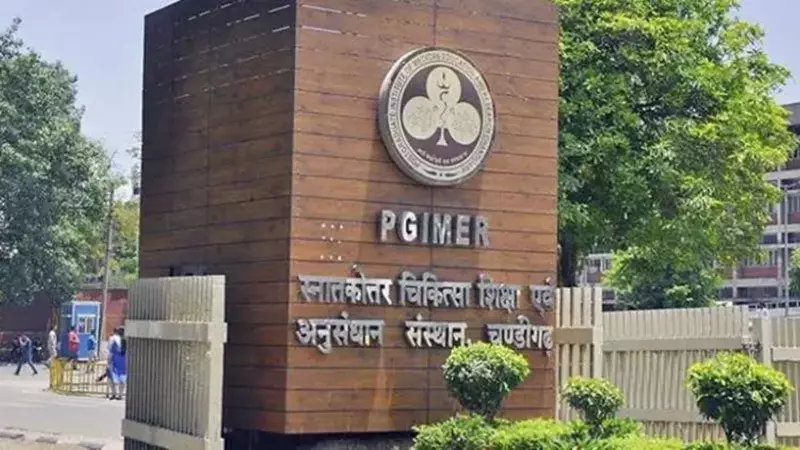
In a remarkable feat of medical efficiency, Chandigarh's Postgraduate Institute of Medical Education and Research (PGIMER) has crossed a monumental milestone of over 5,400 kidney transplants. This achievement is even more extraordinary considering the institute operates with a constrained infrastructure of just 50 dedicated beds for its transplant services.
A National Leader Against All Odds
This volume of procedures solidifies PGIMER's position as the second-highest performing renal transplant centre in India. It trails only the Ahmedabad-based Institute of Kidney Diseases and Research Centre (IKDRC), which boasts nearly 400 beds for transplantation. The Chandigarh institute's success story is built on optimized processes rather than expansive infrastructure.
The impact is clearly seen in the numbers for 2025 alone, where 248 kidney transplants were conducted. This high throughput has dramatically slashed the waiting period for patients with live donors. Previously, candidates waited nearly a year, but now the wait time has been reduced to approximately three months. Hospital authorities confirm this timely intervention significantly eases patient suffering and leads to better survival rates.

Excellence in Complex Procedures and Streamlined Care
Beyond standard renal transplants, PGIMER has carved a niche as a national pioneer in Simultaneous Pancreas-Kidney (SPK) transplantation. This intricate surgery is a lifeline for patients battling both Type 1 diabetes and end-stage renal disease. To date, the institute has successfully completed 67 SPK transplants.
Professor Vivek Lal, Director of PGIMER, credits the institute's evolution into a national model to superior coordination and team-based care. "Through better coordination, streamlined processes and team-based care, we have been able to optimise outcomes even with limited infrastructure," he stated.
The operational model involves two dedicated transplant units run by the Renal Transplant Surgery and Urology Departments. Separate, dedicated teams ensure swift pre-transplant investigations and minimize procedural delays. Furthermore, a specialized group meticulously monitors post-transplant patients to ensure seamless follow-up and testing.
Patient Demographics and Challenges
A significant portion of PGIMER's patient base comes from states like Bihar, Jharkhand, and Uttar Pradesh. More than half of the recipients benefit from various government-funded health schemes, making treatment accessible. The approximate cost of a kidney transplant here is Rs 2 lakh.
However, the system faces certain hurdles. Delays in the disbursement of government funds, which can take up to two months, sometimes affect treatment timelines. Medical complications or infections developed while on the waiting list can also postpone surgery, whereas medically fit patients often get their transplants sooner.
The institute's nephrology outpatient department (OPD) witnesses a heavy footfall, attending to around 400 patients daily, with nearly 30% being new registrations. PGIMER, which performed its first kidney transplant on June 21, 1973, now also serves as a Regional Organ and Tissue Transplant Organisation (ROTTO). In this role, it coordinates organ donation awareness campaigns across several neighbouring states under the national NOTTO framework.