

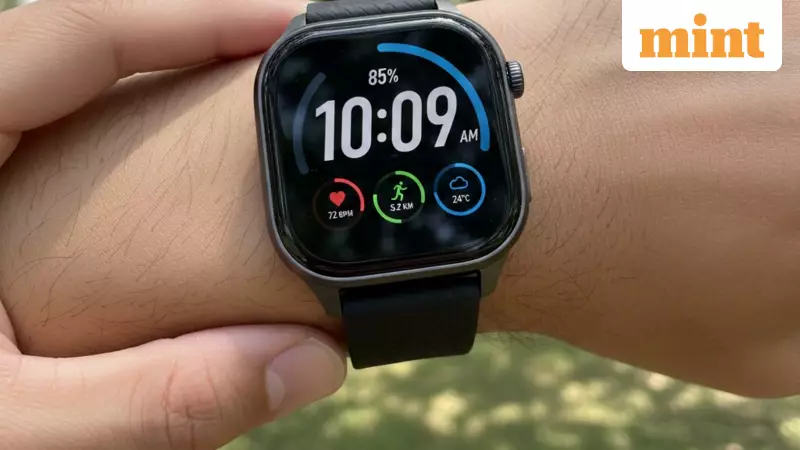
Smartwatches in India are undergoing a significant transformation, shifting from being mere lifestyle accessories to becoming government-certified health monitoring devices. This evolution is opening a major growth avenue in the country's wearable healthcare market, which is projected to expand to $4.2 billion by 2033.
From Fitness Trackers to Medical Devices
Traditionally viewed with skepticism by medical professionals, smartwatches are now receiving crucial certifications from Indian authorities like the Central Drugs Standard Control Organisation (CDSCO). These approvals allow them to monitor and alert users for serious health parameters such as irregular heart rhythms, sleep disorders, and blood pressure anomalies.
A landmark development occurred on 4 December 2025, when Apple launched hypertension tracking on its Apple Watch Series 11. While it doesn't provide a direct blood pressure reading, the feature analyzes blood oxygen, stress, and heart data to warn users of potential hypertension. Apple secured the necessary government approval in late November 2024, making it only the second consumer smartwatch brand to get such a nod from New Delhi.

This move is critical in a country where almost one-third of the population suffers from hypertension, a condition that can cause long-term heart damage.
A Premium Play in a Declining Market
The push for medical-grade features comes at a time when the general smartwatch market in India is facing a slowdown. Sales fell by 34% in 2024, and saw a 28% year-on-year decline in the first half of 2025. In contrast, the specialized wearable healthcare segment is on the rise.
Currently valued at $1.04 billion, India holds 2.5% of the global wearable healthcare market, indicating substantial room for expansion. However, the revenue from advanced smartwatches with clinical features remains a small slice of the pie. Data from IDC shows that in the first six months of 2025, India sold 13.5 million smartwatches, generating $292 million. Devices from Apple and Samsung accounted for just 2.1% of this revenue, or about $6 million.
"The only real avenue to differentiate smartwatches in the premium segment right now is to add value in terms of serious, medical-grade healthcare tracking features," said Tarun Pathak, Research Director at Counterpoint India. He added that for giants like Apple and Samsung, this is the primary strategy to boost appeal among high-value consumers.
The Certification Race and Startup Innovation
The journey for certified health wearables in India began in January 2024, when Samsung became the first company to introduce CDSCO-cleared blood pressure and ECG monitoring in its Galaxy Watch 6 series. Following Apple's December announcement, other players like Garmin and Huawei have also launched devices with similar health features, though their certification status in India is not publicly confirmed.
This trend is also fostering innovation among Indian startups. Bengaluru-based Ultrahuman raised $12 million in November 2025 for its M1 continuous glucose monitor, bringing its total funding to $54 million. Similarly, Gurugram's Gabit introduced a smart ring that tracks heart rate variability and skin temperature to detect early signs of illness.
Doctors are optimistic about this shift. Dr. Amitabha Bhattacharya, a practicing physician in Kolkata, stated that while earlier tracking was informal and often inaccurate, new-generation wearables offer clinical-grade data. This can lead to faster diagnosis, especially for individuals at risk of chronic, long-term ailments.
Despite the buzz, widespread adoption of these advanced devices is still in early stages. Currently, a large portion of India's wearable healthcare industry is driven by clinical monitors used in hospitals, supplied by companies like Philips and Abbott. Nevertheless, the integration of medical certification into consumer smartwatches marks a pivotal step towards proactive and personalized healthcare for millions of Indians.






