Routine Meal Turns into Medical Emergency as Denture Gets Lodged in Food Pipe
A seemingly ordinary meal escalated into a critical medical situation when a man accidentally swallowed his denture, which became firmly lodged deep within his food pipe, causing severe distress and immediate health concerns. The incident highlights the dangers of foreign body ingestion and the advanced medical techniques now available to address such emergencies.
Complex Procedure Saves Patient from Major Surgery
In a high-risk, minimally invasive operation, medical specialists at a private hospital in New Delhi employed a sophisticated laser-assisted endoscopic method to successfully extract the dental appliance. This innovative approach eliminated the necessity for traditional open surgery, which typically involves greater risks and a prolonged recovery period. The patient, identified as a 45-year-old vegetable vendor from Rampur near Moradabad, arrived at the facility experiencing intense throat pain, difficulty swallowing, and gasping for breath.
Medical scans revealed the dental plate was impacted at the cricopharynx, a highly sensitive anatomical junction connecting the food pipe and windpipe. This narrow, rigid area is notoriously problematic for foreign objects due to its constricted passage. The denture's sharp metallic clasps posed a significant threat of tearing or perforating the esophageal lining, which could lead to severe infections or life-threatening complications.

Conventional Methods Deemed Too Risky
"This represented one of the most challenging foreign body cases we have encountered," stated Dr. Anil Arora, Chairman of the Institute of Liver, Gastroenterology and Pancreaticobiliary Sciences at Sir Ganga Ram Hospital. "Standard extraction tools like forceps or snares were considered too hazardous, as they could have caused substantial injury to the delicate tissues."
Foreign objects such as coins, dentures, button batteries, pins, or fish bones are not digestible and often fail to pass through the gastrointestinal tract naturally. Sharp items particularly endanger internal organs by potentially injuring or perforating the tract, while some may migrate into the airway, triggering breathing difficulties or serious pulmonary infections.
Endoscopic examination confirmed the denture was tightly wedged, and initial removal attempts proved unsuccessful. The medical team then pivoted to an alternative strategy utilizing precision laser technology under endoscopic visualization.
Laser Fragmentation and Protective Measures
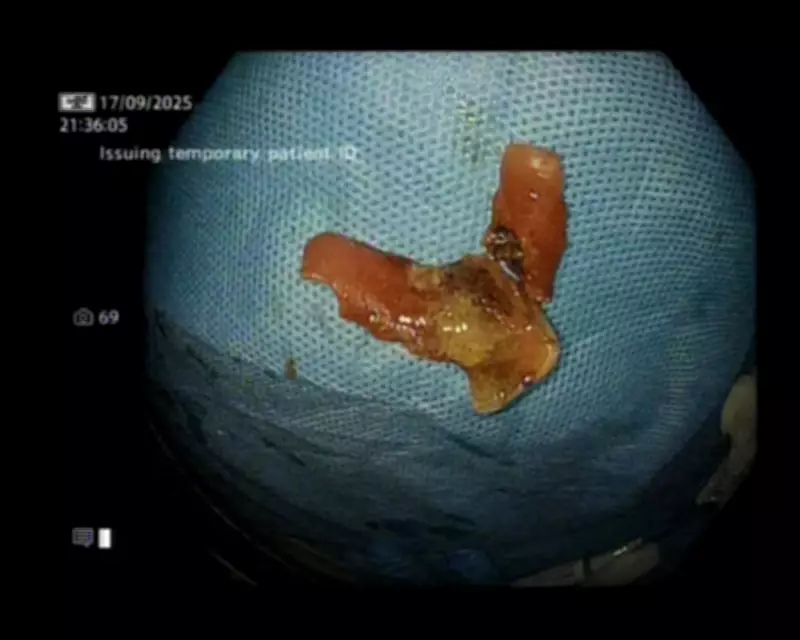
Using a focused, high-energy laser beam—typically from a holmium source—doctors meticulously fragmented the denture into smaller pieces directly within the esophagus. A protective overtube was strategically deployed to shield the inner mucosal lining from the sharp edges during extraction.
"The laser enabled controlled fragmentation, while the overtube prevented damage from the sharp fragments," explained Shrihari Anikhindi, a consultant gastroenterologist involved in the procedure. "This coordinated technique allowed us to circumvent open surgery, which carries considerable risks and requires extended recuperation time."
This method effectively avoided potential complications like airway obstruction or perforation, which can result in deep neck infections or other serious conditions. The patient subsequently recovered without any adverse effects, transforming a potentially fatal scenario into a demonstration of cutting-edge, minimally invasive medical innovation.
Importance of Early Medical Intervention
Medical professionals emphasize that commonly encountered foreign bodies include fish or chicken bones, dentures, and even broken toothbrush components. They stress the critical importance of seeking prompt medical attention when ingestion occurs, as delayed treatment can exacerbate risks and complicate removal procedures.
The successful outcome underscores the advancements in gastroenterological interventions, where laser technology and endoscopic precision can resolve complex cases without resorting to invasive surgical measures, thereby improving patient safety and recovery outcomes.