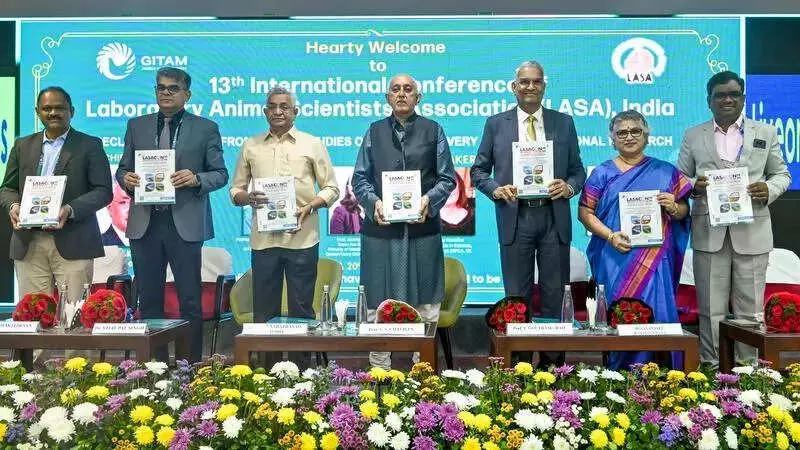
The two-day 13th International Conference of the Laboratory Animal Scientists' Association (LASA) concluded at GITAM Deemed to be University in Visakhapatnam on Saturday. The event brought together leading scientists and regulators who underscored the indispensable role of meticulously planned and ethically executed preclinical animal research in biomedical progress.
Pitfalls of Poor Design and the Ethical Imperative
Dr. Rajender K. Motiani, a UNESCO–RCB intermediate fellow, issued a strong caution against poorly designed animal studies. He warned that such studies can yield misleading results, which in turn lead to wasted scientific effort, failed clinical trials, and a significant loss of valuable resources. Dr. Motiani emphasized that preclinical studies are fundamental for advancing our understanding of human diseases and urged the research community to adopt robust experimental designs and unwavering ethical practices.
Echoing the regulatory perspective, CCSEA expert consultants Dr. Vivek Tyagi and Dr. Kripali Pande detailed the provisions of the Prevention of Cruelty to Animals Act, 1960, and the regulatory framework that governs laboratory animal research in India. The conference also saw addresses from LASA president Dr. Vijay Pal Singh, Prof. L Srinivas, principal of GITAM School of Pharmacy, and LASA secretary Dr. R. K. Shakthi Devan, all focusing on the pillars of ethical, innovative, and impactful biomedical research.

Technological Advancements and Alternative Models
A significant portion of the discussions was dedicated to technological innovations reducing reliance on traditional testing. Dr. Ajay Godwin Potnuri from AIIMS highlighted how non-animal new approach methodologies are transforming cardiac safety pharmacology, offering improved predictability while cutting down on animal use.
Dr. Mohd Idris of CCMB provided insights into alternative animal models that are accelerating progress in regenerative medicine and translational research. Adding an international viewpoint, Prof. Prasadi Nayanashani De Silva from the University of Colombo spoke on the growing popularity of zebrafish as a vertebrate model. She cited their genetic similarity to humans as a key advantage and stressed that maintaining healthy zebrafish colonies is critical for both reliable science and animal welfare.
AI, Biosecurity, and the Future of Discovery
The role of cutting-edge technology in streamlining research was a key theme. Dr. Suresh Poosala, founder of Oncoseek Bio, elaborated on the powerful role of artificial intelligence and machine learning in drug discovery. He explained how these tools enhance data analysis and improve forecasting for the success of new drug candidates.
On the front of national safety, Dr. Sonia Sharma, deputy commissioner of Animal Quarantine and Certification Services, raised a red flag on biosecurity. She warned that heightened global trade and travel escalate the risk of exotic diseases entering the country. Dr. Sharma affirmed that quarantine stations established in major Indian cities are a crucial line of defense in safeguarding the nation's health and agriculture.
The conference served as a comprehensive platform, balancing the critical need for animal studies with the ethical mandate for their welfare, while championing technological solutions that promise a more efficient and humane future for biomedical research.