

Medical Breakthrough at KGMU: Vision Restored to Child with Rare Genetic Disorder
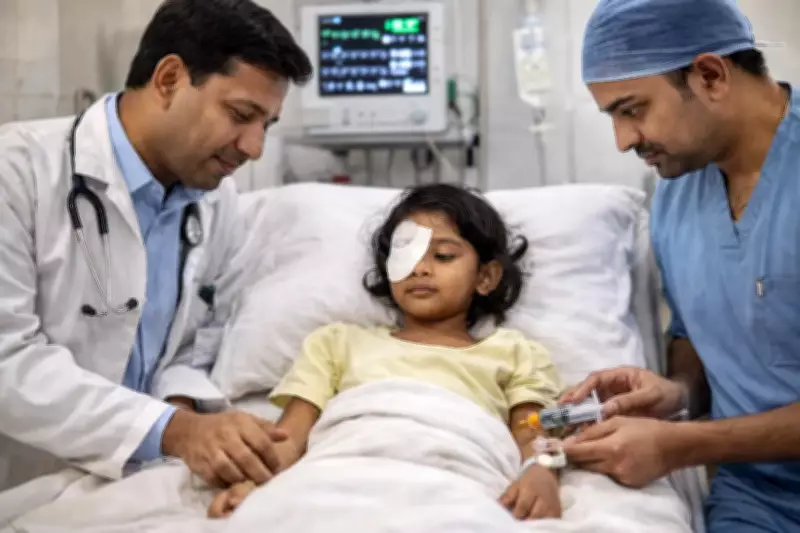
In a remarkable medical achievement, doctors at King George's Medical University (KGMU) in Lucknow have successfully restored vision to a six-year-old girl suffering from an extremely rare bleeding disorder. The young patient, a resident of Chinhat, had developed cataracts in both eyes due to her underlying medical condition known as factor VII deficiency.
The Challenge of Factor VII Deficiency
Factor VII deficiency is a genetic disorder affecting approximately one in every 500,000 to 800,000 individuals worldwide. This condition severely impairs the body's ability to form blood clots, making even minor surgical procedures potentially life-threatening due to uncontrolled bleeding risks. The girl's impaired vision significantly affected her daily activities and quality of life.
"Several hospitals refused to treat the girl because her medical condition prevents normal blood clotting, meaning even minor surgical procedures can result in bleeding with serious consequences," explained Dr. Siddharth Agarwal, the ophthalmologist at KGMU who led the surgical team.

Multidisciplinary Medical Approach
The KGMU medical team devised a comprehensive treatment plan involving specialists from multiple departments:
- Ophthalmology for the cataract surgery
- Haematology for blood disorder management
- Paediatrics for child-specific care
- Anaesthesiology for safe sedation during the procedure
Before the surgery, the medical team conducted extensive pre-operative assessments including:
- Complete blood profiling
- Comprehensive clotting function tests
- Detailed pediatric evaluations
Precision Timing of Critical Treatment
The surgical team administered clotting factor injections at precisely timed intervals before, during, and after the cataract procedure. "These injections were timed precisely, as the clotting factor remains active in the body for a short duration," emphasized Dr. SP Verma, head of clinical haematology at KGMU.
Dr. Kritika Yadav, the anaesthesiologist involved in the case, noted: "The case required constant monitoring to detect and manage any sign of bleeding throughout the procedure."
Ongoing Care and Future Procedures
The young patient, named Anaya, will require regular follow-up appointments and may need a second surgery for her other eye in the future. The successful procedure has already dramatically improved her vision and quality of life.
Financial Accessibility Through Government Program
The entire treatment was provided free of cost under the Rashtriya Bal Swasthya Karyakram, a national child health program. Professor Apjit Kaur, head of ophthalmology at KGMU, highlighted that such specialized treatment could otherwise cost over ₹10 lakh in private healthcare settings.
This medical success story demonstrates how coordinated efforts across medical specialties can overcome even the most challenging health conditions, providing hope for patients with rare disorders across India.






