

In a significant breakthrough for targeted cancer therapy, a collaborative team from the Indian Institute of Technology Madras (IIT Madras) and two Australian universities has developed a novel nanotechnology-based system. This innovation uses microscopic needle-like structures to deliver anticancer drugs directly into breast cancer cells, thereby shielding healthy cells from damage.
How the Nano-Needle Delivery System Works
The core of this technology is a chip embedded with minuscule, needle-shaped silicon tubes. The researchers ingeniously packaged the common chemotherapy drug, doxorubicin, into protective lipid bubbles or vesicles. These drug-loaded bubbles are then precisely pushed into the cancer cells using the silicon nano-needles.
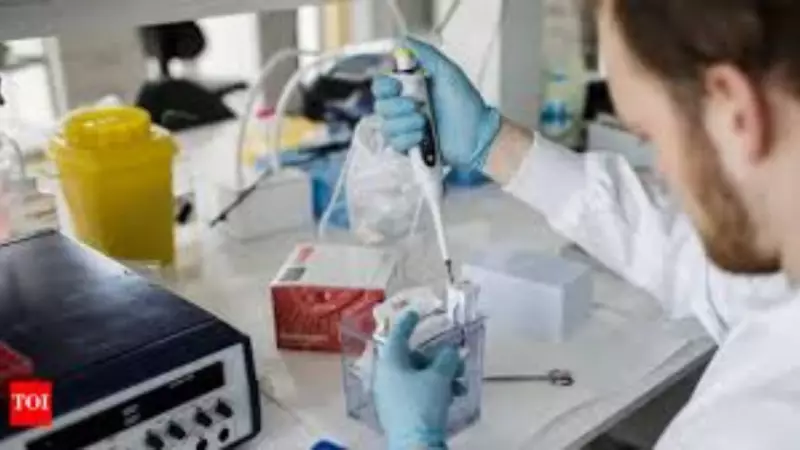
Dr. Swathi Sudhakar, an assistant professor in IIT-M's Department of Applied Mechanics and Biomedical Engineering, explained the process. The study was conducted on petri dishes in a lab setting. "We could release the drug directly, but that would be faster delivery. So, for sustained release, it was wrapped in a bubble and pushed into it," she said. This method allows for a controlled, long-term release of the medication directly at the tumour site.

Superior Efficacy and Addressing a Major Healthcare Challenge
Laboratory tests on breast cancer cells yielded highly promising results. The targeted delivery not only halted cancer cell growth but also successfully killed the malignant cells and blocked the formation of new blood vessels that tumours need to grow—a process known as angiogenesis.
The findings, published in the respected journal Advanced Materials Interfaces, reveal the system's remarkable efficiency. The nano-needle delivery method worked 23 times more effectively than administering the drug doxorubicin alone. Dr. Sudhakar highlighted its advantages, noting it has higher potential even at smaller doses. The system offers thermal stability and can release the drug steadily for up to an impressive 700 hours. It also overcomes common flaws in existing nanocarrier systems, such as sudden, uncontrolled "burst release" of drugs and poor biocompatibility.
The Critical Need for Targeted Breast Cancer Treatment
This research addresses a pressing need in oncology. Breast cancer remains one of the most prevalent cancers among women across both urban and rural India. In cities like Chennai, it accounts for a substantial 28% of all cancers in women, followed by cervix (14%), ovary (6%), and corpus uteri (4%).
Conventional treatments like chemotherapy and radiation therapy are often non-specific. They expose the entire body to powerful drugs, harming healthy tissues and leading to severe side effects. The new system developed by IIT Madras, Monash University, and Deakin University aims to minimize this collateral damage by ensuring the drug acts primarily on cancer cells.
The research team is optimistic about the future applications of this technology. They describe it as a reliable and scalable candidate ready for the next stages of trials, potentially paving the way for more precise and less toxic cancer treatments.






