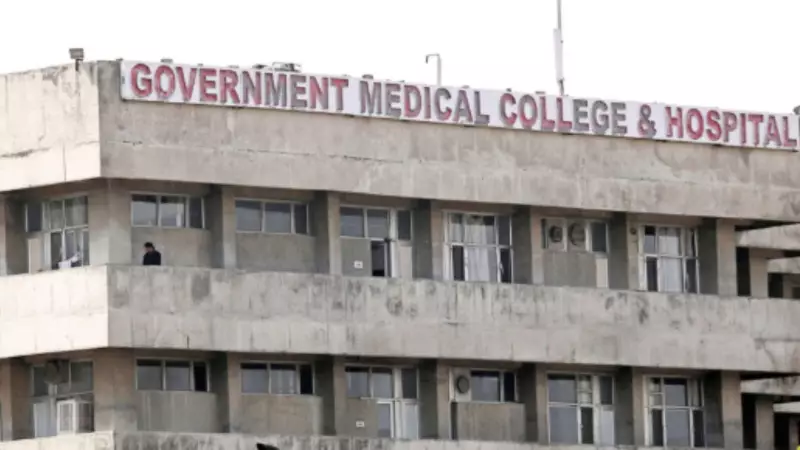
In a significant leap towards modernising public healthcare, Chandigarh's Government Medical College and Hospital in Sector 32 (GMCH-32) is preparing to launch a comprehensive e-hospital system. This initiative aims to transform patient services by making them largely paperless and significantly faster, reducing queues and administrative burdens.
Pilot Phase and Gradual Rollout
The new digital system will be introduced on a pilot basis within the next week, initially installed on doctors' laptops. According to the hospital's Director-Principal, Dr G P Thami, the rollout will be gradual. Following the pilot, computers will be deployed across all Outpatient Departments (OPDs) and, eventually, Inpatient Departments (IPDs). This step builds on the success of the e-office system already operational at GMCH-32, which has streamlined administrative work.
Dr Thami highlighted the transformative potential of the e-hospital services. "Once e-hospital is fully functional, a patient's journey, from registration to consultation and prescription, will be largely digital," he stated. This shift is expected to not only speed up hospital processes but also save invaluable time for patients visiting the facility.
ABHA ID: The Heart of the Digital Shift
A cornerstone of the new system is the integration of the Ayushman Bharat Health Account (ABHA) ID. This unique digital identifier will act as a single repository for a patient's complete medical history. Patients with an ABHA ID will no longer need to carry physical OPD cards, paper files, or old prescriptions.
"If a patient's ABHA ID is in place, menu-based registration will work. The patient's entire details, including health records, will already be uploaded on the system," Dr Thami explained. "Doctors will be able to access the patient's medical history on the computer in both OPD and IPD with just one click."
Under the new framework, once a token number is generated, all relevant patient information will be available on the doctor's screen before the consultation even begins. Prescriptions, diagnoses, and treatment plans will be digitally recorded and linked to the ABHA ID, allowing patients to access them anytime, anywhere.
Ensuring No Patient is Left Behind
While championing digitisation, hospital authorities have assured that patients who are not digitally literate or comfortable with the new system will not be excluded. The traditional methods of registration and consultation will continue to be available for those without an ABHA ID or who prefer the old system. Dr Thami emphasised that the transition would be patient-friendly and gradual.
The e-hospital project is the latest in a series of digital upgrades at GMCH-32. Most OPDs already offer online registration, and a majority of laboratory reports are available digitally. The hospital is also working to make radiology services like X-rays accessible online and expand digital payment options via UPI at cash counters.
Officials believe this cloud-based, next-generation system will help reduce overcrowding at counters, improve inter-departmental coordination, and enhance the continuity of care for patients. For high-footfall public hospitals like GMCH-32, such digital systems are crucial for managing patient load efficiently without compromising access.
With this rollout, GMCH-32 joins a growing cohort of public healthcare institutions leveraging technology to modernise service delivery, potentially reshaping the functioning of government hospitals across India in the years to come.