

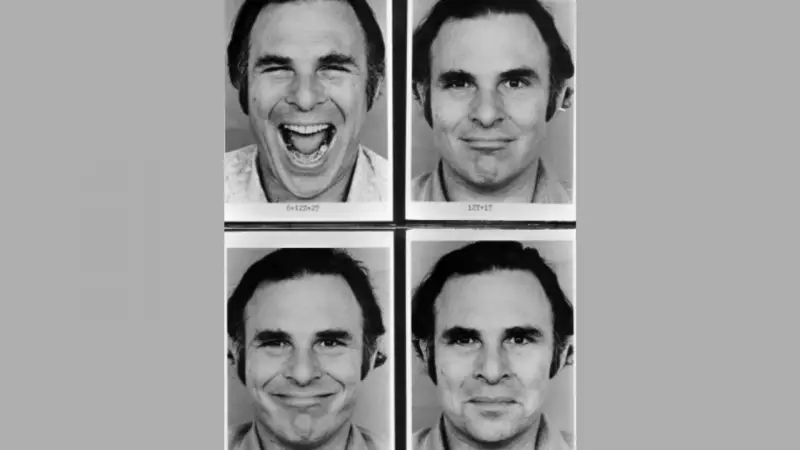
The world of psychology has lost one of its most influential figures. Paul Ekman, the pioneering psychologist who scientifically catalogued how our faces reveal our innermost feelings, passed away on November 17 at his home in San Francisco. He was 91 years old.
The Man Who Gave Science to the Smile
Dr. Ekman dedicated his career to bringing scientific precision to the ancient human instinct of reading faces. He wasn't just interested in what emotions looked like; he wanted to understand the precise muscles that created them. His work was so detailed that he documented 18 distinct types of smiles. He famously differentiated between a polite, forced smile and a genuine, spontaneous one, which he identified by the crinkling of the orbicularis oculi muscle, creating the familiar 'crow's feet' around the eyes.
His expertise made him a sought-after advisor for diverse fields. He worked with FBI interrogators and the Transportation Security Administration (TSA) to improve deception detection. At the same time, his knowledge was invaluable to Hollywood animators seeking to create more believable and emotionally resonant characters.

Overturning Scientific Consensus
In the late 1960s, Ekman challenged the established scientific belief, championed by anthropologists like Margaret Mead, that facial expressions were learned behaviours that varied from culture to culture. Ekman believed they were universal, hardwired by evolution.
To prove his theory, he showed photographs of people displaying 30 different emotions—such as anger, joy, and fear—to subjects in the United States, Japan, and South America. Consistently, people from these different cultures linked the same expressions to the same emotions.
Not satisfied, he and his colleague Wallace V. Friesen travelled to Papua New Guinea to study a remote community of about 300 Indigenous people who had no exposure to Western media or culture. The results were definitive. These individuals, who could not have learned the meanings from outsiders, also connected the facial expressions to the identical emotions. This groundbreaking research led Ekman to conclude in a 1970 paper that there is indeed a 'pan-cultural element in facial expressions of emotion.'
A Lasting Legacy in Science and Culture
Paul Ekman's work fundamentally reshaped our understanding of human emotion. He moved the conversation from environment to evolution, proving that our most basic emotional expressions are a universal human language. His findings transcended academic journals, deeply influencing popular culture and cementing his reputation as the world's most famous face reader. His legacy continues to inform fields ranging from psychology and security to animation and artificial intelligence.






