

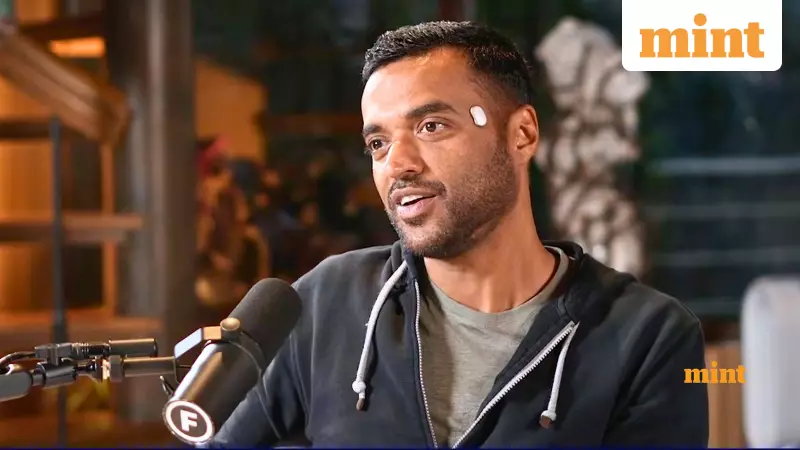
The founder of Zomato, Deepinder Goyal, has found himself at the centre of a scientific controversy after a former doctor from the All India Institute of Medical Sciences (AIIMS) strongly criticised an experimental device he was seen wearing.
Public Criticism from a Medical Expert
The incident unfolded after Goyal appeared on a popular YouTube podcast hosted by entrepreneur Raj Shamani. Viewers quickly noticed a small, metallic sensor attached to Goyal's temple, sparking widespread curiosity online.
Responding to the buzz, Dr. Suvrankar Datta, a physician-scientist and former AIIMS doctor, issued a sharp critique. He questioned the scientific foundation of the wearable, which Goyal refers to as 'Temple'.

"As a physician-scientist and one of the earliest researchers in India in arterial stiffness and pulse wave velocity (2017), which predicts cardiovascular mortality, I can assure you that this device currently has zero scientific standing as a useful device," Dr. Datta stated unequivocally.
His warning to the public was blunt and direct. He advised people not to spend their hard-earned money on such "fancy toys" that billionaires can afford to experiment with, adding a clear caution against speculative health tech.
What is the 'Temple' Device and Goyal's Hypothesis?
The device in question is described as an experimental sensor designed to measure blood flow to the brain in real time. Goyal clarified that it is not a Zomato product and is not available for commercial sale. It is part of his privately funded, $25 million (approximately ₹225 crore) research initiative.
This research is based on what Goyal terms the 'Gravity Ageing Hypothesis'. The theory proposes that gravity, over a lifetime, reduces cerebral blood flow because humans spend most of their time upright, with the brain above the heart. This reduced circulation is hypothesised to accelerate brain ageing, subsequently affecting overall bodily health.
Goyal has cited various examples to support his idea, including:
- The longevity of bats, which spend long periods inverted.
- Yoga poses that position the head below the heart.
- Observations linking shorter height to longer lifespan due to a shorter distance for blood to travel against gravity to the brain.
Goyal claims the hypothesis has been discussed with doctors and scientists globally for over two years without encountering major scientific contradictions.
A Clash of Perspectives on Innovation
The debate intensified when a social media user suggested that innovation often comes from "unreasonable people." Dr. Datta countered this argument, emphasising the established nature of biological science.
"Unfortunately cannot. Unreasonable people often innovate. But we are talking biology here, and it has been studied a lot. Why reinvent the wheel?" he responded, stressing that biology does not allow for speculative reinvention in the way other fields might.
While Goyal frames his project as an open-source quest for scientific progress on human longevity, medical experts like Dr. Datta remain deeply sceptical. They stress that current established biological research does not support such claims and urge the public to exercise caution when experimental ideas are showcased in influential public forums.
The episode highlights the tension between bold, personal experimentation in health technology and the rigorous, evidence-based scrutiny demanded by the medical community.






