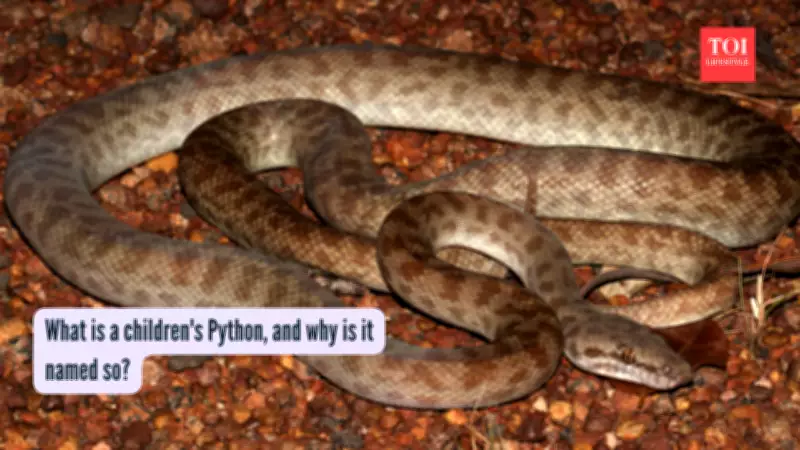
Snakes are fascinating slithering creatures that can be intimidating, but you might be surprised to learn that some are ideal for beginner pet owners. Quite small, nonvenomous, and interesting, this non-venomous creature is an adorable cutie from Australia, without any fangs, that loves hiding and hunting at night.
Meet the Children's Python
The Children's python (Antaresia childreni) is a non-venomous, nocturnal snake native to the arid zones of northern Australia. Slim and reddish-brown with darker smears, it grows to a maximum size of 3-4 feet, making it one of the smallest pythons. Hatchlings are born with brighter colors but begin to fade as they mature. They hunt small mammals, birds, and lizards by constriction, often climbing trees or rocks. While mainly ground dwellers, they adapt well to enclosed spaces when kept in captivity.
Why is it Called the 'Children's' Python?
There is a fun backstory behind its name. In 1842, British zoologist John Edward Gray discovered this little Australian snake and named it Liasis childreni to honor his mentor and boss, John George Children. John worked as the curator of the British Museum's zoology section in the 1840s, helping classify specimens like this one. The name stuck over time, even though it has nothing to do with children! Later, scientists renamed the genus Antaresia after the bright star Antares, but "Children's" remained as the common nickname.

How Long Does it Live?
In captivity, Children's pythons can live 15-30 years with proper care, with a maximum recorded lifespan of 25.7 years. They have a shorter lifespan in the wild due to predators and inconsistent food availability.
Where is it Found?
According to the IUCN Red List, Children's pythons inhabit northern Australia, from far northwest Western Australia, through the top third of the Northern Territory, to northern Queensland, including Torres Strait islands. The Stimson's type, a subspecies, spreads even wider inland, from Queensland to Perth. They are found in forests, open grasslands, deserts, shrubby areas, and wetlands.