

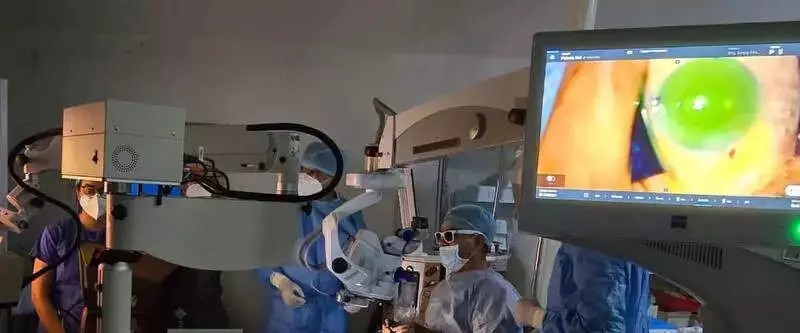
In a landmark achievement for India's medical sector, a state-of-the-art surgical procedure has been successfully performed for the first time in the country, offering new hope to millions battling glaucoma. The historic surgery took place at the Army Hospital (Research & Referral) in Delhi Cantt.
A Pioneering Surgical Procedure
The groundbreaking operation is known as 3D Flex Aqueous Angiography combined with an iStent implant. This sophisticated technique represents a major leap forward in the management of glaucoma, a leading cause of irreversible blindness in India. The surgery was led by Brigadier Dr Sanjay Mishra, a renowned eye surgeon originally from Mau in Uttar Pradesh, who heads the ophthalmology department at the hospital.
The core of this advancement lies in its use of high-definition, three-dimensional imaging to create a detailed, real-time map of the fluid drainage pathways inside the eye. This allows surgeons to pinpoint exactly where blockages are occurring. Following this precise mapping, a miniature device called an iStent is implanted. This tiny stent works to improve the eye's natural fluid outflow, effectively reducing internal pressure, which is the primary culprit behind optic nerve damage in glaucoma.

Advanced Technology Enabling Precision
This surgical feat was made possible by the integration of cutting-edge equipment at the hospital. Surgeons utilized a newly installed, movable Spectralis system mounted on a stand, coupled with a high-powered 3D operating microscope. This combination provides an unprecedented, magnified, and three-dimensional live view of the eye's delicate drainage channels.
This real-time, zoomed-in visualization is critical, as it enables surgeons to perform the procedure with extreme accuracy, ensuring the iStent is placed in the optimal location for maximum therapeutic effect. The technology moves beyond traditional methods, allowing for targeted intervention early in the disease process.
Transforming Glaucoma Care in India
The success of this first surgery has significant implications for public health. Glaucoma is often called the "silent thief of sight" because it typically progresses without noticeable symptoms until substantial, irreversible vision loss has occurred. Late detection remains a major challenge across the country.
This new 3D angiography and iStent technology empowers doctors to identify and treat blocked drainage channels much earlier and with far greater accuracy. By facilitating timely and precise intervention, the procedure dramatically improves the long-term prognosis for patients, helping to preserve their vision and prevent blindness.
Building on this success, the Armed Forces Medical Services has announced plans to expand access to this technology. The same advanced system will be introduced at the Command Hospital in Lucknow. This facility serves a vast population, providing care to nearly 3.5 lakh (350,000) patients across six Indian states and even from Nepal, including thousands with ophthalmic issues.
The upcoming procurement and installation at the Lucknow hospital are expected to significantly enhance its capability to deliver world-class, advanced glaucoma care to a large segment of North India, marking a vital step in democratizing access to this breakthrough treatment.






