

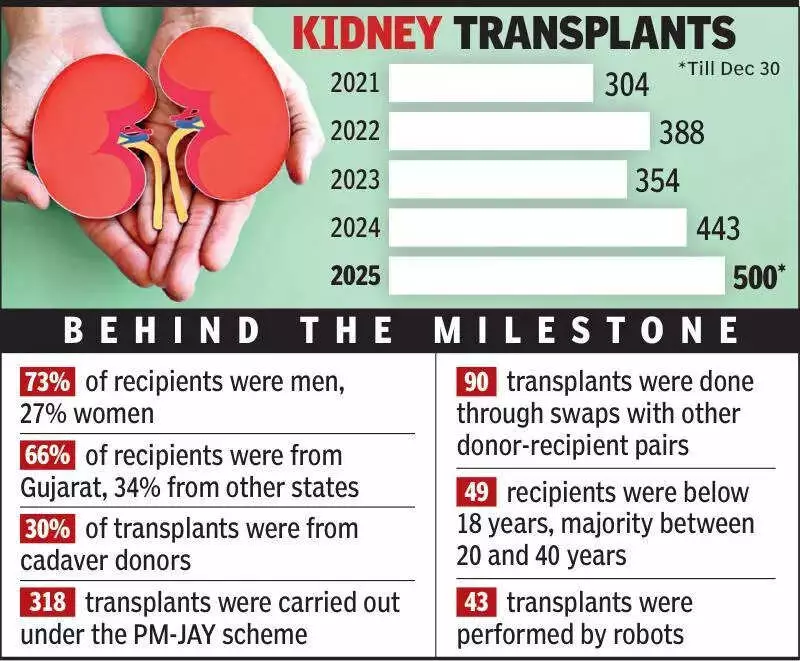
In a landmark achievement for public healthcare in India, the Institute of Kidney Diseases and Research Centre (IKDRC) in Ahmedabad has set a new national record. On Tuesday, the institute completed its 500th kidney transplant procedure for the year 2024, surpassing its previous annual high of 443 transplants.
A National Milestone in Government Healthcare
Dr. Pranjal Modi, director of IKDRC and vice chancellor of the Gujarat University of Transplantation Sciences (GUTS), confirmed that this is the highest number of transplants performed in a single year within any government hospital setup in the country. The institute is poised to add two more procedures before December 31, potentially closing the year with a total of 502 transplants.
This staggering figure underscores a critical and growing need for renal replacement therapy across the nation. Dr. Modi emphasized that the record is a dual indicator of both the institute's surgical prowess and the escalating burden of kidney disease. An analysis of approximately 3,000 transplant patients at IKDRC revealed a concerning trend: 73% of the recipients were aged 40 or younger.

The Alarming Rise of Kidney Failure in the Young
Medical experts at the centre point to a confluence of factors driving this increase in end-stage renal disease among younger populations. Lifestyle diseases like diabetes and hypertension are primary culprits, often acting as silent precursors to kidney failure. In other cases, genetic predispositions and autoimmune disorders play a significant role.
A city-based nephrologist explained the physiological chain reaction: "A sedentary lifestyle, poor dietary choices, and lack of physical activity lead to fat accumulation. This reduces blood flow, impairs the body's ability to manage glucose, and causes a build-up of toxins. All of this puts immense stress on the kidneys, gradually degrading their filtering capacity."
Positive Trends in Awareness and Access
Amidst the concerning data, there are signs of progress. Officials noted that rising public awareness about organ donation has led to a positive shift. This year, about 30% of the transplants were made possible through kidneys donated by cadaver donors.
Furthermore, the central government's health insurance scheme has been instrumental in improving access. Approximately 60% of the total transplants at IKDRC were conducted under the Pradhan Mantri Jan Arogya Yojana (PM-JAY) initiative, making life-saving procedures affordable for many. The institute's reputation also draws patients from across India, with one-third of the recipients hailing from states outside Gujarat.
The record-breaking year at IKDRC serves as both a commendation for the medical team and a stark warning for public health. Experts urge that these numbers be seen as a powerful call for early detection and proactive intervention to manage conditions like diabetes and hypertension before they irrevocably damage the kidneys.






