

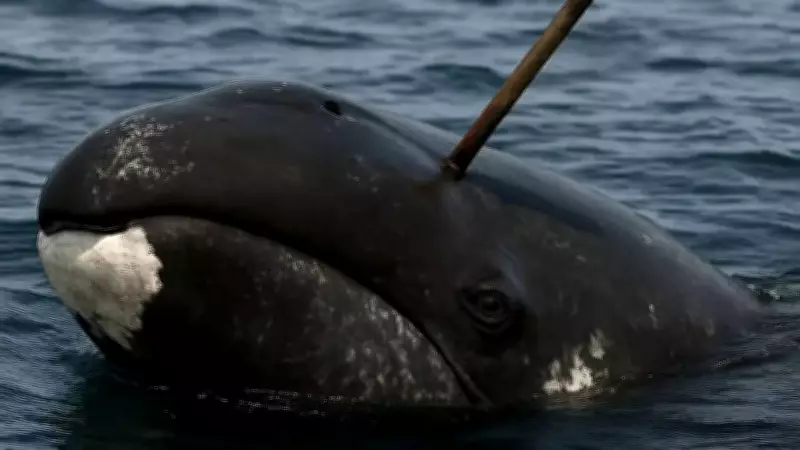
In 2007, during a subsistence hunt in Alaska, a bowhead whale yielded a remarkable secret: a fragment of an exploding harpoon embedded deep within its blubber. The weapon, identified as a patented lance type used by commercial whalers between 1880 and 1895, suggests the whale survived an attack over a century ago. This discovery stunned researchers and provided compelling evidence of the bowhead's extraordinary lifespan, estimated at around 115 years at the time of harvest.
A Century-Old Clue to Whale Longevity
The harpoon fragment was found while processing the whale, legally harvested by Indigenous communities. Experts identified it as a late 19th-century design, likely from fleets operating out of New Bedford, Massachusetts. The find implies the whale was alive when struck, swimming Arctic waters for over 100 years. This makes it one of the oldest mammals ever recorded, though the true age may be higher if the whale was several years old when hit.
Bowhead Whales: Masters of Slow Aging
Bowhead whales have long been known for exceptional longevity, but confirming ages is challenging. Unlike trees, whales lack growth rings. Scientists use eye lens aspartate racemization, measuring amino acid ratios to estimate age. Some bowheads may live over 200 years, surpassing all other mammals. Their slow cell division and efficient DNA repair mechanisms reduce aging-related damage.

Conservation Success and Cultural Significance
Commercial whaling decimated bowhead populations by the early 20th century, but protective measures have allowed recovery. Today, regulated subsistence hunting by Indigenous communities continues, reflecting millennia-old traditions. The 2007 discovery underscores both the species' resilience and the value of integrating Indigenous knowledge with modern science.
The Biology Behind Extreme Longevity
Bowhead whales possess unique biological traits that combat aging. Their cells repair mistakes more slowly, reducing damage accumulation. This genetic stability enables them to survive for centuries, carrying evidence of historical encounters—like the rusted harpoon—as living archives of the past.






