

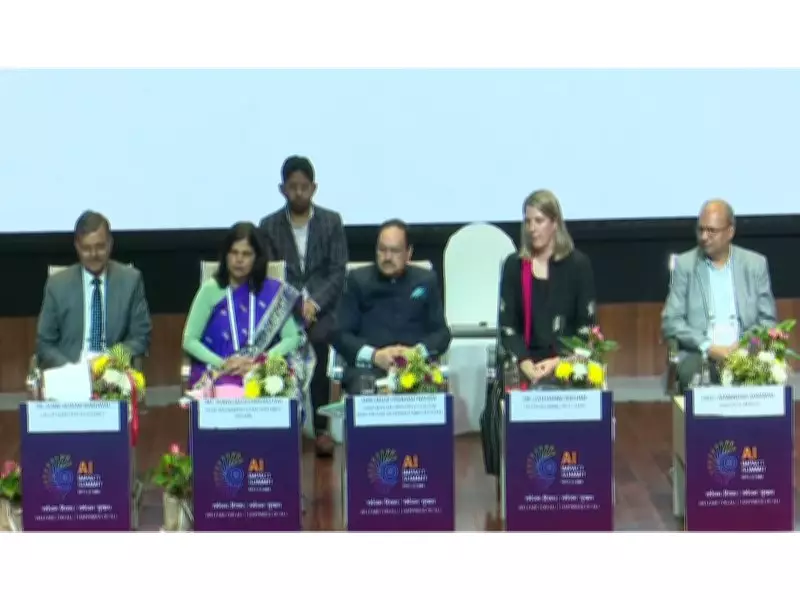
WHO Official Lauds India's Pioneering National Health AI Strategy
In a significant development for global digital health, Dr. Catharina Boehme, Chief of Staff at the World Health Organization (WHO), has publicly hailed India as the first country in its region to formally adopt a comprehensive national strategy for artificial intelligence (AI) in healthcare. This recognition positions India as a regional leader in leveraging advanced technology to transform public health systems and outcomes.
A Landmark Achievement in Digital Health Governance
The endorsement from a top WHO official underscores the strategic importance of India's move. Dr. Boehme emphasized that this initiative establishes a crucial benchmark for other nations in the region and beyond, demonstrating how structured policy frameworks can accelerate the ethical and effective integration of AI into national health agendas. The strategy is expected to guide the development, deployment, and regulation of AI tools across various healthcare domains.
Key Components and Expected Impact
While specific details of the strategy were not fully elaborated in the announcement, it is understood to encompass several critical areas designed to harness AI's potential responsibly.

- Enhanced Diagnostics and Treatment: AI applications are poised to improve the accuracy and speed of disease detection, personalized treatment plans, and predictive analytics for public health threats.
- Strengthened Healthcare Infrastructure: The strategy likely includes provisions for integrating AI into existing health systems to optimize resource allocation, manage patient data securely, and support remote healthcare delivery.
- Ethical and Regulatory Frameworks: A core focus is on establishing guidelines for data privacy, algorithmic bias mitigation, and ensuring equitable access to AI-driven health solutions across diverse populations.
- Capacity Building and Innovation: The plan probably encourages research, development, and skill-building in health AI, fostering a ecosystem of innovation while aligning with global health standards.
Setting a Regional Precedent
Dr. Boehme's commendation highlights that India's proactive approach serves as a model for neighboring countries grappling with similar health challenges. By being the first in the region to formalize such a strategy, India not only advances its own public health capabilities but also contributes to setting international norms for the responsible use of AI in medicine. This move is seen as a step towards achieving universal health coverage and strengthening pandemic preparedness through technological empowerment.
The announcement has generated positive attention within global health circles, with experts noting that India's strategy could inspire similar policy actions worldwide. As AI continues to reshape healthcare, India's early and structured adoption marks a pivotal moment in the convergence of technology and public health governance.






