

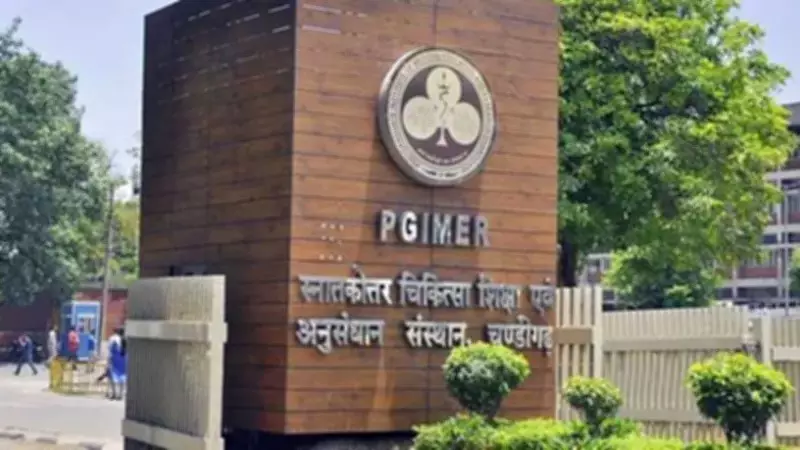
PGI's SARATHI Initiative Sets National Benchmark in Youth-Led Healthcare Volunteering
In an era where voluntary service is often sporadic and unstructured, SARATHI, the organized volunteer program at PGI Chandigarh, has established a new national standard by achieving over 100,000 hours of dedicated service within a premier public healthcare institution. This remarkable milestone underscores the transformative power of sustained, disciplined, and empathetic engagement in the healthcare sector.
A Paradigm Shift in Voluntary Service
Reflecting on this significant accomplishment, Vivek Lal, Director of PGI Chandigarh, emphasized that SARATHI represents a fundamental shift in how voluntary service is perceived and practiced across India. He stated, "Voluntary service holds true meaning only when it is consistent, accountable, and deeply rooted in empathy. SARATHI has demonstrated that service, when guided by core values and strict discipline, can evolve into a cornerstone of institutional strength." Lal further highlighted that each hour contributed by volunteers represents time consciously dedicated to serving patients, moving beyond mere numerical achievements to foster a culture of compassionate care.
Foundational Framework and Volunteer Commitment
Officially launched on May 5, 2024, SARATHI, which stands for Students' Alliance for Responsible Action to Transform Healthcare Institutes, has attracted nearly 1,700 student volunteers. Each volunteer has committed an average of 60 hours, totaling over 100,000 hours of selfless service. These efforts, offered without any expectation of reward, have been instrumental in providing patient guidance, assisting elderly individuals and persons with disabilities, offering emotional reassurance to anxious attendants, and ensuring orderly facilitation across various hospital departments, including outpatient clinics, inpatient areas, emergency services, and diagnostic blocks.

Beyond Numbers: The Cultural Impact
The cumulative impact of these voluntary hours extends far beyond quantitative metrics. Lal elaborated, "Every hour of service signifies a young individual choosing compassion over personal convenience. When such choices are multiplied 100,000 times, they fundamentally reshape the culture of care within a public institution, fostering an environment of support and empathy." This cultural transformation is a testament to the program's ability to integrate volunteerism seamlessly into the healthcare ecosystem.
Structured Approach and Institutional Discipline
Pankaj Rai, Deputy Director (Administration) at PGI, detailed the program's robust framework, which respects both volunteers and the sensitive healthcare environment. He explained, "Voluntary service in a hospital setting cannot be ad hoc or unstructured. SARATHI operates through clearly defined roles, standard operating procedures, and continuous supervision, ensuring that every hour of service adds tangible value while upholding institutional discipline and protocols." Rai also praised the volunteers' perseverance, noting that sustained service over months requires unwavering commitment, and SARATHI volunteers have proven to be a reliable support system at the critical patient interface.
Training and Value-Based Learning
Before deployment, SARATHI volunteers undergo a structured orientation program that equips them with essential skills in communication, patient dignity, confidentiality, and stress management. Lal emphasized, "True service is not intrusive; it respects boundaries, upholds dignity, and complements clinical care. Our volunteers understand that their role is to strengthen, not disrupt, the healthcare system." Beyond direct patient assistance, SARATHI has emerged as a powerful platform for value-based learning. Many volunteers describe their experiences as transformative, gaining profound insights into social inequities, public health challenges, and the realities of India's healthcare landscape, thereby fostering a new generation of socially conscious leaders.






