

Rajasthan Launches Unified State Cancer Registry to Track Disease Burden
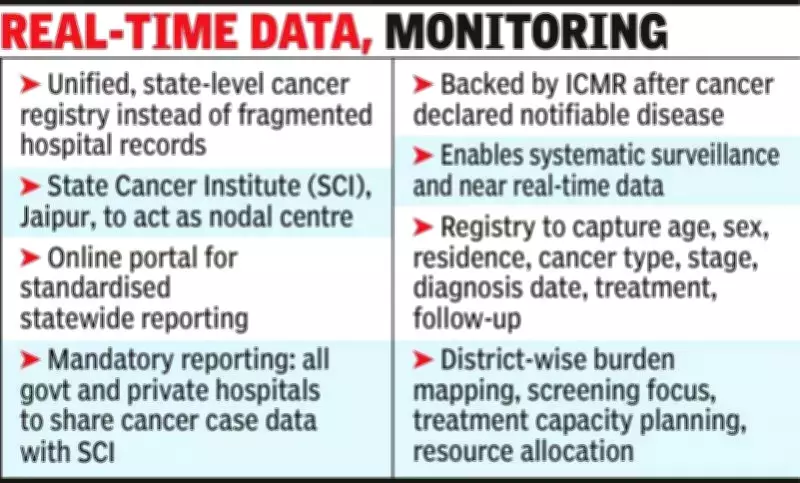
In a significant public health initiative, Rajasthan has announced the establishment of a unified, state-level cancer registry. This move aims to replace the current fragmented hospital records that have made it challenging to accurately assess the cancer burden and effectively plan health services across the state.
Nodal Centre and Online Portal Development
The State Cancer Institute (SCI) in Jaipur will serve as the nodal centre for this ambitious project. SCI will develop an online portal to facilitate standardized reporting of cancer cases from all corners of Rajasthan. This digital platform is designed to streamline data collection and ensure consistency in the information gathered.
The primary objective of the registry is to generate reliable, near real-time data. This data will be crucial for supporting various aspects of cancer care, including screening programs, treatment capacity planning, prevention strategies, and efficient resource allocation. The initiative has received support from the Indian Council of Medical Research (ICMR), following the declaration of cancer as a notifiable disease, which enables systematic reporting and surveillance.

Mandatory Reporting and Data Collection
Dr. Sandeep Jasuja, the medical superintendent at SCI Jaipur, emphasized the importance of comprehensive data collection. "All private and government hospitals will be required to share cancer case data with SCI for the state registry. Cancer is being diagnosed and treated at many centres across Rajasthan, and the burden is increasing. Reporting all diagnosed cases will help identify trends over time and across districts," he stated.
A cancer registry is a structured system that collects, stores, and updates information on individuals diagnosed with cancer. It records detailed information such as:
- Age and sex of the patient
- Place of residence
- Type of cancer
- Stage at diagnosis
- Date of diagnosis
- Treatment provided
- Follow-up status
Data is collected in a uniform manner from hospitals, laboratories, and treatment centres to ensure consistency and reliability. This standardized approach is key to converting scattered data into actionable public health information.
Benefits and Impact on Public Health
Officials highlight that the unified registry will transform how cancer data is utilized in Rajasthan. It will help measure cancer incidence, track patterns, and identify emerging trends, showing which cancers are rising and where they are most prevalent. This information is vital for guiding early detection efforts through targeted screening programmes.
Furthermore, the registry will support treatment planning by estimating the needs for various medical services, including:
- Surgery
- Chemotherapy
- Radiotherapy
- Palliative care
- Follow-up services
By providing a comprehensive overview of the cancer landscape in Rajasthan, this registry aims to enhance the state's ability to combat the disease effectively, ensuring that resources are allocated where they are most needed and that public health strategies are data-driven and impactful.






