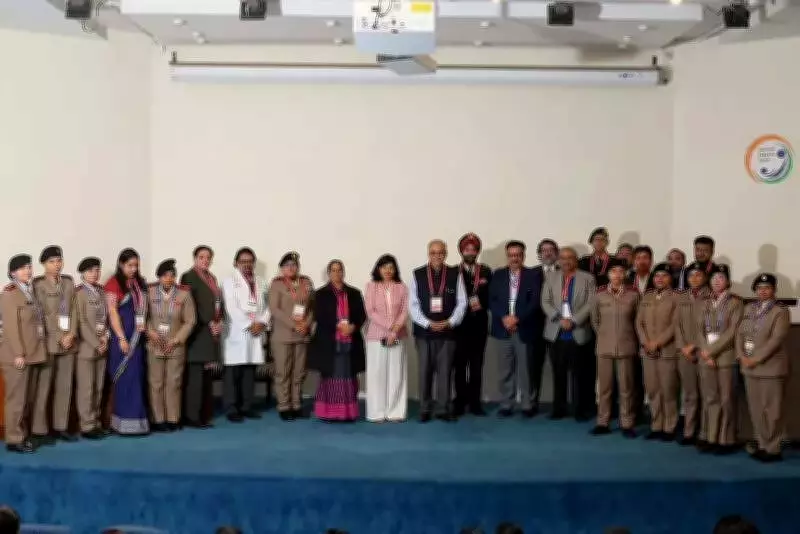
In a significant development for emergency medical care in India, the Postgraduate Institute of Medical Education and Research (PGIMER) in Chandigarh hosted the inaugural session of the two-day National Neuro-Critical Care Summit on Friday. The event, titled 'Brain Waves–2026', was jointly inaugurated by Prof. Vivek Lal, Director of PGIMER, and Major General Harkirat Singh, Commandant of the Command Hospital in Chandimandir.
Military-Civilian Collaboration for Enhanced Neuro-Care
The summit represents a powerful convergence of PGIMER's renowned clinical expertise and the disciplined, innovative approaches of the Armed Forces Medical Services. Major General Harkirat Singh, a specialist in nuclear medicine, highlighted during his address that military medical services have historically pioneered rapid response systems and protocols. He emphasized that these advanced systems are now being progressively integrated into civilian healthcare settings across the nation, aiming to elevate the standard of emergency care available to the general public.
Emphasis on the 'Golden Hour' in Neurological Emergencies
Prof. Vivek Lal, who formally inaugurated the summit, stressed the critical importance of precision and seamless teamwork in managing neuro-critical emergencies. He pointed out that the collaboration with Army medical services is particularly vital for optimizing patient care during the 'golden hour'—the crucial window immediately following a neurological event where rapid and effective intervention can mean the difference between life and death, or between recovery and permanent disability.

The central theme of the summit, 'Golden Hour and Beyond: Race Against Time in Neuro Emergencies', underscored the urgent need for evidence-based, well-coordinated interventions for conditions like stroke and neurotrauma. Dr. Navdeep, the Road Safety Advisor for Punjab, contributed to this discussion by noting that effective management of such crises depends heavily on the integration of law enforcement agencies and emergency evacuation services with premier medical institutions like PGIMER.
National Participation and Hands-On Workshops
This national-level summit was organized in collaboration with several key organizations, including the Society for Emergency, Trauma and Disaster (SETD), the Society for Critical Care Nursing, and the BHISHM Project. It attracted an impressive gathering of over 300 delegates from across the country. Participants included medical professionals from all 16 AIIMS institutions, representatives from the Indian Army and Air Force medical corps, and officials from various state police departments and civil administrations.
Moving beyond theoretical discussions, the summit featured a series of high-intensity, hands-on workshops designed to translate academic knowledge into immediate clinical action. These practical sessions included:
- A stroke simulation workshop focused on the rapid administration of intravenous (IV) thrombolysis.
- A trauma and neuro-surgical workshop addressing high-pressure surgical decision-making scenarios.
- A specialised session dedicated to the complexities of paediatric and neonatal critical care.
The event also provided a comprehensive platform to address clinical protocols and system-level challenges, featuring eminent speakers such as Prof. Dheeraj Khurana and Dr. Raman Sharma from PGIMER. The 'Brain Waves–2026' summit stands as a testament to the growing synergy between India's civilian and military healthcare sectors, aiming to set new benchmarks in the race against time to save lives during neurological emergencies.