

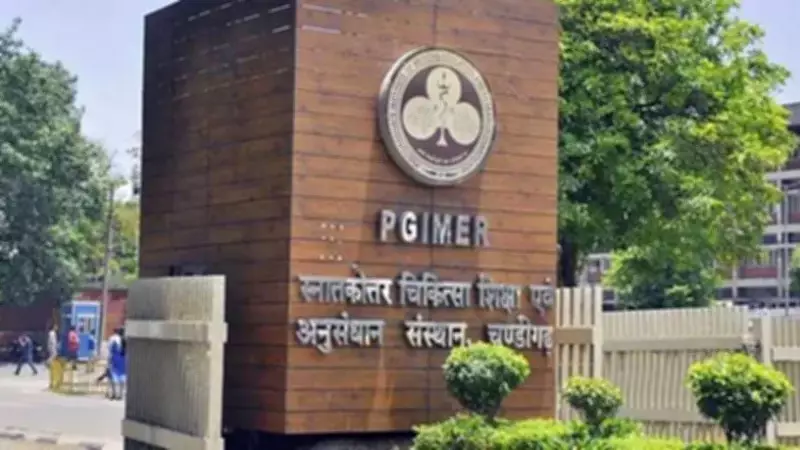
At the national neuro-critical care summit, Brain Waves 2026, held recently, the Postgraduate Institute of Medical Education and Research (PGIMER) showcased a significant collaboration with the armed forces, aimed at revolutionizing emergency healthcare responses. The event, which spanned two days, drew participation from around 300 delegates, including key representatives from the Indian Army, Indian Air Force, police services, and the Government of Haryana, underscoring its broad impact across sectors.
Institutional and Military Synergy in Neuro-Care
In his address as the chief guest, Prof Vivek Lal, Director of PGI, emphasized the powerful convergence of institutional clinical excellence and military medical discipline. He stated that the armed forces have made substantial advancements in critical care medicine through their rigorous discipline, innovative approaches, and rapid response systems. This partnership, according to Lal, is not just a formal alliance but a strategic move to enhance the delivery of neuro-critical care, where precision and speed are paramount.
Golden Hour: A Race Against Time
The summit's central theme, 'Golden Hour and Beyond: Race Against Time in Neuro Emergencies,' highlighted the critical importance of timely interventions in conditions like stroke and neurotrauma. Lal underscored that in neuro-critical emergencies, every second during the golden hour can determine outcomes between life and severe disability. He pointed out that collaborations with the Army Medical Services are strengthening this aspect by integrating military efficiency into civilian healthcare frameworks.

Sharing Best Practices and Innovation
Prof Lal further elaborated that platforms such as Brain Waves 2026 serve as vital arenas for sharing best practices and fostering innovation. He noted that these interactions enable the development of a resilient emergency healthcare response system that benefits both civilian and defence settings. By learning from the armed forces' structured protocols and rapid deployment capabilities, institutions like PGIMER can enhance their own emergency management strategies.
Armed Forces' Contribution to Medical Excellence
Echoing these sentiments, Major General Harkirat Singh from the Command Hospital highlighted the longstanding contributions of the Armed Forces Medical Services to medical innovation and emergency response. He remarked that their consistent efforts in training and rapid response have been instrumental in critical care medicine. Collaborations with premier institutions like PGIMER, he added, bolster the collective ability to manage complex neuro-emergencies, whether in combat scenarios or civilian contexts, ultimately serving the nation's broader health interests.
The Brain Waves 2026 summit not only facilitated discussions on cutting-edge neuro-critical care techniques but also reinforced the importance of interdisciplinary partnerships. With delegates from diverse backgrounds, the event underscored a unified approach towards improving healthcare outcomes, leveraging the strengths of both clinical institutions and military disciplines to save lives and reduce disabilities in time-sensitive neurological emergencies.






