

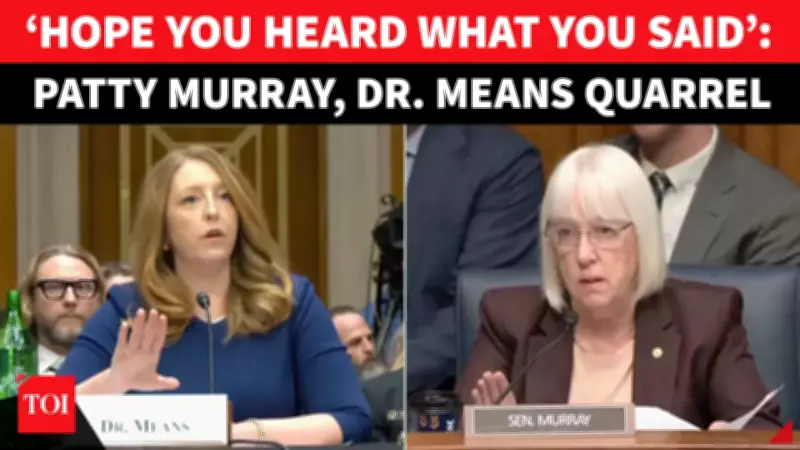
Senate Chamber Erupts In Heated Healthcare Confrontation
The US Senate confirmation hearing for Surgeon General nominee Dr. Casey Means transformed into a dramatic battleground on February 26, 2026, as Senator Patty Murray launched a fierce interrogation over the nation's most contentious health issues. The exchange crackled with tension from the outset, highlighting the deep political divides that continue to shape America's healthcare future.
Core Issues Spark Intense Debate
Senator Murray, known for her advocacy on health matters, pressed Dr. Means on multiple critical fronts. The discussion quickly escalated beyond routine questioning into a substantive clash over policy direction.
Skyrocketing healthcare costs emerged as a primary concern, with Murray demanding concrete solutions to make medical care more affordable for American families. The nominee's responses were scrutinized for their practicality and alignment with current administration priorities.

The debate then turned to vaccine efficacy and safety, particularly regarding RSV vaccines and their role in public health strategy. This segment revealed fundamental disagreements about vaccine policy implementation and communication to the public.
Reproductive Health And Medication Safety
Perhaps the most volatile exchanges centered on reproductive healthcare. Murray challenged Means on:
- The safety profile of FDA-approved contraceptives
- Maternal health outcomes and disparities
- Use of SSRIs during pregnancy
- Access to birth control across different demographics
These topics laid bare the ideological fault lines that have long characterized healthcare debates in Washington, with both participants standing firm on their respective positions.
Chronic Disease Reform And Future Directions
The confrontation extended to chronic disease management reform, another area where Murray sought specific commitments from the nominee. The senator emphasized the need for innovative approaches to conditions like diabetes, heart disease, and obesity that burden the healthcare system.
Throughout the hearing, the political theater underscored how confirmation proceedings have evolved into platforms for substantive policy debates rather than mere formalities. The tension between Murray's pointed questions and Means' measured responses created a compelling narrative about the future of American healthcare.
This dramatic session served as a microcosm of the broader national conversation about healthcare priorities, government's role in medical decisions, and how scientific evidence should inform public policy. The outcome of this nomination process could signal significant shifts in how the Surgeon General's office addresses these divisive issues moving forward.






