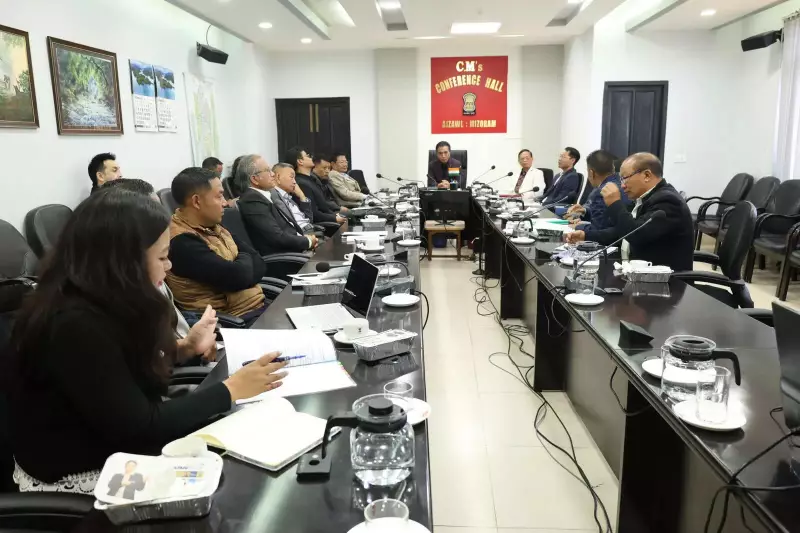
The Mizoram government, in a significant move, has officially enforced a ban on private medical practice for all state-employed doctors who are recipients of the Non-Practising Allowance (NPA). The decision was reaffirmed during a meeting of the Mizoram Resource Mobilisation Committee (MRMC) chaired by Chief Minister Lalduhoma.
Strict Enforcement on Doctors' Private Practice
The committee reviewed its earlier directive from April 23, 2024, which mandated that government doctors drawing NPA must not engage in private practice. A report from the state health and family welfare department provided crucial data, revealing that Mizoram has 452 government doctors. Out of these, 347 receive the NPA, while the remaining 105 do not. The report confirmed that doctors availing the NPA are currently not involved in private practice.
The legal basis for this prohibition was clarified, citing the Mizoram Health Services Rules of 2009 and subsequent gazette notifications from February 18, 2010, and an amendment issued on December 18, 2024. The rules explicitly prohibit all government doctors, including non-clinical staff, from private practice while they are drawing the NPA. The committee also noted that in cases where private practice is permitted, obtaining prior government approval is absolutely mandatory. The meeting involved discussions on establishing robust mechanisms to ensure the continued enforcement of this rule.

Crackdown on Unregistered GST Businesses & Administrative Streamlining
Beyond healthcare regulations, the MRMC also turned its attention to state revenue. The committee discussed the pressing issue of identifying businesses operating within Aizawl city that are liable for Goods and Services Tax (GST) registration but have remained unregistered. It was decided that this exercise would be conducted jointly with the Aizawl City Local Council Association, with follow-up actions to be handled by the state's taxation department.
In a related matter concerning tax officials' safety, the committee addressed requests from taxation personnel to carry arms during raids or verification drives for self-protection. The committee observed that, aligning with practices followed by the central government and other states, coordination with the home department could be considered whenever such a necessity arises.
Pilot for Faster File Movement in Departments
The MRMC further deliberated on improving administrative efficiency. It discussed a key recommendation from the Administrative Reforms Commission (2019) to limit the movement of files to a maximum of four levels of officers. To test this, the committee decided to suggest a modified pilot implementation in selected departments through the Department of Personnel & Administrative Reforms (DP&AR).
Under the proposed new arrangement, a government department would have either an Under Secretary or a Deputy Secretary, but not both. Similarly, if a Joint Secretary is posted, there would be no Additional Secretary, and vice-versa. The DP&AR will identify the specific departments where this pilot project will be launched. The meeting was attended by MRMC vice chairman Pu Haukhuma Hauzel and other members.