

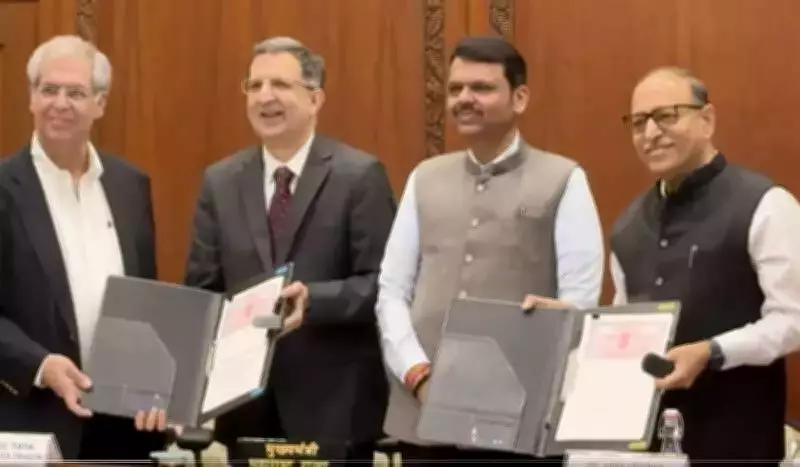
Maharashtra Government and Tata Trusts Forge Healthcare Partnerships with Nagpur Hospitals
In a significant move to bolster healthcare infrastructure and social welfare initiatives, the Maharashtra government has entered into a series of memoranda of understanding (MoUs) with Tata Trusts. The agreements, formalized at the Sahyadri Guest House in Mumbai on Thursday, include key collaborations with six major hospitals from Nagpur, aiming to strengthen healthcare delivery across the state.
Key Healthcare Institutions Involved
The MoUs specifically target six prominent Nagpur-based medical institutions:
- National Cancer Institute
- All India Institute of Medical Sciences (AIIMS)
- Central India Institute of Medical Sciences (CIIMS)
- Care Hospital
- Swami Vivekanand Medical Mission
- Midas Multispeciality Hospital
These partnerships are designed to facilitate financial assistance and affordable treatment for patients suffering from serious and life-threatening illnesses, leveraging the Chief Minister's Relief Fund. Chief Minister Devendra Fadnavis, who was present at the signing ceremony, emphasized the government's commitment to ensuring that no patient is denied treatment due to lack of resources. He highlighted that support from Tata Trusts to the Relief Fund will enable timely and structured assistance to needy patients, accelerating Maharashtra's development across various sectors.

Comprehensive Health and Nutrition Framework
Beyond tertiary care, the MoUs encompass a broader health and nutrition framework, addressing multiple critical areas:
- Maternal and Child Health: Strengthening services for mothers, newborns, children, and adolescents, with a special focus on reducing stunting, underweight, and malnutrition among children under two years of age.
- Telemedicine Expansion: Improving access to telemedicine services to reach urban and remote areas more effectively.
- Primary Healthcare Enhancement: Bolstering comprehensive primary healthcare in both urban settings and isolated regions.
- Emergency Response Systems: Enhancing integrated emergency management systems to ensure swift and coordinated responses during crises.
Additionally, the agreements aim to address anaemia among adolescents and strengthen schemes such as take-home ration distribution, particularly in tribal and remote districts like Gadchiroli. This holistic approach seeks to create a resilient healthcare ecosystem that prioritizes preventive care and community well-being.
Water Conservation and Broader Social Initiatives
In a separate agreement, the state government has partnered with the Naam Foundation for water conservation and watershed development. This collaboration focuses on measures such as desilting of rivers, streams, and lakes, groundwater recharge, and soil and water conservation works, with an emphasis on water-scarce regions of Vidarbha and Marathwada. The broader framework also includes climate-resilient agriculture, livestock development, forest-based livelihoods, and non-farm rural employment, aiming to promote sustainable development and improve livelihoods in rural areas.
Leadership Perspectives and Future Goals
Tata Trusts Chairman Noel Tata expressed optimism about the partnership, stating that it will promote convergence across programmes related to health, education, nutrition, livelihoods, water, and sanitation. The objective is to improve the overall quality of life for residents of Maharashtra. Naam Foundation founder Nana Patekar also expressed satisfaction over the continued collaboration with the state in the field of water conservation, underscoring the importance of such initiatives in addressing environmental challenges.
These MoUs represent a strategic effort to leverage public-private partnerships for comprehensive social welfare, with healthcare at the forefront. By integrating resources and expertise from Tata Trusts and local institutions, the Maharashtra government aims to create a more equitable and accessible healthcare system, while also tackling critical issues like water scarcity and rural development.






