

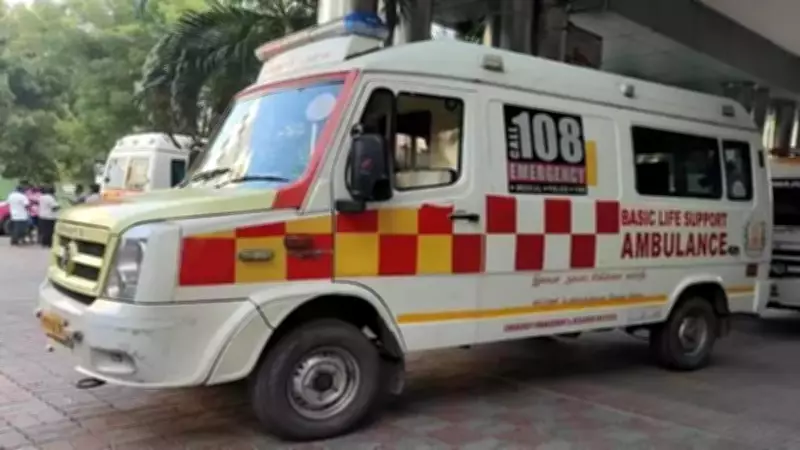
Jharkhand to Revolutionize Emergency Medical Services with App-Based Ambulance Booking
In a significant move to enhance emergency healthcare accessibility, the Jharkhand government is set to transform its 108 ambulance service by introducing a dedicated mobile application for booking rides. This initiative, modeled after popular app-based cab aggregators like Ola, aims to streamline and modernize emergency medical response across the state.
Modernizing Ambulance Operations with Technology
The decision was finalized during a high-level meeting chaired by Additional Chief Secretary of Health, Ajoy Kumar Singh, on Friday. The meeting focused on comprehensive strategies to strengthen healthcare delivery, with a particular emphasis on leveraging technology for improved ambulance services.
"The service would soon function on the lines of Ola and other app-based platforms," Singh announced. "A dedicated software is being developed and integrated with ambulances, enabling effective monitoring of operating agencies and call centers through a service level agreement."

Currently, patients or their relatives must rely on calling the toll-free number 108 to request an ambulance. The new system will replace this with a user-friendly mobile application, providing a more efficient and transparent booking process.
Key Features of the New Ambulance System
The upgraded ambulance fleet will be equipped with advanced technological features to ensure prompt and reliable service:
- GPS Tracking: All ambulances will be fitted with GPS devices for real-time location monitoring.
- Mobile Data Terminal (MDT) Devices: These will facilitate communication between ambulances and control centers.
- Free Service: The ambulance service will remain entirely free of cost for patients, with no charges imposed.
- Hospital Choice: Patients will have the flexibility to book ambulances for transportation to any hospital of their choice, not just government facilities.
The initial implementation of this system is planned for a period of 10 years, with ongoing evaluations to ensure effectiveness.
Performance Monitoring and Accountability
To maintain high standards of service, the health department has introduced strict accountability measures:
- Biometric Attendance: Ambulance drivers will be required to mark their attendance using biometric systems to prevent absenteeism.
- Incentives and Penalties: Operating agencies will receive incentives for early response times and face penalties for delays, ensuring timely emergency care.
- Private Ambulance Integration: In the future, private ambulances will be integrated into the system. They will be compensated on a per-kilometer basis, while the service remains free for the public.
Expanding Diagnostic Services Under Public-Private Partnership
The meeting also reviewed proposals for enhancing diagnostic services in the state. Under a public-private partnership (PPP) model, pathology and radiology services will be made available in district and sub-divisional hospitals.
These diagnostic tests will be offered to the public at Central Government Health Scheme (CGHS) rates, making them affordable and accessible. The appointed agency will initially operate for five years, with a provision for a three-year extension based on performance evaluation.
This holistic approach to healthcare reform underscores Jharkhand's commitment to leveraging technology and partnerships for better public health outcomes. The app-based ambulance service is expected to reduce response times, improve transparency, and ultimately save more lives during medical emergencies.






