

Haryana Chief Minister Launches Sweeping Public Health Reforms
In a decisive move to overhaul the state's public health infrastructure, Haryana Chief Minister Nayab Singh Saini has mandated an end to the long-standing practice of doctors compelling patients to purchase medicines from private pharmacies. This initiative, announced during a high-level review meeting on Monday, aims to alleviate the financial burden on low-income individuals who often face high out-of-pocket expenses for drugs that should be provided free of charge in government hospitals.
Centralized Portal for Real-Time Medicine Tracking
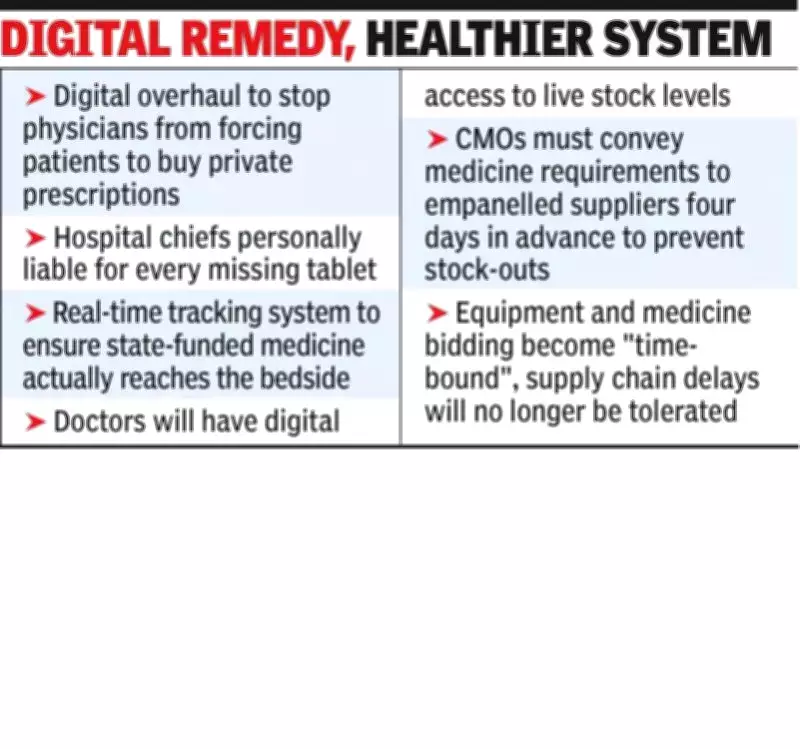
The cornerstone of this reform is the migration of all government hospitals to a real-time centralized portal designed to monitor pharmaceutical stocks comprehensively. This system is intended to eliminate the common excuse of "unavailability" that has historically forced patients into costly external purchases. Under the new directive, any doctor who prescribes medicine from an external pharmacy must now explicitly certify on the official outpatient (OPD) slip that the hospital's own stock is exhausted. Chief medical officers (CMOs) will be held personally accountable for any breaches of this policy, ensuring strict adherence and transparency.
Enhanced Transparency and Accountability Measures
The Chief Minister's office has characterized this move as a significant push for transparency in a system often criticized for procurement delays and "leakages." The new portal includes features such as inventory tracking, replenishment mandates, and procurement reforms. Doctors will have digital access to live stock levels, thereby removing any scope for unnecessary external prescriptions. Additionally, CMOs are now required to communicate medicine requirements to empanelled suppliers at least four days in advance to prevent stock-outs. Saini has also ordered that equipment and medicine bidding processes become "time-bound," emphasizing that delays in the supply chain will no longer be tolerated.

Expansion to Diagnostic Infrastructure
The overhaul extends beyond pharmacy reforms to include significant upgrades in diagnostic capabilities. Saini has directed that advanced diagnostic tools, such as CT and MRI scans, be installed in all district hospitals. This measure aims to prevent patients from traveling long distances for basic imaging services, thereby improving accessibility and convenience. While ten districts have already completed these upgrades, the Chief Minister has set a deadline for the remaining twelve districts to follow suit "at the earliest," ensuring statewide implementation.
Addressing Staffing Gaps with Flexible Models
To manage the high patient load effectively, the state government has confirmed a pivot to a more flexible staffing model. Until full-time specialists can be permanently appointed to medical colleges and district hubs, the health and family welfare department has been authorized to hire doctors on a contractual basis. This approach ensures that duty rosters remain filled and patient care is not compromised. During the review, Saini told senior officials, including Health Secretary Dr. Sumita Misra, that "shortage of medicines at any level will not be tolerated" and stressed that "patients visiting government hospitals should not face any inconvenience."
These comprehensive reforms mark a pivotal step towards enhancing the efficiency and accountability of Haryana's public health system, with a clear focus on patient welfare and systemic integrity.






