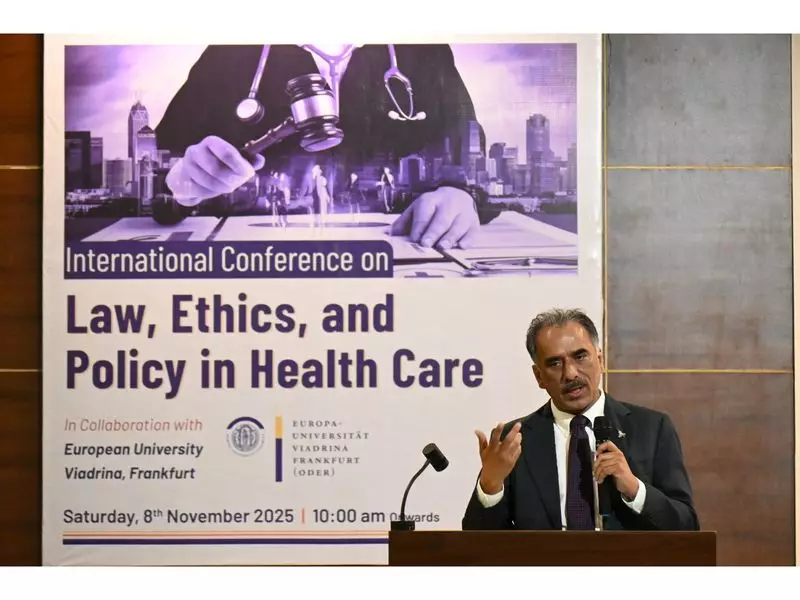
Navrachana University in Vadodara became the epicenter of a crucial global conversation as it hosted an international dialogue focusing on the intersection of law, ethics, and healthcare policymaking. The event brought together distinguished experts from medical, legal, and academic fields to address pressing challenges in contemporary healthcare systems.
Distinguished Gathering of Medical and Legal Minds
The conference featured an impressive lineup of speakers including Dr. S. P. S. Tinna, Director of Medical Education at the Government of Gujarat, who delivered a compelling keynote address. The event was further graced by the presence of Dr. R. K. Dixit, Director of the National Institute of Pharmaceutical Education and Research (NIPER), who shared valuable perspectives on pharmaceutical regulations and their impact on healthcare delivery.
From the international arena, Professor Colleen M. Flood from the University of Ottawa, Canada contributed global insights, while Professor David M. McQuoid-Mason from the University of KwaZulu-Natal, South Africa provided comparative analysis of healthcare legal frameworks across different jurisdictions.

Critical Examination of Healthcare Legal Frameworks
The dialogue delved deep into the complex relationship between medical practice and legal boundaries. Participants engaged in thorough discussions about patient rights, medical negligence standards, and the ethical implications of emerging healthcare technologies. The conversation highlighted how legal frameworks must evolve to keep pace with medical advancements while protecting both practitioners and patients.
One significant focus was on the informed consent process and how it varies across different healthcare scenarios. Experts emphasized the need for clearer guidelines that balance patient autonomy with practical medical considerations, particularly in emergency situations where immediate decisions can mean the difference between life and death.
Ethical Challenges in Modern Healthcare Delivery
The conference placed substantial emphasis on the ethical dimensions of healthcare, examining how moral principles should guide medical decisions and policy formation. Discussions covered resource allocation, accessibility issues, and the moral responsibilities of healthcare providers in increasingly complex medical environments.
Participants explored the tension between technological advancement and humanistic care, debating how to maintain ethical standards while embracing innovation. The dialogue particularly highlighted the challenges faced by developing nations like India in creating equitable healthcare systems that serve diverse populations with varying needs and resources.
The presence of Professor David M. McQuoid-Mason brought valuable perspectives from the South African experience, offering comparative insights into how different nations approach similar ethical dilemmas in healthcare. His contributions helped contextualize India's challenges within a broader global framework.
Shaping Future Healthcare Policy Directions
Beyond theoretical discussions, the conference focused on practical policy implications and recommendations. Experts proposed concrete steps for improving healthcare governance, enhancing patient safety protocols, and strengthening regulatory mechanisms. The dialogue emphasized the need for collaborative approaches that involve multiple stakeholders in policy formation.
Dr. S. P. S. Tinna's address particularly highlighted the Gujarat government's initiatives in medical education reform and how these efforts align with broader healthcare policy objectives. His insights provided valuable context for understanding how state-level policies contribute to national healthcare goals.
The event concluded with a consensus on the urgent need for interdisciplinary collaboration between medical professionals, legal experts, policymakers, and educators. Participants agreed that only through such integrated approaches can sustainable and effective healthcare systems be developed.

This landmark dialogue at Navrachana University represents a significant step forward in addressing the complex interplay between law, ethics, and healthcare. The insights generated are expected to influence both academic discourse and practical policy formation in the coming years, potentially shaping how healthcare systems evolve to meet twenty-first-century challenges.