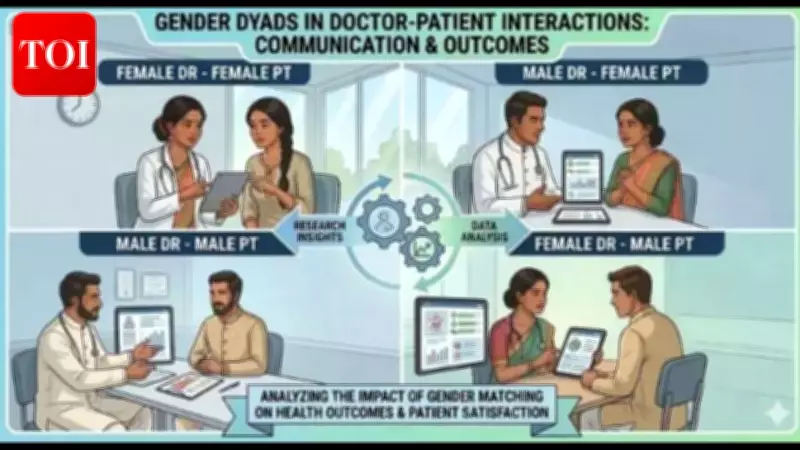
Goa Institute of Management Study Challenges Traditional Gender Matching in Healthcare
A comprehensive research study conducted by the Goa Institute of Management has uncovered surprising findings about gender dynamics in India's rapidly expanding telemedicine sector. The investigation into what researchers term the "Gender Concordance Paradox" reveals that matching patients with doctors of the same gender may actually reduce satisfaction levels during virtual medical consultations.
Contradicting Traditional Healthcare Patterns
While previous research in physical healthcare settings consistently showed that patients typically reported higher satisfaction when treated by doctors of the same gender, this new telemedicine study demonstrates the opposite trend. The research was spearheaded by Dr. Nafisa Vaz, assistant professor of healthcare management at GIM, in collaboration with Dr. Vishalkumar Jani, head of research at Practo, one of India's leading digital healthcare platforms.
The groundbreaking findings have been published in the prestigious Journal of Medical Internet Research, representing a significant contribution to understanding how digital healthcare delivery differs from traditional medical practice.

Massive Data Analysis Reveals Surprising Patterns
The study represents one of the largest investigations into gender and telemedicine conducted in the Global South, analyzing an impressive 286,196 anonymized teleconsultation records from a nationwide telemedicine provider between January 2023 and December 2024. This extensive dataset covered approximately 20 different medical specialties, providing a comprehensive view of telemedicine practices across India.
Researchers discovered that 60.4% of all consultations were gender concordant, meaning patients were matched with doctors of the same gender. While an overwhelming 91.3% of patients reported positive experiences overall, the study revealed a statistically significant negative association between gender concordance and patient satisfaction scores.
The "Expectation-Surprise" Effect Among Male Patients
One of the most intriguing findings involved what researchers termed an "expectation-surprise" effect among male patients. Contrary to conventional assumptions, male patients reported higher satisfaction levels when treated by female clinicians during telemedicine consultations. This phenomenon was attributed to perceived improvements in communication quality and empathy displayed by female healthcare providers in virtual settings.
The study suggests that traditional gender matching assumptions may not translate effectively to digital healthcare environments, where communication dynamics and patient expectations differ significantly from in-person medical encounters.
Implications for Telemedicine Practice and Policy
The research concludes that gender matching is not a universal predictor of successful medical consultations, though it remains relevant for specific intimate health concerns where patient comfort with provider gender continues to matter. However, for the majority of telemedicine interactions, other factors appear to play more significant roles in determining patient satisfaction.
Perhaps most importantly, the study identified patient satisfaction with doctor interaction as one of the strongest predictors of patient recovery outcomes, highlighting the critical importance of optimizing communication and relationship-building in virtual healthcare settings.
These findings have substantial implications for telemedicine platforms, healthcare providers, and policymakers as India continues to expand digital healthcare access nationwide. The research suggests that telemedicine providers might need to reconsider automatic gender matching algorithms and instead focus on matching patients with providers based on communication style, specialty expertise, and other factors that may prove more important in virtual consultations.
As telemedicine becomes increasingly integrated into India's healthcare landscape, studies like this provide valuable insights for improving patient experiences and outcomes in the digital healthcare revolution.