

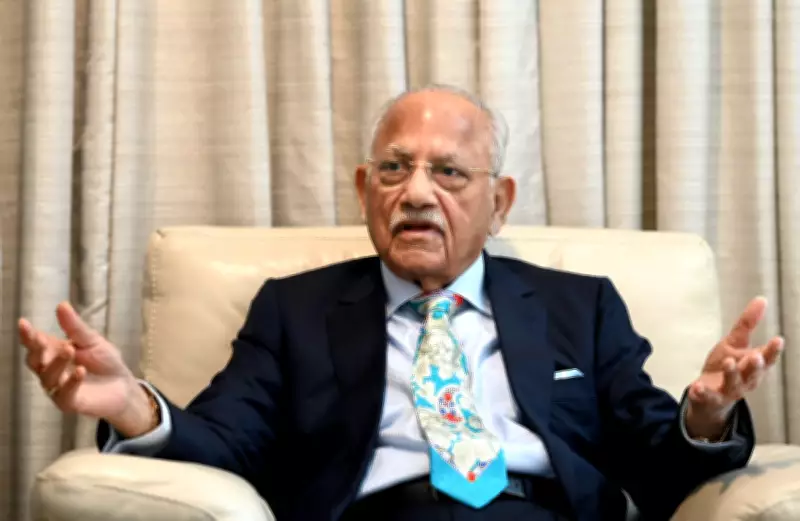
The Visionary Journey of Dr Prathap C Reddy: Transforming Indian Healthcare
In 1979, a tragic event changed the course of Indian healthcare forever. The death of a 35-year-old patient, who couldn't afford treatment abroad, compelled cardiologist Dr Prathap C Reddy to take action. This heartbreaking loss drove him to lobby Prime Minister Indira Gandhi for duty-free import of advanced medical equipment. His persistence paid off when import duties were slashed from 300% to 0%, with the condition that 25% of treatments would be provided free of charge.
Building a Healthcare Empire
Dr Reddy's determination didn't stop there. With support from banks and subsidized materials, he established India's first multi-speciality Apollo Hospital in Chennai in 1983. This marked the beginning of a healthcare revolution that would expand to more than 10,000 beds across the country. The foundation was built on what Dr Reddy calls the 4Cs: clinical excellence, compassionate care, cost-effectiveness, and cutting-edge technology.
Even before the hospital opened, Dr Reddy demonstrated his commitment to patient dignity by changing the term "casualty" to "emergency" – a move that has since become standard across India. His advocacy extended to health policy reform and insurance, including pitching the "Heal in India" medical tourism initiative to Prime Minister Narendra Modi.

Pioneering Medical Innovations
Apollo Hospitals has consistently pushed the boundaries of medical technology. The institution pioneered proton therapy in South-East Asia and plans to launch next-generation centers in Mumbai (2026) and Delhi (2027). These facilities will feature superior tumor conformity capabilities, representing significant advancements in cancer treatment.
Looking ahead, Apollo is preparing to participate in clinical trials for flash therapy – an emerging cancer treatment that delivers ultra-high radiation doses in milliseconds while sparing healthy tissues. Although the complete technology currently costs approximately ₹800 crore and remains in trial phases, Apollo plans to acquire FDA-approved equipment to contribute to these groundbreaking studies.
The Shift to Preventive Healthcare
Dr Reddy emphasizes that the future of healthcare lies in prevention rather than cure. Apollo's ProHealth program exemplifies this approach – an AI-driven package that analyzes 25 million past check-ups to predict health risks and create personalized wellness plans. For ₹9,000, this comprehensive screening covers heart, lungs, cancer markers, metabolism, and sleep patterns, supported by health coaches and digital tracking.
The hospital is now introducing a premium tier that includes genetic screening, calcium scoring, and advanced cancer markers for ₹1 lakh, with recommendations to repeat the assessment every decade. "Most people don't do annual health checks because they think they are healthy," Dr Reddy observes. "We tell people that they are healthy only if they are told they are healthy."
Challenges and Solutions in Healthcare Financing
Despite the clear benefits of preventive care, insurance coverage remains a significant hurdle. Most insurers exclude preventive checks and often limit coverage for advanced treatments like robotic surgery, favoring cheaper alternatives. This creates challenges for hospitals operating in tier-2 and tier-3 cities, where government insurance schemes offer limited reimbursement rates.
Dr Reddy reveals that Apollo attempted to address this by launching Apollo Munich Health Insurance in 2006, but regulatory constraints forced them to relinquish control. Now, the focus is on encouraging insurers to embrace preventive models. In his native Aragonda, Apollo has implemented a innovative program offering disease screening with insurance coverage for just ₹1 per day.
Medical Tourism: India's Untapped Potential
Dr Reddy strongly advocates for positioning India as a global healthcare destination. He suggests that implementing visa-on-arrival for friendly nations could double patient inflows overnight. With nearly 400 hospitals, including Apollo branches, offering world-class care at a fraction of developed nations' costs, India has tremendous potential in medical tourism.

"Medical tourism will build credibility, hospital revenues, and, most crucially, jobs," Dr Reddy asserts. "We can retain skilled nurses and technicians with better pay and work environments."
Personal Health Journey and Advice for Youth
At 93, Dr Reddy speaks from personal experience about managing health challenges. He has lived with diabetes for nearly 50 years, battled hypertension, high cholesterol, and survived a heart attack 15 years ago. Through preventive checks, early diagnosis, proper medication, diet, and exercise, he has maintained his health, losing 15kg and keeping his blood pressure and sugar levels under control.
His daily routine includes 20 minutes of walking, with seven minutes at a brisk pace. Dr Reddy emphasizes that while Indians may have genetic predispositions to non-communicable diseases, these conditions can be managed effectively through lifestyle modifications and appropriate medical care.
"We have long known that Indians have a genetic predisposition for some non-communicable diseases," he concludes. "What we must understand is that they can be brought under control with lifestyle changes and the right medication."





