Chennai Hospital's Ward of the Unknown: 23 Patients Await Identity and Family
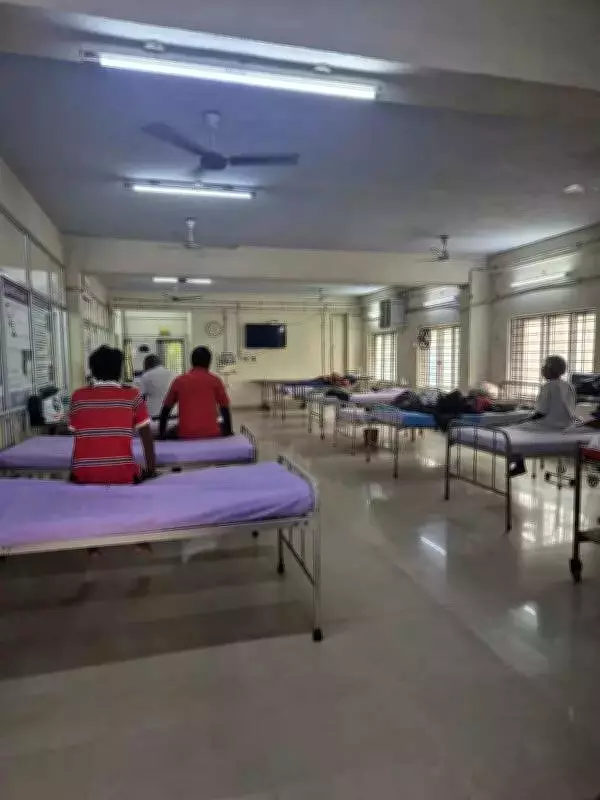
In the bustling corridors of Rajiv Gandhi Government General Hospital in Chennai, a unique ward exists where patients are known not by their given names, but by temporary monikers assigned by compassionate staff. This rehabilitation unit, dedicated to unidentified individuals, currently shelters 23 patients—17 men and six women—across various age groups, each with a story shrouded in mystery.
The Enigma of Govindamma and Others
One such patient, referred to as Govindamma by hospital personnel, arrived nearly three months ago following a road accident. Despite her recovery progress, this elderly woman in her seventies remains an enigma, as she is not coherent enough to reveal her identity. Dr Priya Malini, associate professor of geriatric medicine and in-charge of the ward, explains, "She is recovering, but may take some more time before she can tell us more about her." This scenario is common in the ward, where many patients are given placeholder names akin to the John Does and Jane Does used in legal systems of the US, UK, and Canada.
A Multilingual Ward with Diverse Challenges
Over the past five years, this ward has admitted as many as 769 people, highlighting a persistent issue in urban healthcare. The current residents speak multiple languages, with some recalling their names while others rely on interim identifiers for daily interactions. Dr Malini shares a poignant example: "For instance, 25-year-old Kishan* is fluent in a language that none of us understand." These patients, treated for various ailments in different wards, are moved back here due to their need for special care and lack of attendants.

The Quest for Family Reunions
Efforts to reunite patients with their families are ongoing but fraught with challenges. Staff nurse P Dhanalakshmi notes that they request Aadhaar cards or phone numbers to trace relatives, with recent successes including a 50-year-old man from Nepal with dementia who was reunited with his family through police assistance. R Gopinath, sub-inspector at the C4 police station, adds that police match patients with missing-person complaints from their home states or countries.
Hurdles in Reintegration
However, tracing a family does not always lead to a happy reunion. In a disheartening case, the family of 60-year-old Venkadesan* from nearby Tiruvottiyur refused to take him back. He expressed a desire to move to a night shelter and work during the day, but Vetri Thamizhan, a social worker with HelpAge India, points out the lack of accessible facilities: "We couldn't find a home with toilets accessible for those with amputated or broken limbs. That facility exists only at the government hospital."
Employment and Support Within the Hospital
In a heartening turn, some recovered patients have found purpose within the hospital itself. Dr K Shantaraman, the hospital dean, reveals that a few are engaged in sanitation work, with doctors pooling money to employ those who have recovered to run errands, fostering a sense of community and self-sufficiency.
This ward stands as a testament to the complexities of urban healthcare, where medical recovery intertwines with social and emotional rehabilitation, all while patients await the rediscovery of their identities and the warmth of family bonds.