Chennai: Government Kasturba Gandhi Hospital For Women And Children in Triplicane, which records an average monthly footfall of 14,000 outpatients and 11,000 inpatients, is grappling with poor infrastructure and hygiene issues. Broken glass bottles, discarded syringes, pipes, plywood pieces, and traces of burnt waste greet patients and attendants.
Patient Complaints
An attender, Raji L, 63, was seen filling a 5-litre water bottle at a nearby tea shop for her pregnant daughter, who was waiting for a check-up. “Waiting inside the block feels like a saucepan — hot and with no proper drinking water facility,” she said.
Santhosh M, who works at a mobile phone shop, said, “The hospital has the best doctors, which is why we have come here for my wife’s second pregnancy. But the facilities need to be better.” He added, “Once, while we were resting on the campus after a check-up with our seven-year-old daughter, a dog got aggressive and tried to attack us. A watchman shooed it away.”

Official Response
An official said drinking water facilities and additional seating would be provided wherever feasible once construction is complete. “Since the gates remain open, stray dogs enter the campus. Even after approaching the civic body, there has not been an adequate response to the issue,” the official said.
Infrastructure Issues
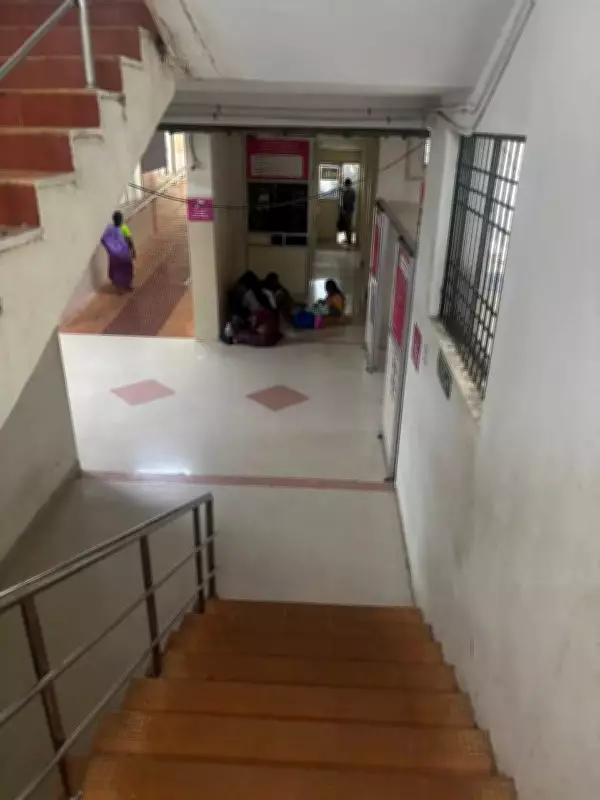
Most floors have inadequate seating, while some have none at all. In March this year, a multi-storey building was inaugurated by the then deputy chief minister, Udhayanidhi Stalin. While the ground floor of the new building is in use, the upper two floors remain vacant.
A senior health official said that shifting works into the new building are not completed, and the full building will come into use within a month. He added that construction debris remains on the campus because work is still underway on two blocks — one medical and one administrative.
Hygiene Concerns
Though the floor and toilets are filthy, patients and attendants are made to remove their footwear and walk barefoot. A doctor said, “Footwear is recommended except for restricted sterile zones.”