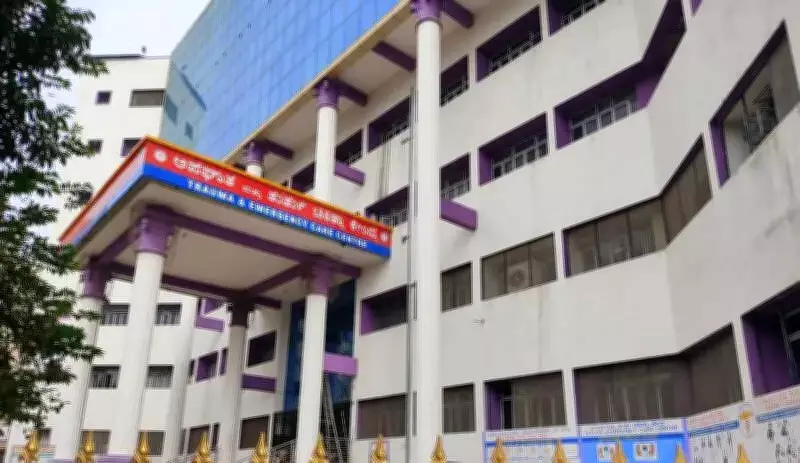
Victoria Hospital Ventilator Crisis: Year-Long Repair Delays Expose Maintenance Failures
In a stark revelation of systemic delays plaguing government healthcare infrastructure, it took nearly a full year to repair malfunctioning ventilators at the Trauma and Emergency Care Centre (TECC) of Victoria Hospital in Bengaluru. This prolonged disruption severely impacted critical care operations at one of the city's premier medical facilities.
Equipment Breakdown Timeline and Operational Disruption
The crisis began in June 2025 when eight ventilators and five electric patient cots in the Intensive Care Unit started malfunctioning. According to hospital sources, this initial equipment failure created significant operational challenges at the emergency care center. Over the subsequent months, the situation deteriorated further as additional critical equipment broke down, including an operation table and a CT contrast machine.
The cumulative effect of these failures rendered six ICU beds completely unusable, creating potential bottlenecks in emergency medical care capacity during a period when the facility should have been operating at full efficiency.

Failed Maintenance Contract and War-Related Excuses
Hospital authorities initially followed protocol by approaching the third-party service provider responsible for maintaining the medical equipment. However, what followed was a pattern of unfulfilled promises and delayed responses. "After a few months, the company began citing the ongoing war situation as a primary reason for being unable to procure spare parts and carry out necessary repairs," revealed a source at Victoria Hospital who spoke on condition of anonymity.
This explanation proved unsatisfactory to hospital administration, who grew increasingly frustrated with the maintenance provider's lack of progress despite repeated notifications about the critical nature of the equipment failures.
Administrative Response and Contract Termination
Dr. Kavya ST, director-cum-dean of Bangalore Medical College and Research Institute which oversees TECC operations, provided insight into the administrative response. "We issued repeated notices asking them to repair the equipment, but we were not satisfied with their service or efficiency," she stated. "Hence, we made the decisive move to terminate the contract and are now directly sourcing services from the original manufacturer of the ventilators."
This contractual shift represents a significant administrative intervention aimed at resolving the prolonged equipment crisis that had persisted for approximately eleven months before decisive action was taken.
Current Status and Patient Care Assurance
According to Dr. Kavya, most of the malfunctioning ventilators have now been repaired through direct engagement with the original equipment manufacturer. The remaining units are expected to be restored to full functionality soon. She emphasized that patient care was never compromised during the equipment downtime. "Even when some ventilators were not functioning, patient care was not affected as we had backup equipment available," she assured.
The hospital has also addressed the faulty electric patient cots, replacing them to ensure both patient safety and comfort in the ICU environment. This comprehensive approach to resolving the equipment crisis demonstrates the administration's commitment to restoring full operational capacity.
Lokayukta Scrutiny and Broader Implications
The equipment maintenance failures at Victoria Hospital have attracted attention beyond the medical community. The Karnataka Lokayukta recently took suo motu cognisance of irregularities at the hospital, specifically highlighting the malfunctioning ventilators that made six ICU beds unusable. This judicial oversight indicates the seriousness with which authorities view the maintenance lapses at a critical healthcare facility.
This incident raises broader questions about equipment maintenance protocols in government hospitals across Karnataka, particularly regarding third-party service provider accountability, spare parts procurement challenges, and emergency response mechanisms for critical medical equipment failures.

The nearly year-long delay in repairing life-saving equipment at a major trauma center serves as a cautionary tale about healthcare infrastructure maintenance, prompting calls for more robust monitoring systems and quicker intervention protocols when essential medical equipment fails in public health facilities.