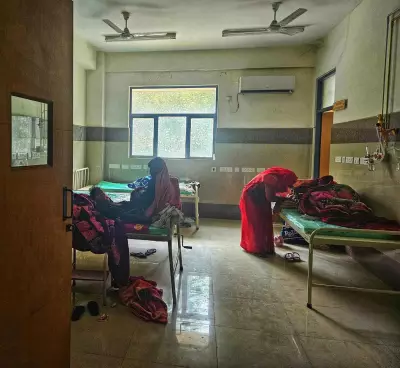
Uttarakhand Takes Decisive Step: Leprosy Now a Notifiable Disease
In a significant public health move, the state of Uttarakhand has officially declared leprosy a notifiable disease. This new mandate requires all diagnosed cases, whether in government hospitals, private healthcare facilities, or clinics, to be reported to district leprosy officers without delay. The decision, aimed at fortifying disease surveillance and control mechanisms, underscores the state's commitment to eliminating leprosy and safeguarding community health.
Enhancing Surveillance and Early Intervention
Health officials have emphasized that this notification is crucial for strengthening surveillance systems, ensuring prompt treatment initiation, and curbing the transmission of the disease. According to data from the National Leprosy Elimination Programme, Uttarakhand's leprosy prevalence rate currently stands at 0.23 per 10,000 population. While this indicates progress, authorities warn that low prevalence can lead to under-detection and complacency, particularly within the private healthcare sector.
Current Leprosy Statistics and Impact
In the fiscal year 2025-26, a total of 241 new leprosy cases were identified across Uttarakhand, including five children. Among these, nearly five cases, accounting for 2.1%, were classified as multibacillary (MB), which represents the more severe form of the disease. The World Health Organisation (WHO) describes MB leprosy as involving more than five skin lesions, nerve involvement, or the presence of bacilli in skin smears, regardless of lesion count.

Leprosy, a chronic infectious disease, primarily affects the skin, peripheral nerves, mucosa of the upper respiratory tract, and eyes. Beyond causing physical deformities, it often subjects affected individuals to severe social stigma and discrimination, as highlighted by WHO reports.
District-Wide Analysis and Leprosy-Free Zones
Departmental data reveals that districts such as Dehradun, Haridwar, and Udham Singh Nagar have reported relatively higher caseloads. However, out of Uttarakhand's 13 districts, seven—Almora, Bageshwar, Champawat, Nainital, Pauri, Rudraprayag, and Tehri Garhwal—are currently classified as leprosy-free. This designation means no indigenous child cases have been reported in these areas for five consecutive years, marking a significant achievement in the state's elimination efforts.
Expert Insights and Strategic Goals
Dr. Jitendra Negi, Joint Director and State Nodal Officer for Leprosy at the Uttarakhand Health Department, explained the rationale behind the notification. "As disease burden declines, the risks of under-detection and silent transmission increase," he stated. "Making leprosy notifiable will help close surveillance gaps, especially in the private sector, and ensure early diagnosis, contact screening, and disability prevention. This is a vital public health measure to protect the state's elimination gains."
Officials noted that Uttarakhand is currently in a maintenance and consolidation phase, not yet at programmatic exit. They stressed that child cases serve as critical indicators of recent transmission, and missed diagnoses could potentially restart transmission chains, undermining years of progress.
Official Approval and Future Implications
The proposal to declare leprosy notifiable was formally signed by Health Secretary Sachin Kurve and received approval from Governor Lt Gen (retd) Gurmit Singh. This regulatory step is designed to preserve existing public health achievements and foster a more robust, integrated approach to disease management across all healthcare providers in the state.