

Traffic Noise in Lucknow Linked to Mental Health Issues and Hypertension: KGMU Study
A groundbreaking study conducted by King George's Medical University has revealed alarming connections between long-term traffic noise exposure and significant health deterioration among drivers in Lucknow. While traffic noise is commonly perceived as merely an annoyance or a potential hearing hazard, this research demonstrates it poses far more serious threats to both mental and physical well-being.
Comprehensive Research on Lucknow's Drivers
The community medicine department at KGMU conducted an extensive examination of 300 drivers operating vehicles across three busy routes in Lucknow's old city areas. The study, published in the December issue of the medical journal 'Noise and Health', specifically investigated the non-acoustic effects of prolonged noise exposure on professional drivers.
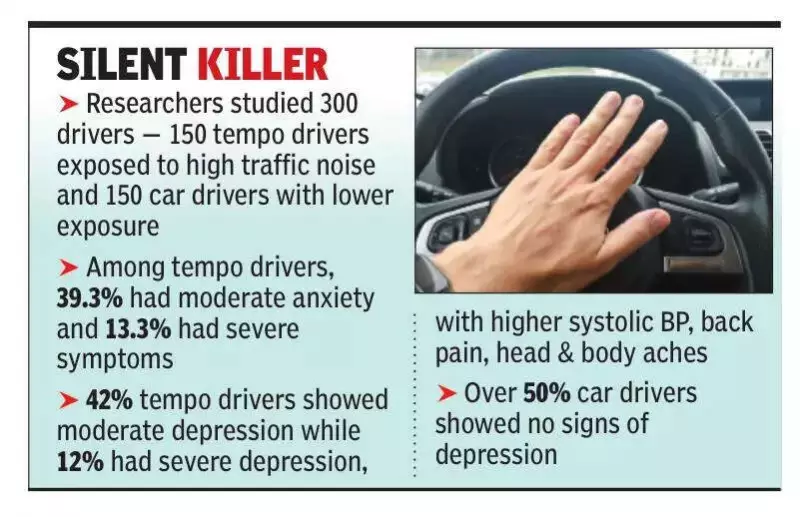
Researchers divided participants into two distinct groups: 150 tempo drivers regularly exposed to high traffic noise levels, and 150 car drivers experiencing comparatively lower noise exposure. Each participant underwent thorough health evaluations and mental health assessments to determine the comprehensive impact of their working environment.

Alarming Mental Health Findings Among Tempo Drivers
The study uncovered disturbing mental health statistics among tempo drivers exposed to higher noise levels. Approximately 39.3% of tempo drivers exhibited moderate anxiety symptoms, while 13.3% suffered from severe anxiety disorders. Depression rates proved equally concerning, with 42% showing moderate depression and 12% experiencing severe depressive symptoms.
In stark contrast, over half of the car drivers displayed no signs of depression whatsoever, and none were diagnosed with severe depression. This dramatic difference highlights the direct correlation between noise exposure levels and mental health outcomes.
"Our research clearly demonstrates that noise pollution affects not only auditory functions but also profoundly impacts brain function, cardiovascular health, and emotional stability," explained Professor Manish Kumar Manar, principal investigator and faculty member at KGMU's community medicine department. "These findings establish a strong, undeniable link between constant traffic noise exposure and the development of mental health disorders."
Physical Health and Quality of Life Impacts
The study documented significant physical health disparities between the two driver groups. Tempo drivers scored substantially lower across multiple quality-of-life domains including physical health, psychological well-being, environmental comfort, and overall life satisfaction. Car drivers consistently performed better in nearly all these areas.
Cardiovascular measurements revealed tempo drivers had higher systolic blood pressure readings, though diastolic pressure showed no major differences between groups. Researchers warned that long-term noise-related stress could substantially increase heart disease risks over time.
"Noise exposure gradually but persistently erodes a person's quality of life," noted researcher Neeraj Kumar Singh. "The damage occurs incrementally but accumulates into serious health consequences."
Noise Level Measurements and Additional Health Concerns
Scientific measurements recorded noise levels inside tempo vehicles at 84-86 decibels, compared to approximately 74 decibels inside cars. Medical experts emphasized that even this 10-decibel difference can double harmful health impacts when exposure is prolonged over months and years.
Beyond mental health and cardiovascular issues, many tempo drivers reported additional physical complaints including chronic back pain, frequent headaches, persistent body aches, and episodes of breathlessness. These symptoms highlight the comprehensive physical strain associated with high-noise driving environments.
Behavioral Patterns and Public Health Implications
The research identified higher tobacco and alcohol consumption among tempo drivers compared to their car-driving counterparts. Researchers suggested these behaviors might represent coping mechanisms developed in response to constant noise exposure and extended working hours in stressful conditions.

Highlighting broader public health concerns, the study noted that road traffic contributes approximately 78% of urban noise pollution in Indian cities. This places not only drivers but also traffic police personnel and roadside workers at elevated health risks.
"Noise pollution must be recognized as a serious public health emergency, not merely an environmental nuisance," emphasized co-author Shailza Verma. "The systemic health impacts demand urgent policy attention and intervention strategies."
This comprehensive KGMU study provides compelling evidence that traffic noise represents a significant, under-recognized public health threat in urban environments like Lucknow, with particular severity affecting professional drivers regularly exposed to high decibel levels during their working hours.





