Alarming Low Cancer Screening Rates in Telangana Amid Rising Cases
In Telangana, a stark disparity is emerging as cancer cases continue to climb while screening rates remain critically low, putting thousands at risk of late diagnosis and poorer health outcomes. According to the Telangana Cancer Burden Profile-2026, released by the Indian Council of Medical Research and its National Centre for Disease Informatics and Research, less than 4% of women aged 30-49 in the state have undergone any form of cancer screening.
Critical Gaps in Specific Cancer Screenings
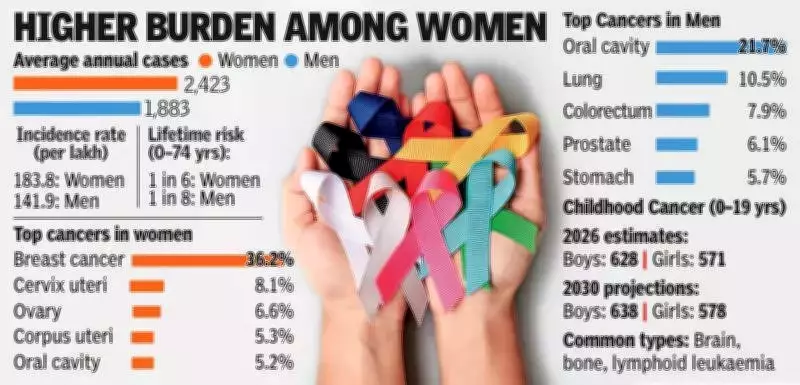
The report reveals deeply concerning figures for individual cancer types. Breast cancer screening is at a mere 0.3%, oral cancer screening stands at 2.5%, and cervical cancer screening is only 3.3%. Among men in the same age group, just 2.6% have received oral cavity examinations. This minimal coverage is particularly troubling given that breast cancer remains the most common cancer among women in India, including Telangana, followed by cervical and ovarian cancers.
The data, sourced from the National Cancer Registry Programme with inputs from the Population-Based Cancer Registry at Nizam's Institute of Medical Sciences and ten other hospitals across the state, underscores missed opportunities for early detection that could save lives.

Projected Surge in Cancer Cases
Estimates indicate that Telangana will record over 46,762 new cancer cases in 2026, comprising 21,252 in men and 25,510 in women. This number is expected to rise further, reaching approximately 47,314 cases annually by 2030. Data presented earlier in the Lok Sabha shows a 30% increase in cancer cases over the past decade, from 40,177 cases in 2015 to 52,334 in 2024.
The state health department projects 55,000 new cases annually, potentially escalating to 65,000 by 2030. The burden disproportionately affects women, with an average annual number of new cases at 2,423 for women compared to 1,883 for men. Incidence rates are higher among women at 183.8 per 100,000 population, against 141.9 among men.
Risk Factors and Health Implications
The lifetime risk of developing cancer is estimated at 1 in 6 for women and 1 in 8 for men. Tobacco-related cancers remain a major concern, accounting for 58.8% of cancers among men and 29.7% among women, largely driven by high tobacco use reported at 22.3% among men. These cancers commonly affect the oral cavity, lungs, and throat.
Additionally, the report highlights a growing burden of non-communicable diseases, which constitute 59.2% of the state's disease load. Widespread risk factors such as obesity, anaemia, diabetes, hypertension, and high blood sugar levels increase cancer risk. Reproductive and hormonal conditions, including PCOD and menopause-related issues, are also common but often underreported.
Expert Calls for Urgent Action
A senior oncologist from the MNJ Institute of Oncology and Regional Cancer Centre emphasized that low screening rates are leading to late detection. "The data shows that a significant proportion of patients come at advanced stages of the disease, which complicates treatment outcomes. There is an urgent need to scale up population-based screening programmes, strengthen primary healthcare systems, and intensify anti-tobacco measures," the doctor added.
This situation calls for immediate public health interventions to improve screening accessibility and awareness, potentially mitigating the projected rise in cancer cases and enhancing outcomes for affected individuals.