

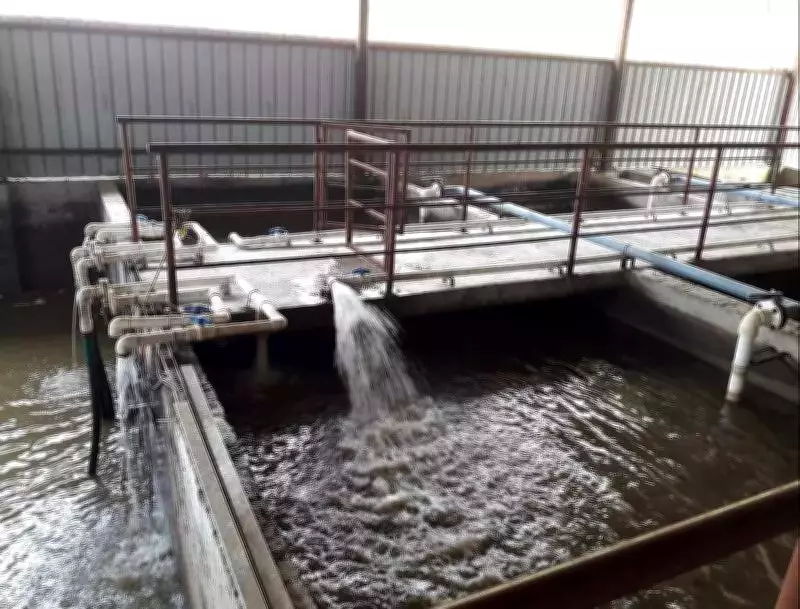
Pune's Deteriorating River Health: A Sewage Treatment Crisis
The health of rivers flowing through Pune and Pimpri Chinchwad has consistently deteriorated in recent years, raising serious environmental and public health concerns. A primary cause, unanimously identified by citizens, activists, and experts, is the absence of efficient sewage treatment plants (STPs) to manage wastewater entering these water bodies. This issue persists both at the municipal level and within individual residential complexes, exacerbating the pollution crisis.
Court Directives and Urban Development Pressures
In a significant move, the Bombay High Court issued an order on January 19 this year, following a public interest litigation (PIL). The directive mandates all municipal corporations across the state to withhold occupancy certificates (OCs) for high-rise buildings that are not connected to civic sewage lines or lack an operational STP on their premises. This decision holds particular relevance for Pune, where rapid redevelopment projects are continuously spawning new housing societies. Access to clean water has emerged as a critical flashpoint, underscored by incidents like the Guillain-Barré Syndrome (GBS) outbreak last year, linked to contaminated drinking water from wastewater infiltration. Such events highlight the urgent need to streamline sewage systems to prevent public health emergencies.
Looming Health Risks: Case Studies from Affected Societies
In February 2024, residents of Blue Ridge, a township housing approximately 20,000 people in Hinjewadi, were alarmed to discover bloodworms (chironomid larvae) in their drinking water. The society directly lifts water from the Mula River, which suffers continuous pollution from sewage discharged by upstream neighborhoods. Vijay Patil, a former committee member, explained that complaints to the Maharashtra Pollution Control Board (MPCB) and Maharashtra Industries Development Corporation (MIDC) revealed contamination due to untreated sewage dumping. While officials temporarily resolved the issue by relocating the sewage pipe, Patil noted that multiple upstream settlements and labor camps contribute to the problem, with agricultural runoff further polluting the river. The township has strict STP compliance, using treated water for a golf course, and has requested alternative drinking water sources from PMRDA and MIDC due to health fears.

Contaminated Natural Water Sources: A Widespread Issue
Instances of untreated effluents polluting groundwater or disconnected sewage networks remain prevalent in Pune. MPCB's 2023-24 report, based on six monitoring stations in the city, indicates a disturbing groundwater quality scenario: only two stations recorded 'good water,' one had 'poor water,' and three were 'unsuitable for drinking.' For example, at Casa Imperia Phase 1 in Wakad, chairman Nitin Selute reported that sewage from nearby areas contaminated their well, once a primary water source. Despite having a fully functional 100 KLD STP, the society now relies on water tankers, spending Rs 24-26 lakh annually for 160 flats. Selute emphasized the need for civic accountability and awareness, as society members promote water conservation internally and seek to revive a nearby stream with help from Mission Groundwater.
Challenges in STP Implementation and Awareness
Ravindra Sinha, founder of Mission Groundwater, noted that Pune and Pimpri Chinchwad have around 1,000 private STPs, many functional but often discharging into sewage lines or directly into rivers due to defunct systems. He cited high operational costs and lack of regular inspections as deterrents, though concessional electricity tariffs from MSEDCL are available. Pradeep Pawar of Shree Water Tech highlighted that lack of awareness about maintaining functional STPs is a major issue, with misinformation leading to improper management. He stressed that collaboration among government authorities, municipal corporations, and residents is essential to address untreated sewage entering rivers.

Official Responses and Regulatory Measures
Jagdish Khanore, chief engineer of PMC's drainage department, mentioned that under UDCPR 2020, new societies with over 100 flats must reuse treated grey water, but confusion between grey and black water STPs persists. A committee is addressing builder challenges, and software for real-time STP monitoring is being explored. Sanjay Kulkarni, chief engineer at PCMC, reported notices issued to 84 societies for non-operational STPs, with reasons including high costs and builder-resident conflicts. A 285km drainage network extension is planned, with a squad conducting regular checks and enforcing rules through water connection cuts if necessary.
Legal Actions and Environmental Advocacy
Following the 2025 GBS crisis, a petition filed in the National Green Tribunal (NGT) highlighted contamination in water samples, urging intervention under the 'Polluter Pays' Principle. Pushkar Kulkarni, the petitioner, called for an infrastructure overhaul to protect safe drinking water rights. Environment lawyer Maitreya Ghorpade noted that MPCB norms and UDCPR 2020 mandate STP installation, with Bombay High Court directives linking OCs to functional STPs. In a recent case, MPCB took punitive action against a builder for violations.
Cost-Effective Solutions: MSEDCL Concessional Tariffs
Narayan Wadekar from Hinjewadi Hills Phase 2 shared that societies can reduce STP running costs by availing MSEDCL's concessional rates. After applying in February 2020, their tariff dropped from Rs 11.71/unit to Rs 5.11/unit, halving monthly bills to approximately Rs 3.2 lakh. The application process involves:
- Ensuring WTP and STP have a dedicated meter.
- Changing the meter category from LT I A to LT III.
- Checking total load for appropriate LT III category charges.
- Submitting an application to the MSEDCL assistant engineer with required documents.
- Clearing all bills beforehand.
- Conducting an energy audit for optimal results.
This approach demonstrates that running an STP need not be prohibitively expensive, offering a viable path toward sustainable wastewater management in Pune's growing urban landscape.





