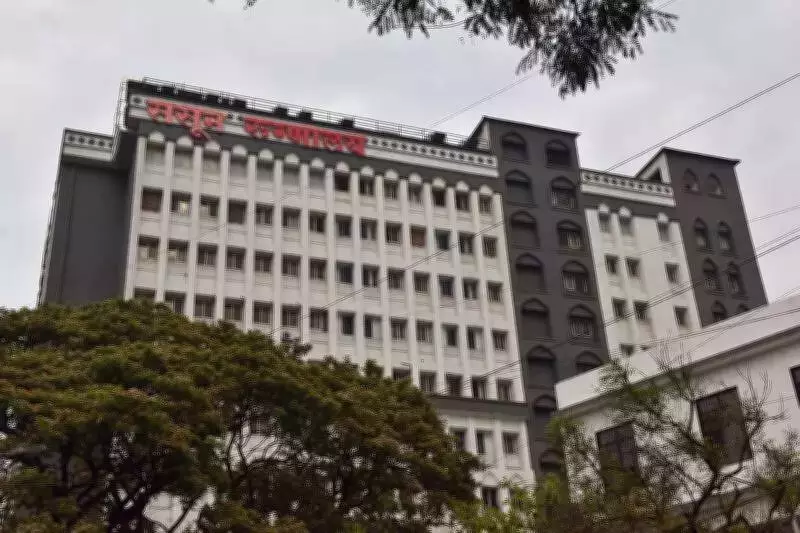
Pune Municipal Corporation's Health Budget Allocation Raises Concerns Over Equity
In the financial year 2025-26, the Pune Municipal Corporation (PMC) allocated a substantial Rs569.8 crore to its health department. However, a detailed analysis of expenditure patterns reveals a troubling distribution of these funds, with a significant portion benefiting a relatively small, privileged segment of the population rather than addressing the broader healthcare needs of the city's general public.
Disproportionate Spending on Special Schemes
Approximately 22% of the total health budget, amounting to Rs130 crore, was spent on just 52,000 families. This group includes current and retired civic employees, corporators, and those registered under the Urban Poor Health Scheme (UPHS). Specifically, Rs70 crore was allocated to 32,000 civic employees and about 700 corporators under the Comprehensive Health Scheme (CHS), while Rs60 crore went to 20,000 card holders under the UPHS.
Health activists have strongly questioned the necessity of the CHS for corporators who have declared assets worth crores of rupees and for Class I and II civic employees whose salaries are sufficient to cover their families' healthcare expenses. This allocation has sparked debates about the equitable use of public funds.

Budget Breakdown: Salaries and Public Welfare
An additional 35% of the health budget is reserved for staff salaries, which further reduces the funds available for direct public healthcare services. This leaves only 43% of the total allocation, roughly Rs245 crore, for the general public. This limited funding impacts the department's ability to purchase essential medicines and consumables, upgrade crumbling healthcare infrastructure, and recruit necessary medical staff.
Assistant health officer Dr Sanjeev Wavare highlighted the financial strain, noting that the PMC had to apply for additional funds to cover salaries and schemes, especially with newly merged areas now under its jurisdiction. The situation underscores a systemic issue where budgetary constraints hinder primary care provision.
Civic Officials and Health Activists Voice Concerns
PMC commissioner Dr Naval Kishore Ram acknowledged the issue, stating, "We are considering the matter. PMC funds must prioritize the welfare of the general public. Those who can afford to pay should voluntarily relinquish benefits under such government schemes. We are contemplating drafting a policy to ensure that benefits reach deserving citizens."
Chief health officer Dr Nina Borade defended the allocation, emphasizing that while a major part of the budget is spent on special schemes and staff, the latter are essential for addressing the city's healthcare needs. However, health activists like Dr Sanjay Dabhade argue that the city's healthcare system is "on a ventilator," with insufficient focus on public needs compared to other municipal corporations like Pimpri Chinchwad.
Criticism of Private Facility Payments and Scheme Misuse
Experts have also criticized the PMC for paying crores of rupees to private healthcare facilities for employees who refuse to use government hospitals such as Kamala Nehru. Activist Dr Abhijit More pointed out that the UPHS, initially a temporary measure for the poor, has seen its allocation balloon from Rs10 crore to Rs80 crore. He noted, "Civic staff and corporators should prioritize government hospitals over private ones. The UPHS has previously been marred by scams, and in public-private partnership hospitals, the PMC not only provides land for free but also covers bills worth crores."
This situation raises serious questions about the efficiency and fairness of Pune's healthcare funding, highlighting the need for policy reforms to ensure that public resources are directed toward those most in need.