

Plastic and Pneumonia Identified as Primary Causes in Chandigarh Cattle Deaths
The postmortem examination of cattle found dead at the Raipur Kalan incinerator plant near Chandigarh has revealed disturbing findings. Excessive plastic ingestion and pneumonia emerged as the primary causes of death for the animals. This discovery came after residents raised alarms about a large number of carcasses accumulating at the facility.
Postmortem Findings and Investigation Details
Officials from the animal husbandry department conducted thorough examinations following public concern. The Chandigarh administration initially selected ten carcasses for analysis. However, only nine underwent postmortem procedures. One body proved too deteriorated for proper medical examination.
The report confirmed two calves died from pneumonia. The remaining cattle succumbed to complications caused by ingesting excessive plastic. Forensic analysis from the Central Forensic Science Laboratory remains pending. This additional report should clarify the exact circumstances surrounding these deaths.

Sources indicate many carcasses might have originated from outside areas. Cattle that died elsewhere were frequently brought to this incinerator plant. The possibility of plastic-related deaths occurring outside the gaushala cannot be ruled out at this stage. The ongoing investigation aims to determine the precise chain of events.
Administrative Response and Committee Actions
The inquiry committee of the Chandigarh administration has intensified its investigation. On Saturday, committee members recorded statements from officers and employees responsible for managing both the incinerator plant and the Raipur Kalan gaushala.
Approximately twenty individuals faced questioning during this process. This group included the suspended medical officer of health, Dr Inderdeep Kaur, along with suspended inspectors and other employees whose services had been terminated earlier. The committee also reviewed critical documents and CCTV footage received from the Municipal Corporation.
These visual records are considered essential for understanding the series of events linked to the deaths of more than sixty animals discovered at the facility. Residents had gathered at the site earlier to protest after discovering the piled-up carcasses. This public outcry prompted officials to expedite their inquiry.
Incinerator Plant Malfunction and Accumulation Issues
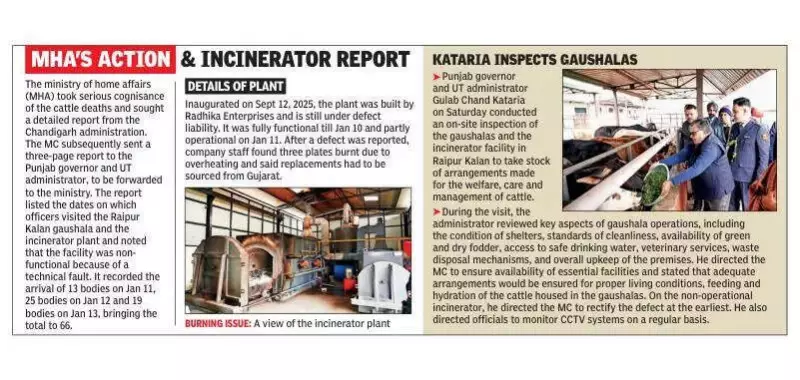
The Municipal Corporation highlighted a significant operational problem. The situation at the plant worsened because the facility had not been fully functional for several days. Officials confirmed the incinerator operated normally until January 10th. It worked partially on January 11th before stopping completely due to a technical fault.
This mechanical failure created a serious backlog. Carcasses continued arriving at the plant even though the equipment required to process them remained out of service. The disruption in operations allowed bodies to accumulate, drawing public attention and triggering multiple investigations.
Officials confirmed the Municipal Corporation issued a show-cause notice of blacklisting to Radhika Enterprises. This private firm holds responsibility for constructing and maintaining the plant. The decision followed concerns over the company's failure to address mechanical issues promptly.
According to available reports, company representatives inspected the plant on January 11th. They discovered three plates had suffered damage due to overheating. Staff received information that replacement parts needed sourcing from Gujarat, causing further delays.
Government Oversight and Administrative Inspection
The Ministry of Home Affairs took serious cognizance of the cattle deaths. Authorities sought a detailed report from the Chandigarh administration. The Municipal Corporation subsequently sent a three-page report to the Punjab governor and UT administrator for forwarding to the ministry.
This official document listed dates when officers visited the Raipur Kalan gaushala and incinerator plant. It noted the facility became non-functional because of technical faults. The report recorded specific arrival numbers: thirteen bodies on January 11th, twenty-five bodies on January 12th, and nineteen bodies on January 13th. These figures brought the total to sixty-six carcasses.

Punjab governor and UT administrator Gulab Chand Kataria conducted an on-site inspection on Saturday. He visited both the gaushalas and the incinerator facility in Raipur Kalan to assess arrangements made for cattle welfare, care, and management.
During this visit, the administrator reviewed multiple aspects of gaushala operations. His examination covered shelter conditions, cleanliness standards, availability of green and dry fodder, access to safe drinking water, veterinary services, waste disposal mechanisms, and overall premises upkeep.
Kataria directed the Municipal Corporation to ensure availability of essential facilities. He stated that adequate arrangements would be guaranteed for proper living conditions, feeding, and hydration of cattle housed in the gaushalas. Regarding the non-operational incinerator, he instructed officials to rectify the defect at the earliest possible opportunity. The administrator also directed regular monitoring of CCTV systems to prevent future incidents.
The plant itself began operations recently, having been inaugurated on September 12, 2025. Radhika Enterprises built the facility, which remains under defect liability. It functioned fully until January 10th and partially on January 11th before the technical fault emerged.





