

Spanish Scientist's Pancreatic Cancer Breakthrough Faces Critical Funding Hurdle
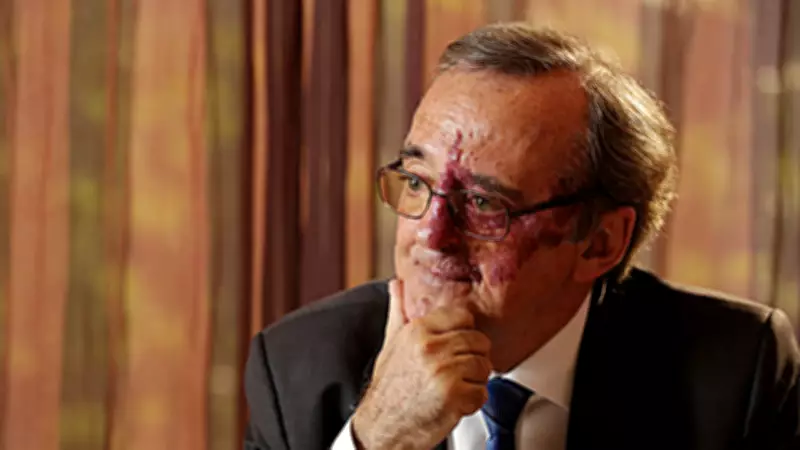
A groundbreaking pancreatic cancer therapy developed by Spanish scientist Mariano Barbacid has captured global scientific attention following striking preclinical results in mouse models. Beyond the significant medical promise, this research project is now making headlines for its unconventional funding approach, highlighting systemic challenges in biomedical financing.
Promising Preclinical Results Against Aggressive Cancer
Mariano Barbacid leads a research team at Spain's premier public cancer research institution, the Spanish National Cancer Research Centre (CNIO). In December 2025, the team published findings in the prestigious Proceedings of the National Academy of Sciences demonstrating that a triple-drug therapy targeting three complementary cancer pathways completely eradicated pancreatic tumors in mouse models.
The therapy achieved a crucial breakthrough: the tumors did not develop resistance, which represents a major cause of treatment failure in pancreatic ductal adenocarcinoma. This aggressive cancer type currently has a devastating five-year survival rate of just 8–12%, according to data from CRIS Contra el Cáncer and the Pancreatic Cancer Action Network.

Researchers have emphasized that these findings remain at the preclinical stage, representing proof of concept rather than readiness for patient treatment. The therapy's mechanism involves simultaneously attacking multiple cancer pathways, potentially overcoming the resistance that typically develops with single-target approaches.
The Expensive Transition to Human Trials
Transitioning from successful animal studies to first-in-human trials represents one of the most expensive and tightly regulated phases of drug development. According to CNIO and Barbacid's interviews with Spanish media, this critical stage requires comprehensive toxicology studies, regulatory approvals, and the manufacture of clinical-grade drug compounds.
The financial requirements are substantial: CNIO estimates that approximately €30 million would ultimately be needed to complete Phase 1 clinical trials. As an initial step, approximately €3.5 million is urgently required to begin toxicology testing and drug manufacturing, which are prerequisites for regulatory submission.
Structural Funding Gap in Biomedical Research
Researchers and science policy analysts identify this situation as reflecting a well-known structural problem in biomedical research, often described as the "valley of death." This term refers to the gap where promising discoveries fall between basic research funding and the high costs of early clinical development.
Analysts have noted that existing public funding mechanisms in Spain and across Europe are often poorly equipped to support this translational phase, leaving many publicly funded biomedical projects without a clear pathway to patient testing. Several Spanish science commentators have pointed out that this funding gap affects numerous research initiatives beyond Barbacid's work.
Crowdfunding Campaign Generates Public Response
In response to the funding challenge, coordinated fundraising has been organized through Fundación CRIS Contra el Cáncer, a long-established Spanish nonprofit that has supported Barbacid's research for years. The organization has contributed more than €2 million to his work since 2020.
The public response has been significant: According to CRIS and media reports from early February, nearly €800,000 was raised in the first five days of the latest campaign through public donations. Contributions primarily came via Bizum (code 07666) and online donations at criscancer.org/barbacid.
The charity reported strong public engagement, with tens of thousands of people interacting with the campaign amid intense media attention. CRIS has noted that the total raised beyond this early figure has not yet been formally confirmed and remains subject to updates on its website. While these funds help sustain ongoing research and begin preparatory steps, they remain insufficient to initiate human trials.

Political Criticism and Scientific Caution
The reliance on crowdfunding has prompted criticism of Spain's government from scientists, clinicians, and members of the public, particularly on social media platforms. Many have questioned why a publicly developed cancer therapy with peer-reviewed results must depend on citizen donations to progress, with some users contrasting the lack of trial funding with government spending priorities.
Barbacid and CNIO have not endorsed these politically charged claims, instead emphasizing that their concern lies with structural funding limitations rather than political intent or obstruction. Both have stressed publicly that their primary focus remains on advancing the research despite financial constraints.
Independent cancer researchers have welcomed the mouse data while urging caution about expectations for human applications. David Tuveson, director of the Cancer Center at Cold Spring Harbor Laboratory and chief scientist for the Lustgarten Foundation's pancreatic cancer research programme, has repeatedly warned that pancreatic cancer therapies showing strong effects in mice often fail to translate into human benefit.
Other oncologists involved in early-phase clinical trials have echoed this caution, noting that combination and multi-pathway approaches are promising but must be rigorously tested in patients before conclusions can be drawn about their effectiveness.
Future Prospects and Timeline
Even if additional funding were secured, CNIO estimates that two to three years would be required to complete toxicology studies, regulatory approvals, and manufacturing before Phase 1 trials could begin. With the majority of the estimated €30 million still unfunded, the project's future depends on whether public institutions, private investors, or a combination of both step forward to provide support.
For now, the therapy remains at the preclinical stage. The crowdfunding campaign has provided momentum and visibility, but not a direct path to patients. This case has become a high-profile example of how scientific promise can collide with financial and institutional constraints at a critical moment in cancer research.
The situation continues to evolve as researchers, funding organizations, and policymakers grapple with the challenge of translating promising laboratory findings into potential treatments for one of medicine's most challenging cancers.





