

Pancreatic Cancer Cases Show Alarming Rise in India, Doctors Point to Lifestyle Factors
On World Cancer Day, observed annually on February 4, medical experts in Bengaluru are drawing attention to a concerning epidemiological shift. While cancers of the head, neck, lung, breast, and cervix continue to dominate public discourse due to their high prevalence, a quieter but steady increase in pancreatic cancer incidence is emerging as a significant health challenge over the past decade.
A Silent Surge in Diagnoses
Once considered relatively rare, pancreatic cancer is now being diagnosed with greater frequency, often at advanced stages where treatment options are limited. This trend is particularly evident in major healthcare hubs. "There has been a clear paradigm shift in the incidence of pancreatic cancer over the last several years," stated Dr. Basant Mahadevappa, a senior consultant and liver transplant surgeon at HCG Cancer Hospital on KR Road in Bengaluru.
He revealed that at his tertiary care center, the monthly caseload has approximately doubled. "At present, we see approximately 10 to 12 new cases of pancreatic cancer every month. In the past, this was closer to 5 or 6 cases per month," Dr. Mahadevappa explained.

Lifestyle and Metabolic Links
Doctors attribute this worrying rise largely to modern lifestyle patterns and associated metabolic disorders. "The incidence of pancreatitis has increased significantly, and this is closely linked to factors such as gallbladder stones, alcohol consumption, and a diet high in saturated fatty acids," Dr. Mahadevappa noted. He emphasized that chronic pancreatitis is a known risk factor for developing pancreatic cancer.
Furthermore, clinicians are observing a disturbing change in the age profile of patients. Pancreatic cancer, traditionally associated with individuals aged 60 and above, is now increasingly detected in patients in their 30s and 40s.
"The exact reasons for this shift are still not clearly understood. However, lifestyle factors are thought to play a significant role," said Dr. Adithya V Naragund, Senior Consultant in GI and HPB Surgery at Cytecare Hospitals. He pointed to potential contributors like dietary quality, including higher exposure to pesticides and processed foods, though definitive evidence is still being gathered.
Dr. Naragund added that this trend mirrors a broader increase in cancer incidence across various organs, including colorectal, stomach, and liver cancers. He also suggested that improved detection methods, such as advanced imaging and more widespread diagnostic investigations, may be contributing to the higher reported numbers by identifying cases that would have previously gone undetected.
The Challenge of Late Diagnosis
A major hurdle in combating pancreatic cancer remains its insidious nature. "One of the greatest challenges is its silent and non-specific early course. Symptoms often appear only when the disease is advanced," explained Dr. Vijay Kumar Srinivasalu, Senior Consultant in Medical Oncology at Sakra World Hospital.
Unlike breast or cervical cancers, there are no routine, reliable mass screening programs for pancreatic cancer due to its relative uncommonness and the lack of cost-effective tests. Consequently, prognosis is often poor by the time a diagnosis is made. Dr. Srinivasalu recommended that high-risk individuals—such as those with a strong family history, genetic predispositions, or long-standing chronic pancreatitis—should consider screening at specialized centers using MRI or endoscopic ultrasound.
Risk Factors and Prevention
Doctors are urging proactive preventive measures. Key modifiable risk factors include:
- Tobacco use in any form
- Excessive alcohol consumption
- Long-standing diabetes mellitus
- Chronic pancreatitis, often alcohol-related
- Obesity and a sedentary lifestyle, increasingly common in urban India
- Family history and specific genetic syndromes
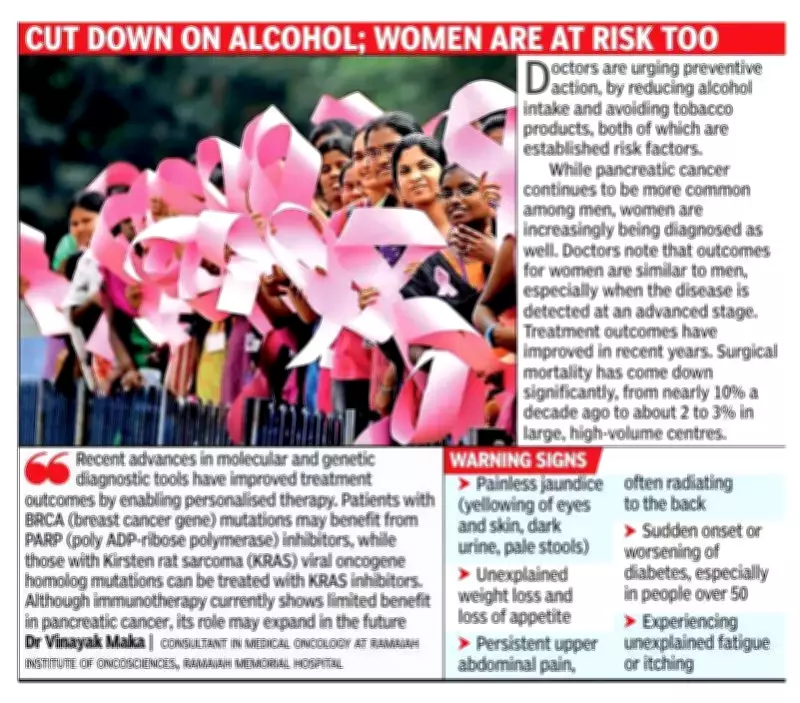
While pancreatic cancer has historically been more common in men, women are now being diagnosed at increasing rates, with similar disease outcomes, especially when detected late.

Advances in Treatment and Hope
On a positive note, treatment outcomes have seen improvement. Surgical mortality rates have dropped significantly in high-volume centers. "Recent advances in molecular and genetic diagnostic tools have significantly improved treatment outcomes," said Dr. Vinayak Maka, Consultant in Medical Oncology at Ramaiah Institute of Oncosciences.
These tools enable personalized therapy. For instance:
- Patients with BRCA gene mutations can be treated with PARP inhibitors.
- Those with specific KRAS mutations may benefit from KRAS inhibitors.
While immunotherapy has shown limited benefits so far, its role may expand in the future. Doctors advise the public to be aware of potential warning signs, which include:
- Painless jaundice (yellowing of eyes/skin, dark urine, pale stools)
- Unexplained weight loss and loss of appetite
- Persistent upper abdominal pain, often radiating to the back
- Sudden onset or worsening of diabetes, especially in people over 50
- Unexplained fatigue or itching
The rising trend of pancreatic cancer underscores the critical need for heightened awareness, lifestyle modifications, and targeted screening for at-risk populations to combat this formidable disease.





