

Nipah Virus Outbreak in Kolkata Claims Life of Young Nurse After Prolonged Struggle
A tragic development has unfolded in West Bengal's healthcare landscape as a 25-year-old female nurse, who contracted the deadly Nipah virus during an outbreak in early January, succumbed to severe secondary infections on Thursday evening. The medical professional fought valiantly for 37 days at Barasat Hospital, where she was employed, before passing away due to complications arising from the viral infection.
Details of the Nipah Virus Cases and Contact Tracing
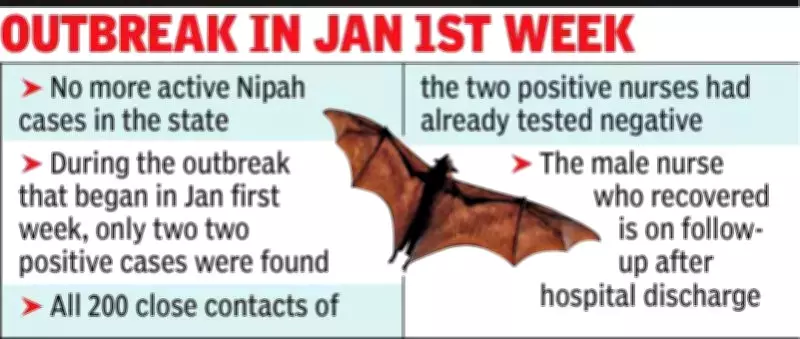
The deceased nurse and a male colleague were the only two individuals confirmed to have tested positive for the Nipah virus during this outbreak period. Remarkably, none of the approximately 200 close contacts identified through rigorous contact tracing procedures returned positive results for the virus, indicating successful containment measures were implemented by health authorities.
The male nurse, who was also infected, has made a full recovery and was discharged from hospital. He is currently recuperating well at home without complications, providing a contrasting outcome to his female colleague's tragic fate.

Timeline of Medical Treatment and Deteriorating Condition
The female nurse's medical journey began when she was initially treated at a hospital in Burdwan. After just two days, her condition deteriorated significantly, necessitating her transfer to Barasat Hospital on January 6. She was already dependent on mechanical ventilation at the first medical facility, indicating the severity of her condition from the outset.
Her male counterpart took a different path, admitting himself directly to Barasat Hospital where both healthcare professionals were attached. The National Institute of Virology in Pune confirmed the Nipah infection in samples from both nurses on January 13, providing definitive diagnosis of the dangerous pathogen.
Critical Condition and Eventual Demise
Throughout her hospitalization, the female nurse's condition remained critical. She eventually slipped into a coma, with medical teams battling to stabilize her deteriorating health. Despite showing some improvement in recent weeks—including testing negative for Nipah in two consecutive tests, with the last conducted on February 8, and being removed from ventilation support for the past 10 days—she developed severe secondary infections.
The complications proved overwhelming, including sepsis with septic shock and autonomic dysfunction. These systemic failures ultimately led to a cardiac arrest, with hospital sources confirming she was declared dead at 4:30 PM on Thursday.
Medical Perspective on the Case
Health department officials emphasized that while the nurse had cleared the Nipah virus from her system, the damage inflicted by the infection left her vulnerable to other life-threatening conditions. The development of secondary infections in such cases represents a common but dangerous progression, particularly when patients have been critically ill for extended periods.
This tragic outcome highlights the persistent threat posed by zoonotic viruses like Nipah, even in contained outbreak situations. The medical community continues to study the long-term effects of such infections on recovered patients, with this case providing important clinical data despite its sorrowful conclusion.






