

Nagpur's Air Quality Crisis: A Sharp Decline into the 'Poor' Category
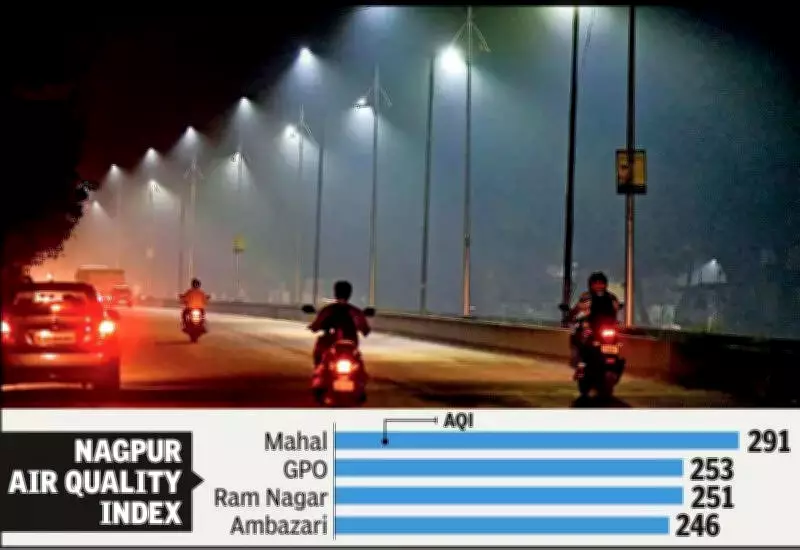
Air quality in Nagpur deteriorated sharply on Sunday, slipping into the 'poor' category as all four monitoring stations recorded a significant spike in fine particulate matter (PM2.5). This alarming development has raised serious concerns over respiratory health among residents, particularly vulnerable groups.
Monitoring Data Reveals Widespread Pollution
Data from the city's air quality monitoring network showed Mahal as the most polluted area, followed by General Post Office (GPO), Ram Nagar, and Ambazari. Environmental activist Suresh Chopne highlighted that poor air quality persisted for five consecutive days in Mahal, while the other three monitoring stations reported poor levels for two days each.
"Nagpur has already replaced Chandrapur as one of the most polluted cities in the state," Chopne stated. "On Sunday, the city's air quality was worse than the rest of Vidarbha."

Health Impacts Becoming Evident
Doctors report that the rise in pollution levels has already begun reflecting in patient patterns, with a noticeable increase in complaints of breathlessness, persistent cough, eye irritation, and chest discomfort. These symptoms are particularly prevalent among children, the elderly, and patients with pre-existing respiratory ailments.
Dr Sushant Meshram, professor and head of pulmonary medicine at the Super Specialty Hospital, Govt Medical College and Hospital Nagpur, confirmed the hospital has seen a rise in pollution-linked cases.
"Patients with existing lung diseases, who were in stable condition earlier, are reporting worsening symptoms and seeking medical advice," Dr Meshram explained. "We are also seeing upper and lower respiratory infections lingering for weeks, with persistent coughs that do not subside even after standard treatment. Air pollution appears to be a significant aggravating factor."
Root Causes and Mitigation Efforts
Chopne attributed the worsening trend to several factors:
- A surge in vehicular numbers
- Traffic congestion leading to pollutant concentration
- Construction dust
The latest deterioration in air quality has been witnessed despite sustained spending on pollution mitigation. A recent RTI reply to activist Jawwad Ahmed revealed that the Nagpur Municipal Corporation (NMC) spent over ₹200 crore on air pollution control measures over the past few years.
The steps taken by NMC included:
- Dust suppression initiatives
- Road development projects
- Promotion of electric mobility
- Greening drives
- Bio-mining of legacy waste
- Expansion of air quality monitoring infrastructure
Persistent Challenges During Winter Months
However, data from Maharashtra Pollution Control Board stations show that PM2.5 and PM10 levels continue to breach safe limits during winter months, especially in December and January. This pattern suggests that despite significant investment in mitigation measures, fundamental challenges remain unaddressed.
The situation in Nagpur highlights the complex interplay between urban development, transportation patterns, and environmental health. As the city grapples with this air quality crisis, residents and authorities alike face mounting pressure to implement more effective solutions to protect public health.






