

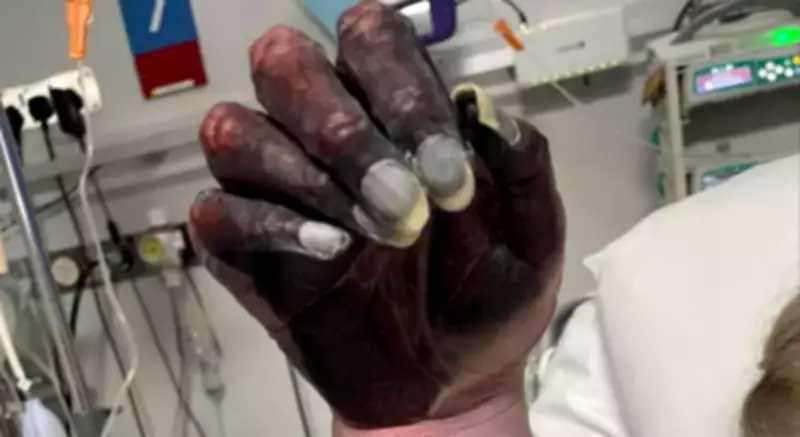
A 52-year-old mother tragically lost her life after medical professionals initially dismissed the alarming discolouration of her hand as mere bruising or even newspaper ink stains, leading to a critical delay in diagnosis that ultimately necessitated the amputation of her arm. This heartbreaking case highlights serious concerns about medical oversight and the devastating consequences of misdiagnosis in urgent care settings.
Initial Symptoms and Medical Dismissal
Lorraine Pettie, a former chef and devoted mother, first observed unsettling changes in the colour of her right hand's fingers during October. Initially attributing the marks to potential bruising from routine finger-prick tests for her diabetes management, she grew increasingly concerned as the discolouration rapidly intensified and spread across her entire hand. Seeking immediate medical attention, Lorraine visited an urgent care facility at an Edinburgh hospital, where her daughter, Nadia Pettie, recounts that healthcare staff speculated the staining might be ink transferred from handling old newspapers.
Nadia, aged 31, vividly remembers the distressing interaction, noting that her mother never read newspapers, making the suggestion particularly baffling. Despite X-ray examinations revealing no bone fractures, clinicians concluded the issue was simply bruising, leading to Lorraine being discharged without further investigation. "As soon as they looked at the X-ray and saw there were no broken bones, they weren't really interested," Nadia lamented, highlighting the perceived lack of urgency in addressing her mother's worsening condition.

Rapid Deterioration and Surgical Intervention
The discolouration persisted and continued to spread alarmingly, prompting another hospital visit where doctors delivered a grave diagnosis: Lorraine's hand was necrotic, meaning the tissue had died due to compromised blood supply caused by a blood clot. According to established NHS guidelines, necrosis typically manifests as tissue turning dark brown or black as circulation fails, a critical sign that demands immediate medical intervention.
Lorraine was urgently transferred to the Royal Infirmary for emergency surgery, where medical teams attempted to remove the clot obstructing blood flow to her arm. Subsequently, she was moved to St John's Hospital in Livingston, where surgeons made the difficult decision to amputate her right arm after discovering the necrosis had spread internally, posing severe risks to her overall health.
Family's Anguish and Search for Answers
Lorraine's sister, Alexis Pettie, described the rapid and frightening progression of her condition, comparing the appearance to frostbite and noting that blood circulation never properly returned to the affected arm. "They have no idea what actually caused the clot. We don't have any answers as to why that clot happened," Alexis expressed, underscoring the family's frustration and unanswered questions regarding the underlying cause.
After spending approximately a month in hospital, Lorraine was discharged home, but her health continued to deteriorate steadily. She passed away peacefully in her sleep on December 28, with the official cause of death listed as heart disease, diabetes, and pneumonia. However, her family firmly believes the amputation marked a pivotal turning point in her decline. "We were told her body was just one massive infection," Alexis revealed, expressing astonishment at the missed diagnosis. "She went home and she just got worse. It kept creeping up her hand."
Missed Opportunities and Lasting Impact
Nadia remembers her mother as a meticulous individual who avoided germs and did not engage in activities like reading newspapers or books that could explain the ink theory. She passionately believes that earlier and more serious medical intervention could have dramatically altered the outcome. "If they had taken it seriously, my mum wouldn't have needed to have her whole arm cut off," Nadia stated. "It disgusts me. Her arm could've been saved. My mum was my everything."

Reflecting on the emotional toll, Nadia added, "We might've had that little bit longer with my mum because it wasn't until her amputation that her health really deteriorated even more. I don't want someone else to go through the heartache and pain that me and my family went through." Her words echo a plea for improved medical vigilance and patient advocacy to prevent similar tragedies.
Institutional Response and Ongoing Dialogue
In response to this distressing incident, a spokesperson for NHS Lothian extended deepest condolences to Lorraine Pettie's family and acknowledged their recent communication. "We welcome the family's decision to get in contact with us in the last couple of days and we will discuss with them directly," the spokesperson affirmed, indicating a commitment to addressing the family's concerns through direct dialogue.
This case serves as a poignant reminder of the critical importance of thorough medical assessment, especially for patients with pre-existing conditions like diabetes, and underscores the need for healthcare systems to learn from such devastating oversights to enhance patient safety and care standards.





