Lifestyle Interventions More Impactful for Younger Adults with High Genetic Obesity Risk, Study Finds
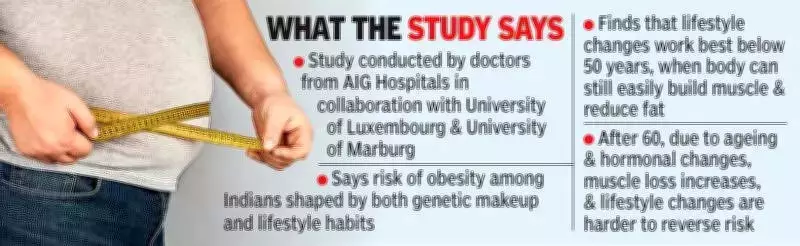
A groundbreaking study conducted by doctors from AIG Hospitals in collaboration with the University of Luxembourg and the University of Marburg, Germany, has revealed that daily dietary habits and healthy lifestyle choices, including exercise, exert a significantly greater influence on weight management for individuals under 50 years old who possess a high genetic predisposition to obesity compared to their older counterparts.
Genetic and Lifestyle Factors Shape Obesity Risk in Indians
The research underscores that the risk of obesity among Indians is intricately shaped by both genetic makeup and lifestyle habits. It found that younger individuals with elevated genetic risk and unhealthy behaviours face a substantially higher likelihood of developing obesity than older adults with similar genetic profiles. This suggests that early lifestyle interventions could yield more substantial benefits in combating the obesity epidemic.
These findings emerge at a critical juncture as metabolic diseases such as diabetes and fatty liver, alongside lifestyle-related conditions like obesity and heart disease, are experiencing a rapid surge across India. A recent Lancet study highlighted that nearly two out of every five adults in Hyderabad are living with fatty liver disease, with obesity identified as a major contributing risk factor.

Study Methodology and Key Insights
During the investigation, doctors meticulously analysed genetic data from 6,663 Indians residing in the UK, utilizing the UK Biobank, alongside a separate India-based cohort comprising 91 participants from various regions, including Hyderabad. The study demonstrated that obesity risk fluctuates based on an individual's genetic risk and lifestyle habits.
The connection between genes and lifestyle was distinctly observed in the larger group and exhibited a similar pattern within the Indian cohort. The analysis further indicated that healthy lifestyle modifications may hold particular importance for younger people with higher inherited risk.
Doctors explained that lifestyle changes are most effective below the age of 50, when the body retains the capacity to build muscle and reduce fat more readily. After 60, due to ageing and hormonal shifts, muscle loss (sarcopenia) intensifies, making it more challenging for lifestyle adjustments to reverse obesity risk.
Call for India-Specific Obesity Guidelines
Dr. D Nageshwar Reddy, chairman of AIG Hospitals and a study author, advocated for the revision of obesity guidelines in India to better reflect indigenous body patterns. He emphasized, "Indians are more prone to abdominal (truncal) obesity, which escalates metabolic risk even at lower body weights. We should redefine obesity according to Indian standards."
Moreover, the doctors argued that the age-related findings are especially pertinent for Indians, who often develop metabolic issues such as diabetes, fatty liver disease, and heart problems at lower body mass index (BMI) levels than Western populations, rendering early prevention even more crucial.
Expert Recommendations for Prevention
Dr. Rakesh Kalapala, director of the centre for obesity & metabolic therapy at AIG Hospitals, stressed the necessity of initiating metabolic screening early, focusing on waist size and belly fat—not merely body weight—and promoting healthy lifestyles from early adulthood. He added, "Moving forward, prevention strategies must become more risk-informed rather than universally applied."
Dr. Reddy, a senior gastroenterologist, advised incorporating regular physical activity into weekly fitness routines, recommending approximately 25 minutes of aerobic exercises such as walking, running, or swimming, complemented by muscle-strengthening activities.